
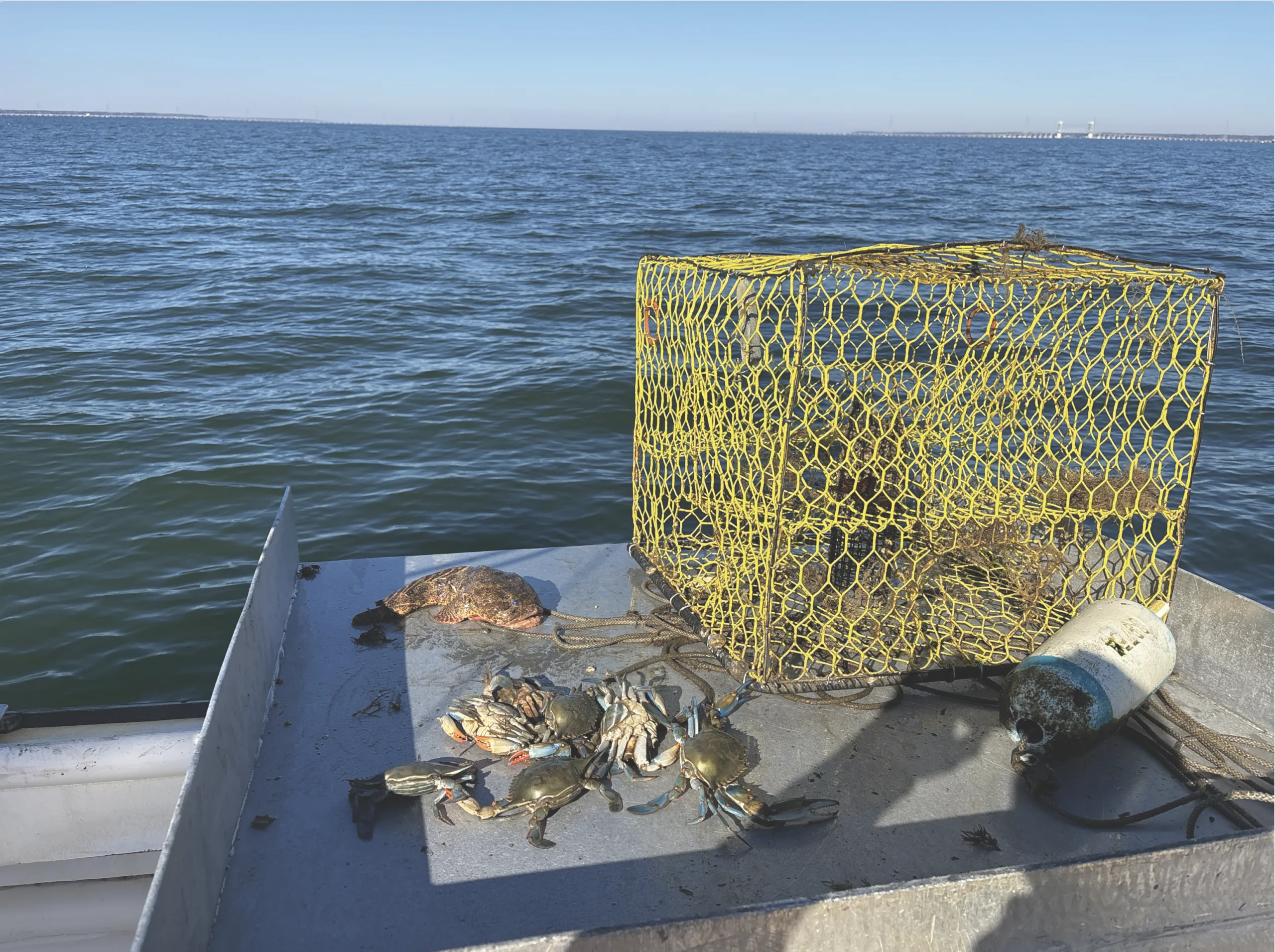
Lost and abandoned fishing gear is one of the major pollutants in U.S. waterways—from coastal California to the Chesapeake Bay. When derelict gear breaks down—crab pots and lobster traps, primarily—they release toxins into the water, putting coastal and marine environments as well as fishing industries in harm’s way. Many traps continue to capture fish, crabs, and other marine life, often killing what they catch.
The Nationwide Fishing Trap Removal, Assessment, and Prevention Program (TRAP), administered by the Center for Coastal Resources at William & Mary’s Batten School and the Virginia Institute of Marine Science, is granting funds for the second year to applicants working to remove what are also known as “ghost traps” out of waterways nationwide. Funding for TRAP projects comes from grants provided by the National Oceanic and Atmospheric Administration’s Marine Debris Program. Approximately $1.5 million is distributed among TRAP’s recipients. In 2025, 11 projects were funded; in 2026, 13 projects across 15 locations were funded.
Since 2025, over 300,000 pounds of debris from derelict traps have been retrieved out of U.S. waterways. Each piece retrieved has a lasting impact on coastal waters, contributing to TRAP’s long-term goal of finding more effective ways to dispose of these harmful ghost traps.
To learn more about the work done by the W&M/VIMS’ TRAP Program, visit
TrapProgram.org.
Featured photo by Ty Farrington | courtesy of Virginia Institute of Marine Science/William & Mary. This article originally appeared in the August 2026 issue.