
The largest planting of Norton grapes in the world covers 40 undulating acres in Middleburg, about a mile from the Bull Run Mountains. That’s around the size of the parking lot of a Walmart Supercenter.
The fact that such a small planting is the world’s largest tells us a lot about this elusive grape. The fact that it’s on the land of Chrysalis Vineyards tells us a great deal about its proprietor, Jenni McCloud.
“I decided I’d rather make the best Norton in the world than the 300th best Merlot,” says McCloud, as she prowls around the terrain of her 412-acre farm in a Jeep Grand Cherokee hybrid on a fall afternoon.
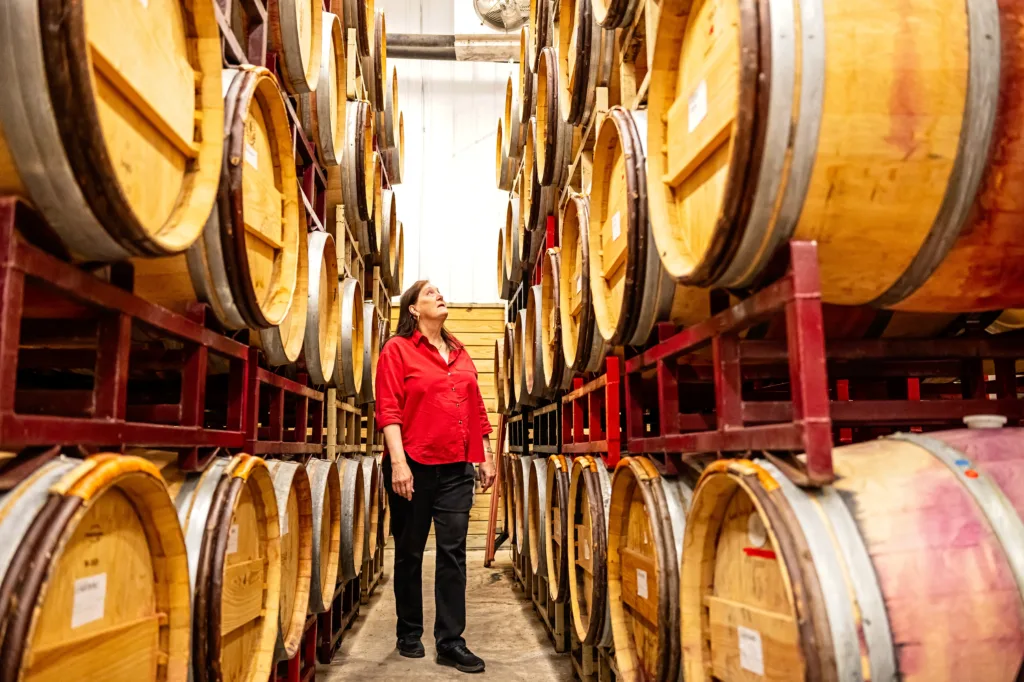
Her 27-year-old winery has become a popular stop for Virginia wine tourists exploring the area around the Blue Ridge, offering a stylish, modern tasting room serving some seriously artisanal pizza in addition to other light fare, including cheeses made from Chrysalis’ own on-site dairy farm and cheese-making facility.
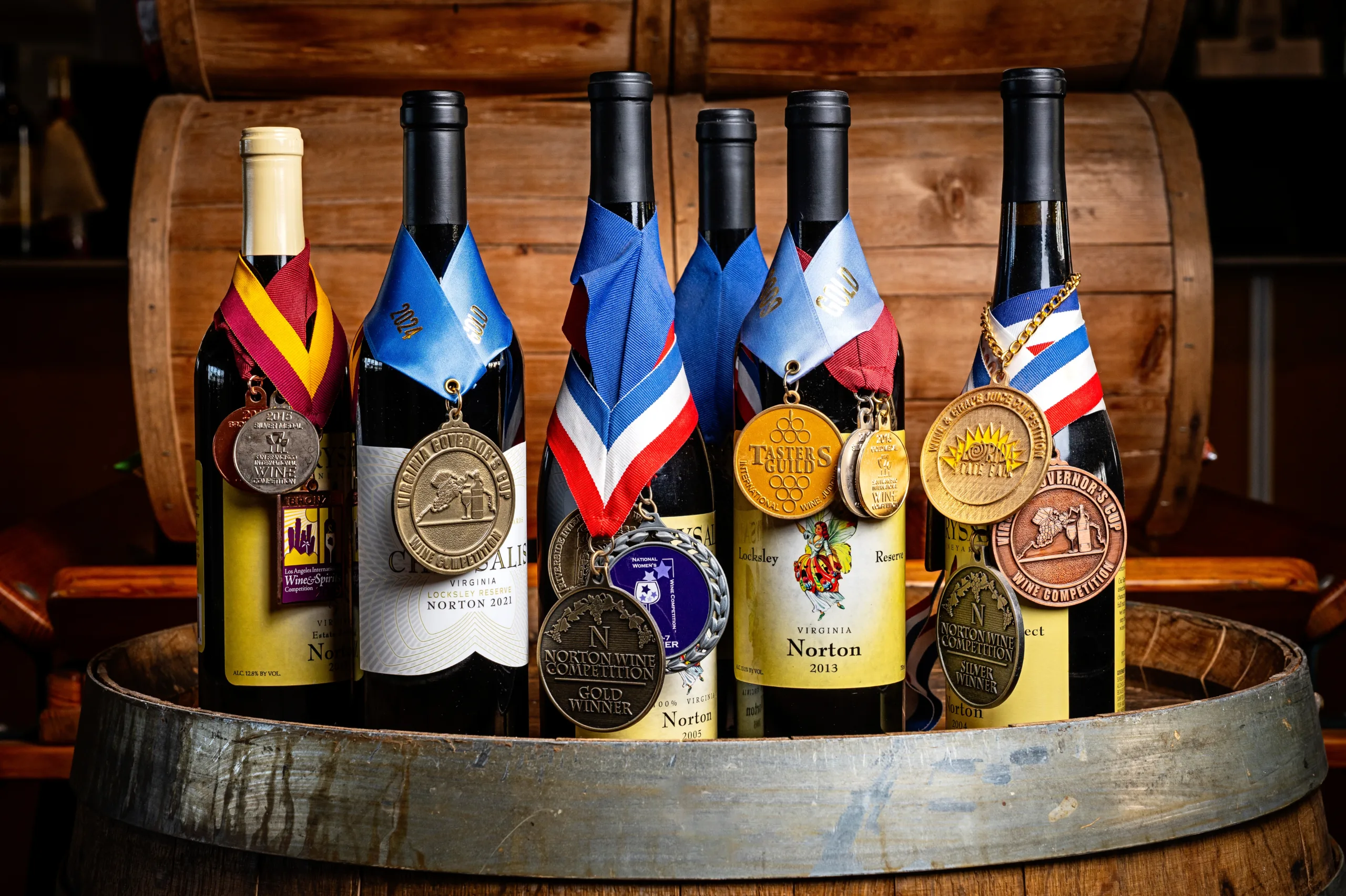
For tasting, there is a range of Nortons, including a rosé, a “nouveau” style similar to France’s Beaujolais Nouveau, at least two straight-on Norton varietals, and a sweet after-dinner libation done in the style of a Port. Chrysalis also makes signature Albariños and Viogniers in addition to a few obscurities that McCloud and winemaker Jake Blodinger are always squeezing out of the winery.
The Elusive Jewel
If the Norton grape is known at all, it’s as America’s native wine grape, created (or discovered; its history is murky) in the Richmond neighborhood of Shockoe Bottom in 1821 (or later—murky, like I said) by Dr. Daniel Norborne Norton (not disputed). He was a medical doctor and an amateur viticulturist, and he either coaxed a native seed to fruition or fashioned a hybrid. In any event, in the early decades of the 19th century it was discovered that the grape, properly handled, could create a pleasantly dry, inky-dark, fruit-forward wine.
This was a breakthrough in American winemaking. That great Virginia planter Thomas Jefferson had famously imported vines and winemakers from France and learned the hard way that the Commonwealth’s climate was not agreeable with European varieties. Native grapes that did thrive in Virginia back then, like Concord and Catawba, produced wines often dismissed as “foxy,” meaning they smelled of musk, animal fur, or even, well, pee.
So the fox-free, dry-but-fruity Norton took America’s nascent wine industry by storm, and soon came to dominate wine production in Virginia and, later, Missouri, which was the wine capital of the U.S. before there was a Napa, thanks largely to its production of Norton wines. In 1873, a Norton from Stone Hill Winery in Hermann, Missouri, was declared “The Best Red Wine of All Nations” at the Vienna Universal Exhibition.
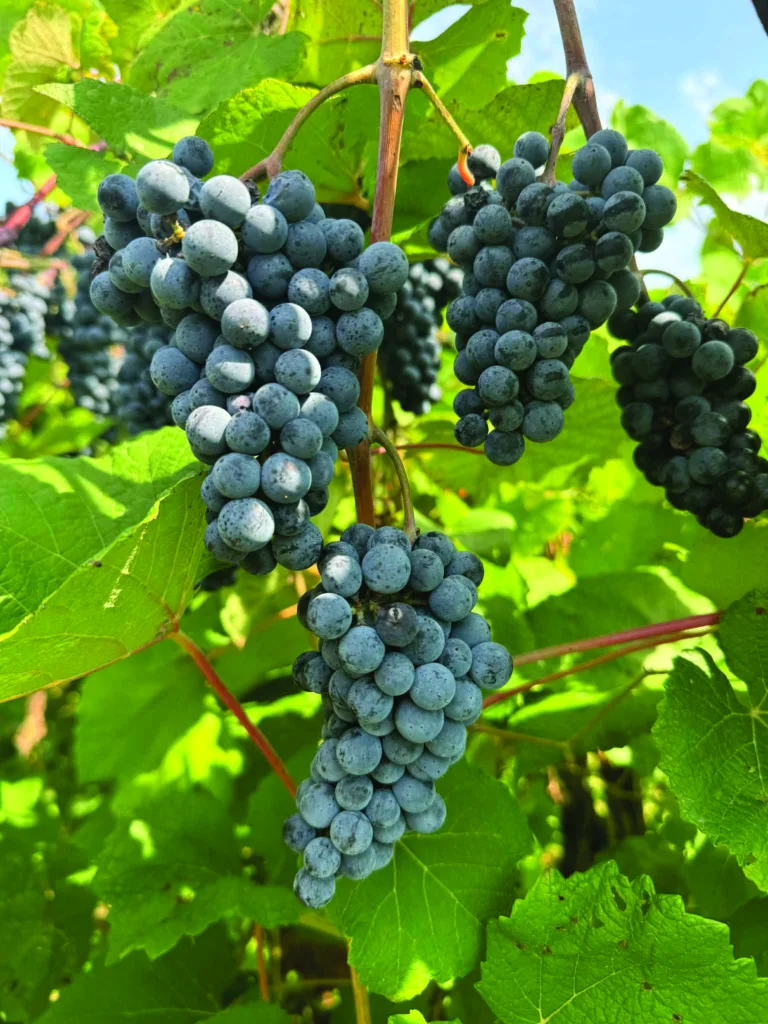
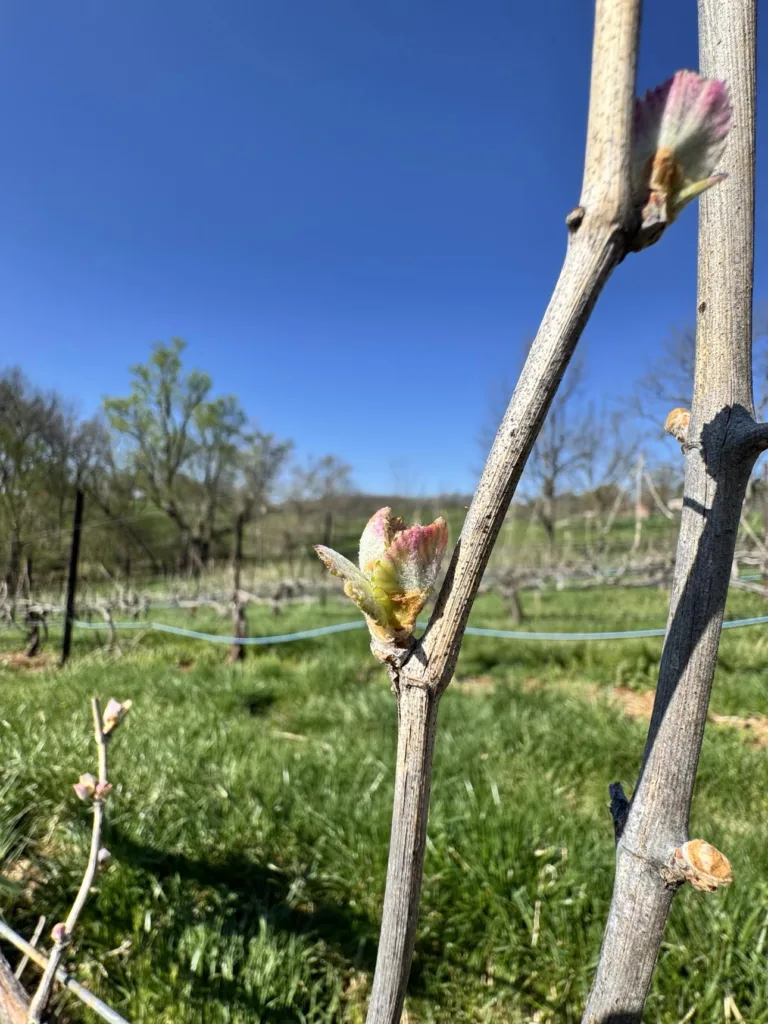
But eventually, California, with a climate that could support European varietals like Cabernet Sauvignon and Merlot, grew to dominate American wine production. Prohibition came along, wiping out the American wine industry coast to coast. Eventually, the only Norton vines left grew on the grounds of a Catholic Church in Hermann, which produced wine under a religious exception allowing sacramental use.
“Our Norton comes from cuttings of those vines,” McCloud says, as she rumbles across the winery’s land, cursing away a raccoon that darts back into the vines.
As a Virginia native, the Norton grape is perfectly suited to the Commonwealth’s climate, thriving through its gummy summers, brittle winters, and idiosyncratic cast of pests, rots, and fungi. “It’s actually hard to kill,” McCloud says cheerfully. But it’s also difficult to tame into wine—it’s naturally high in acids and low in tannins, calling for careful, sometimes creative vinification that many winemakers lack skill or interest in.
The Metamorphosis
Not so McCloud, a serial entrepreneur who in the ’90s built a highly successful business that made diagnostic software for PCs. When she cashed out in 1995, she immediately applied her company-builder’s drive and analytical mind to her personal passion for wine. (She’d been collecting Bordeaux.) Two weeks to the day after selling her company, she attended a meeting of the American Society for Enology and Viticulture and plunked herself down next to Dennis Horton, a native of Hermann, Missouri, who made wine from Norton grapes in Virginia.
She tasted Norton in the afternoon presentation of reds and was immediately taken by it.
“I thought, What is this? It’s dark, it’s fruity, it’s got great extraction .… it’s so good. But different. Then I found out it was Virginia’s native grape—America’s native grape.”

She went all in. She bought the first 209 acres of her Middleburg spread in ’97, hired the seasoned Virginia winemaking consultant Alan Kinne as her winemaker, and planted her first Norton grapes in ’98.
It’s a marvel to witness McCloud geeking out about her decades-long campaign to make a world-class wine from Norton grapes. The central problem: The juice’s sharp malic acids create “a thin mid-palate,” she explains. It’s easy to get lost as she talks rapid-fire about the combinations of (among other things) malolactic fermentation, carbonic maceration, and yeast selection she’s applied to the problem over the years. Isoelectric points and hydrogen ions are involved, a refractometer consulted. Other tricks happen in the vineyard, as the grapes are processed, and as they age in Virginia oak.
During a tasting of the winery’s Locksley Reserve, Chrysalis’ flagship Norton bottling, the wine shows beautifully: It’s dry, it tastes of dark fruit and some other background intrigues, and it’s milky, almost silky, in the mouth. It’s so dark in the glass that it seems to absorb light.
McCloud has a trademark on the phrase “The Real American Grape!” to describe Norton, exclamation point and all. She may be the most enthusiastic maker of Norton wine in Virginia, but she’s by no means the only one.
The Norton Network
In fact, due partly to her relentless advocacy, commercial propagation of Norton plants, and support for fellow winemakers willing to work with the rascal grape, there is now the Norton Network, a collective of 22 Virginia wineries and vineyards that produce Norton. In 2024, the first Virginia Norton Wine Tour was held, a month-long autumn series of events in which participating wineries hosted tastings and educational events. The annual Virginia Wine Experience at the Omni Homestead Resort in Hot Springs features a Norton Cup Challenge. (Chrysalis was a finalist in 2024, but the co-champions were Rappahannock Cellars and Arterra Wines.)
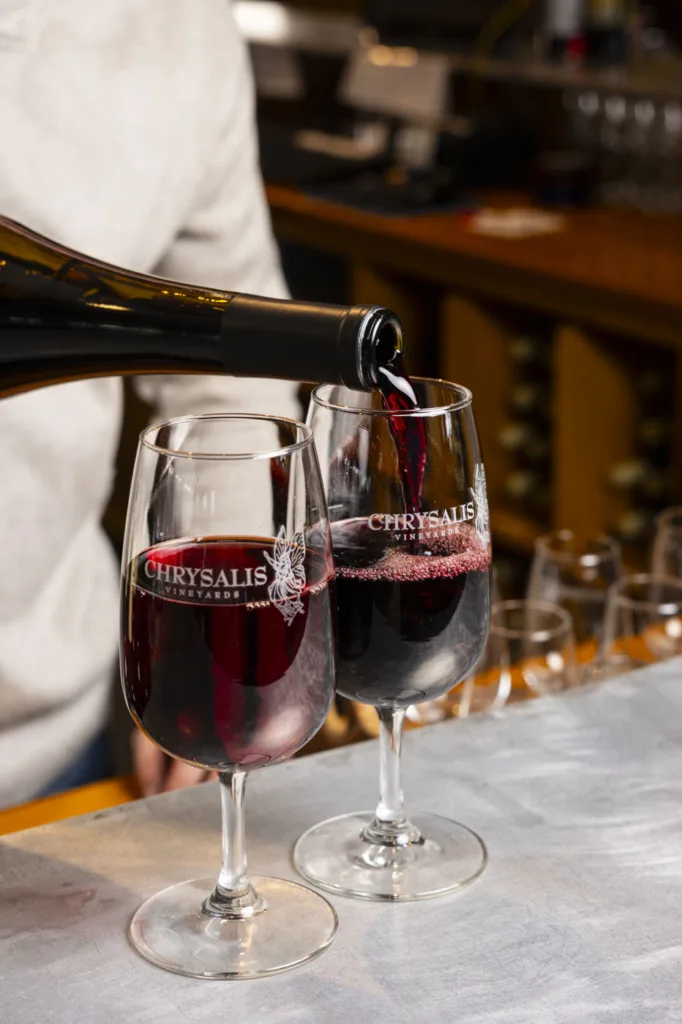
McCloud sometimes refers to a quote by wine critic Michael Franz, who said Virginia wines have a “somewhereness,” meaning they taste of the place they are made.
Riding around the world’s largest planting of Norton vines with McCloud in her Jeep Cherokee, listening to her swear and extoll and explicate, you get the sense that the somewhereness of this obscure, cranky Virginia native grape, which if properly treated can be conjured into such a lovely wine, is right there in Middleburg, on a 412-acre farm about a mile from the Bull Run Mountains.
Photos courtesy of Chrysalis Vineyards. This article originally appeared in the April 2026 issue.