

Talking about love can feel cliché, yet it remains one of humanity’s most enduring fascinations. Countless songs, films, books, and poems have tried to unlock its mystery, each offering its own definition and expectation of what “true love” really means.
In the 1970 film Love Story, Ryan O’Neal’s character famously said, “Love means never having to say you’re sorry.” The Beatles proclaimed, “Love is all you need.” And poet Elizabeth Barrett Browning, in her Sonnet 43, asks, “How do I love thee? Let me count the ways.”
Profound, for sure. But sometimes one of life’s most complex emotions can be one of the simplest. Consider how 5-year-old Elaine defined love in a post that’s gone viral: “Love is when Mommy gives Daddy the best piece of chicken.” Bravo, Elaine.
And research shows that people are hungry for love. Worldwide, there are over 1,500 dating apps and websites attempting to connect soul mates. According to 2025 data from online dating platform Match’s Singles in America survey of 5,000 singles, conducted in partnership with researchers from The Kinsey Institute, 73 percent of respondents say they believe romantic love can last forever. Clearly, there are a lot of romantics out there: 51 percent of those surveyed think there is one perfect match for them. And since Virginia’s motto reminds us that “Virginia is for lovers,” a deeper look at the mysteries of love feels right at home here.
The Pros Weigh In
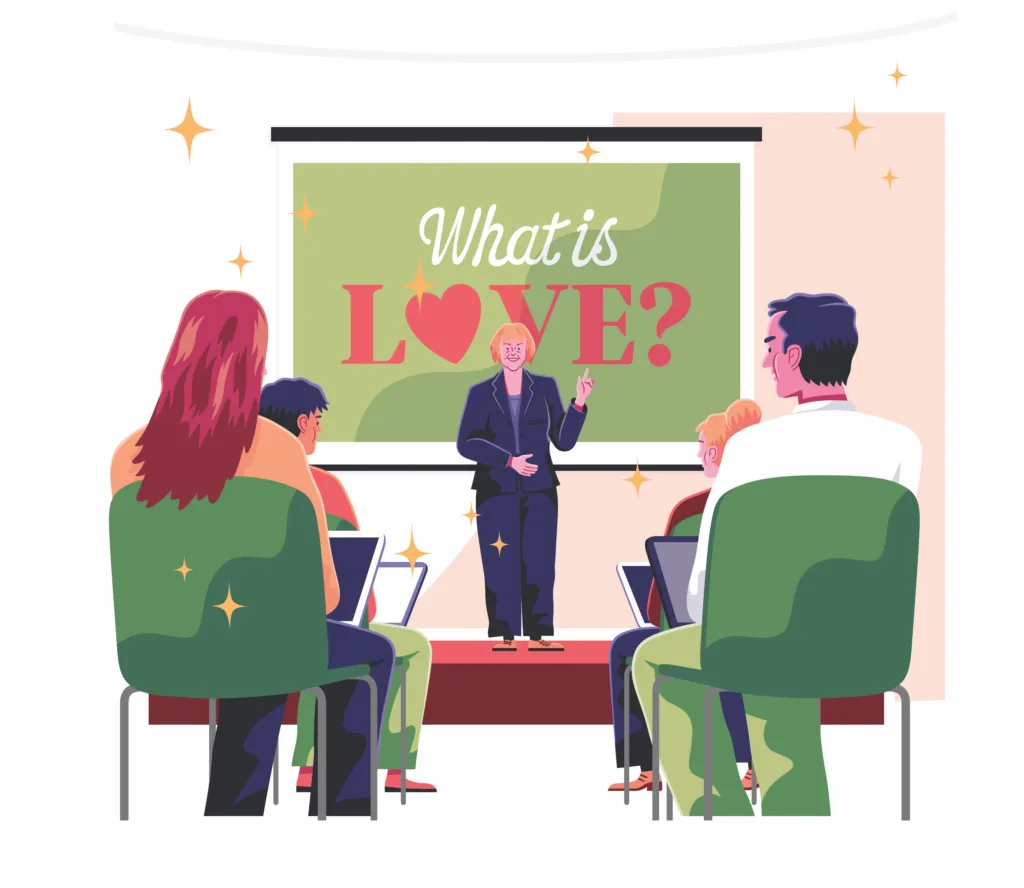
Dr. Kristina Feeser, who teaches Psychology of Love at the University of Virginia at Wise, says her class fills up fast. She suspects many students—especially young women—enroll hoping to uncover the Holy Grail of love knowledge.
“I think they think they’re going to learn about romance,” says Feeser, who has been teaching for 40 years. “They want some special insight into love that will make their lives better.”
But Feeser, now in her fifth marriage, reminds students that love is far more complicated than that. One of the first assignments? Google “love.” Students quickly discover more than a million results and are asked to sample definitions. Feeser offers a simple one of her own in class:
“Love is when you care about the other person more than you care about yourself,” she says.
It’s a noble ideal, and a solid guide for Feeser’s psychologists-in-training. But the beauty of love is that everyone gets to define it for themselves.
Let’s Get Physical
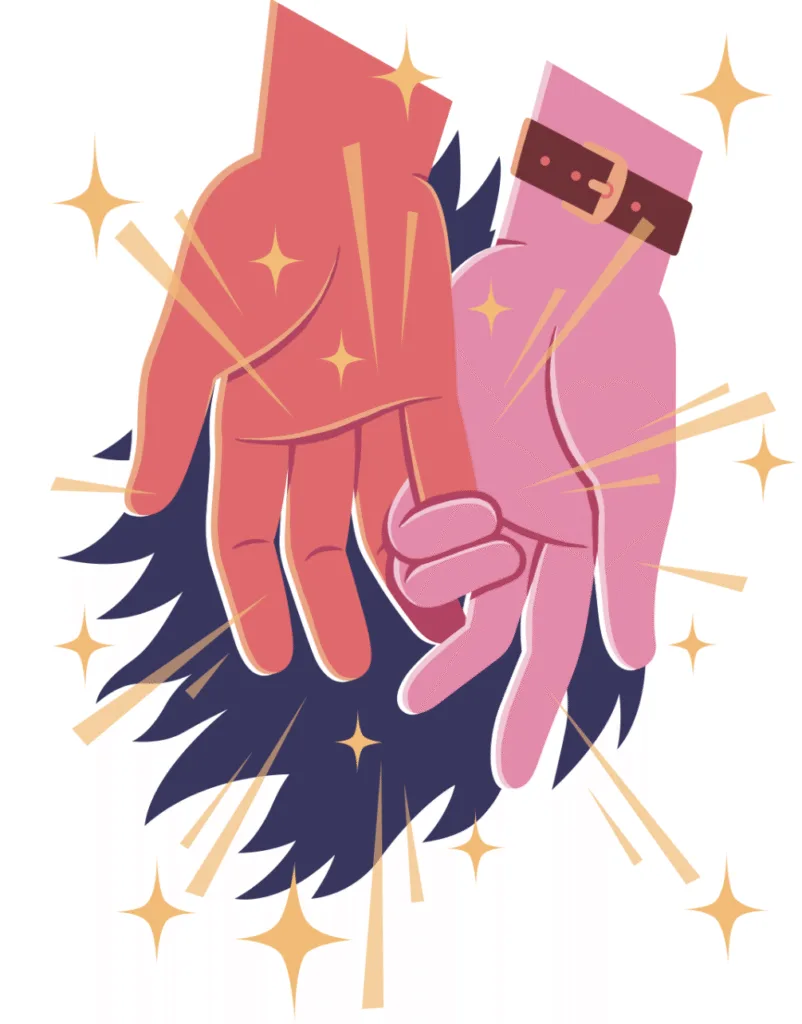
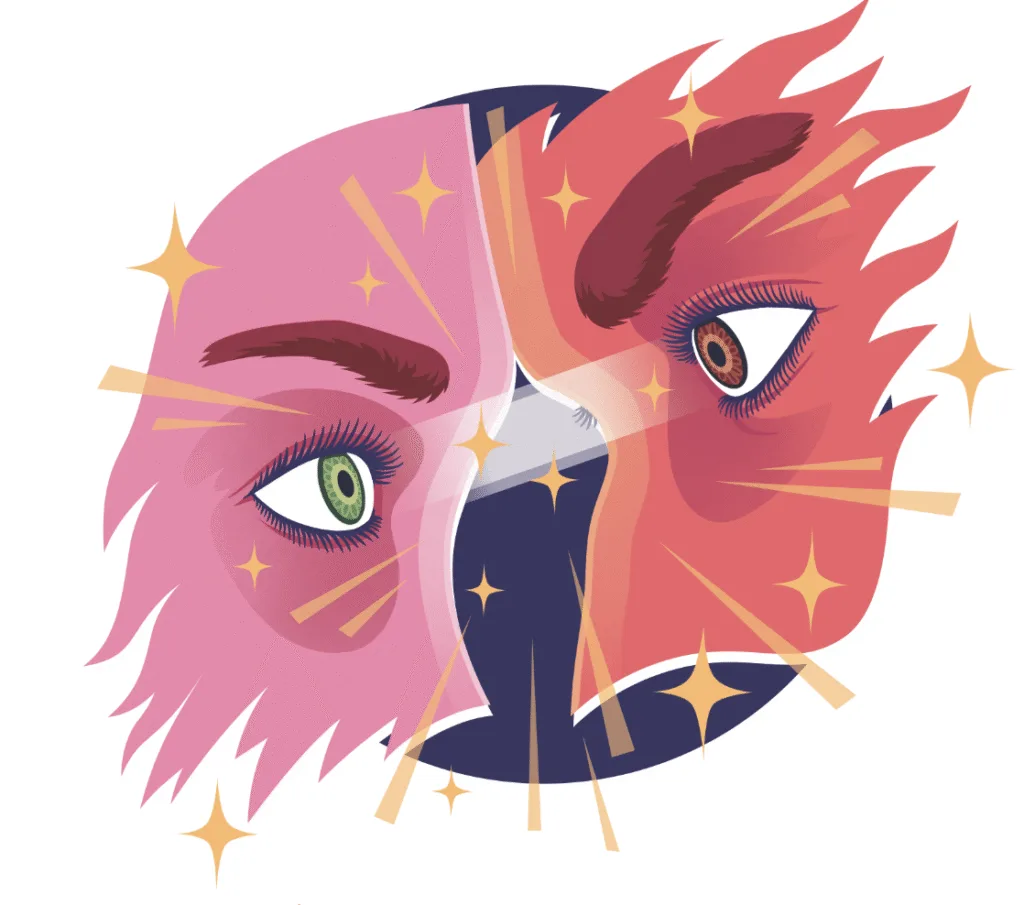
But love isn’t just emotional—it’s physical. When we experience feelings of love, our bodies respond in complex, interconnected ways that are a feast for the senses, according to the Science Museum of Virginia in Richmond. It’s easy to understand how the sense of sight plays an early role—pupils dilate when we’re attracted to someone, signaling interest and enhancing our ability to see details. Gazing into one another’s eyes (and maybe a few flutters of eyelashes) can heighten emotional intensity and even increase mutual attraction. Touch is equally powerful. Studies show that physical contact like holding hands, hugging, or even a light touch on the arm can lower stress levels, decrease heart rates, and strengthen feelings of connection.
Pucker up—one tasty fact about kissing is that it allows partners to exchange information about immune compatibility through the up to 80 million bacteria swapped between a couple in 10 seconds. The sense of smell can also help unconsciously identify potential mates whose genetic traits may complement our own, even through getting a whiff during a handshake or a hug. And sound plays a vital role in love through tone, rhythm, and music. The enchanting sound of a partner’s voice and the lyrics in a romantic song (“our song”) can trigger the brain’s reward system, making us feel closer and more emotionally attuned.
Speaking of the brain, when attraction strikes, it floods with dopamine, the same bliss chemical triggered by chocolate, winning streaks, and addictive substances. That’s what creates that euphoric, slightly obsessive feeling where you can’t stop thinking about your person.
Meanwhile, norepinephrine kicks the rest of the nervous system into high gear. Sweaty palms before a date? Racing pulse when their name pops up on your phone? That’s norepinephrine amplifying every sensation and burning their face into your memory with startling clarity.
Here’s the plot twist: while these chemicals surge, serotonin—your mood stabilizer—actually drops to levels similar to those with OCD. This explains why new love feels slightly unhinged—that tendency to replay conversations endlessly and overanalyze every text.
As relationships deepen, oxytocin and vasopressin take center stage, building attachment and long-term bonding. The initial fireworks mellow into something steadier but equally powerful.
So while the heart gets all the poetic credit—every love song, every Valentine, every “follow your heart” mantra—it’s actually the three pounds of grey matter between your ears running the show. Your heart is just along for the ride, pounding out the rhythm your brain composed.
Though intense lovey-dovey feelings may be touted as “just chemistry,” that chemistry is actually orchestrating one of nature’s most sophisticated experiences. Your brain is literally rewiring itself for connection.
In the Trenches
Science can teach us some things, but real-world scenarios provide tried-and-true results on how to keep love once you’ve found it. Virginia Beach residents Tim and Jane Toth have been married for 48 years and offer a nuanced perspective on love.
“You really want the outcome to be what’s best for the other person,” Jane says. “A huge part of love to me is mutual respect—just trying not to manage other people’s expectations, and letting them be who they are.”
Thirty-seven-year-old Alexandria resident Madeline Lareau, married last October, has a fresh take. She was the first to tell her now-husband Tom she loved him.
“I felt like I could wholly be myself around him, the good parts and the bad,” Lareau says. “To me, love is having a partner who fully understands you, accepts you for who you are, and celebrates every single piece of you, even the bad.”
Chantilly resident Dr. Rohini Ganjoo married her husband, Amit, in their native India in 2002. Their union began as an arranged marriage—her family placed a listing in a local newspaper to find a match for the 24-year-old. Amit, who had emigrated to the U.S., met her in India while he was visiting his parents. He visited three days in a row for a total of about three chaperoned hours. It wasn’t love at first sight for either of them, and they initially decided to pass on a future together.
A few weeks later, he called her and said he had a change of heart; would she consider marrying him? “Yes,” she said. Rohini and Amit wed a few months later; Now, the George Washington University professor and the founder of ANRA Technologies, respectively, are happily married, raising two teenage daughters. Ganjoo says profound love developed about two months into their marriage, and says love continues to show up, even when things get hard.
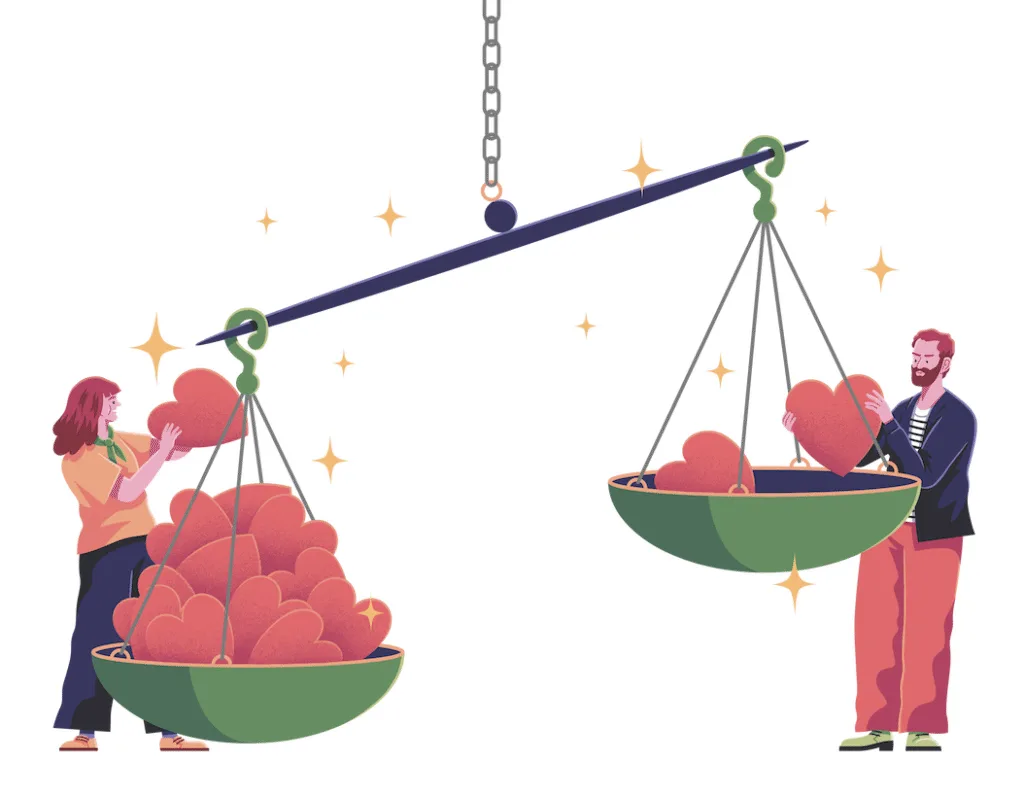
“Balance is really key—it’s not always 50-50,” she says. “It’s more about the times when you’re not in sync—there are times when I’m putting in 100 percent and Amit is at zero, and that’s okay, because I know there are other times when he’s putting in 100 percent and I’m not able to do so.”
Penpals in Love
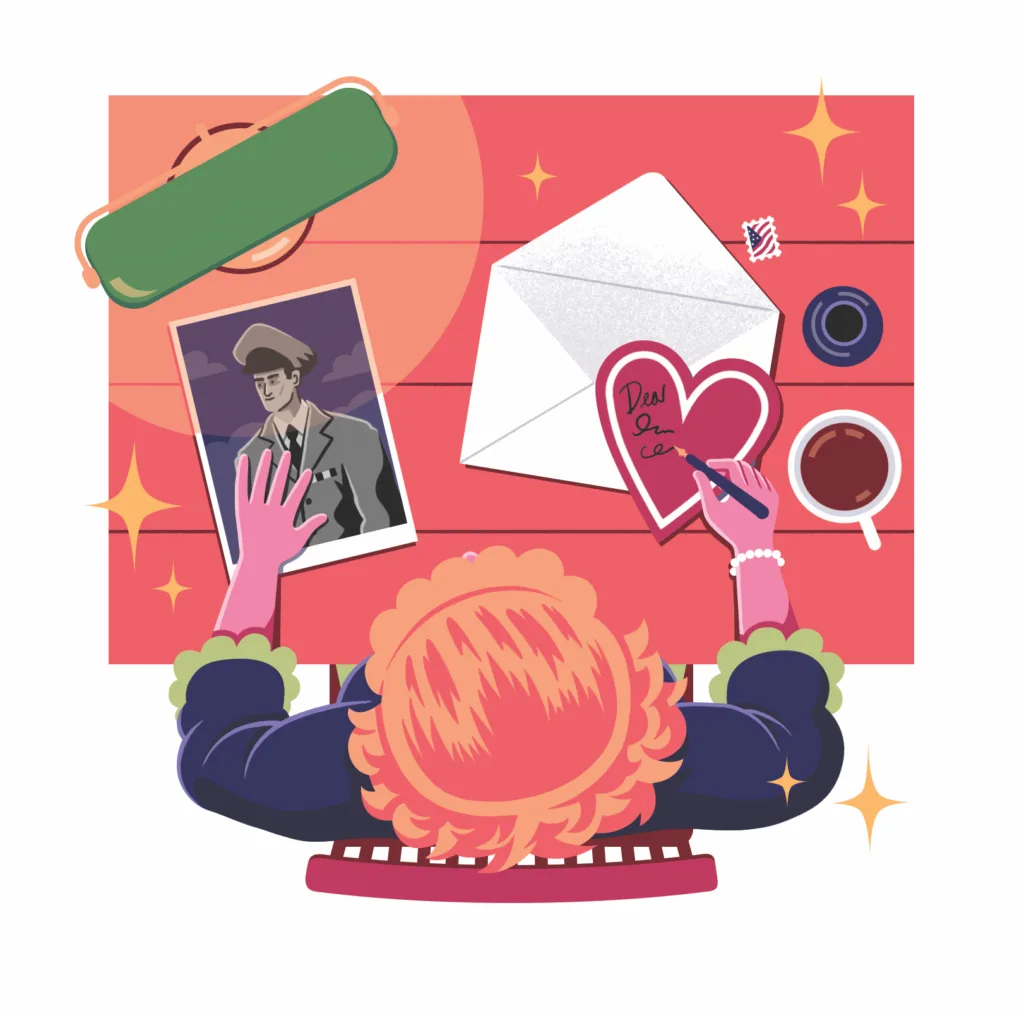
Of course, love stories can start in all sorts of ways—sometimes they begin with pen and paper. Yorktown residents Thelma and Joe Mancari’s true love story began in January 1951 in Dorothy, West Virginia. As 22-year-old Thelma was leaving her church service, she passed the church’s bulletin board. It proudly displayed the names of local sons and daughters serving their country. One name stood out: Joe Mancari, an airman stationed at Keesler Air Force Base in Biloxi, Mississippi.
With Valentine’s Day just around the corner, she sent him a small card—which changed everything. When Joe received Thelma’s valentine, he wrote back immediately with a thank-you note. Well-mannered, Thelma sent a thank-you note for the thank-you note, to which Joe responded again. And so began a correspondence that danced across state lines, filled with kindness and growing affection. By the time Joe came home on leave seven months later, neither of them had any doubt.
“I think we both just knew,” Thelma says now. “We were just meant to find each other.”
Joe proposed shortly after arriving home. Eight days later, on Aug. 24, 1951, Joe and Thelma stood at the altar and said “I do.”
“We didn’t have much, but we had love. And that was more than enough,” says the great-grandmother about her 74-year marriage. “You don’t need a perfect start, you just need a willing heart.” (And maybe, a good pen and some postage stamps.)
Love’s Nuts and Bolts
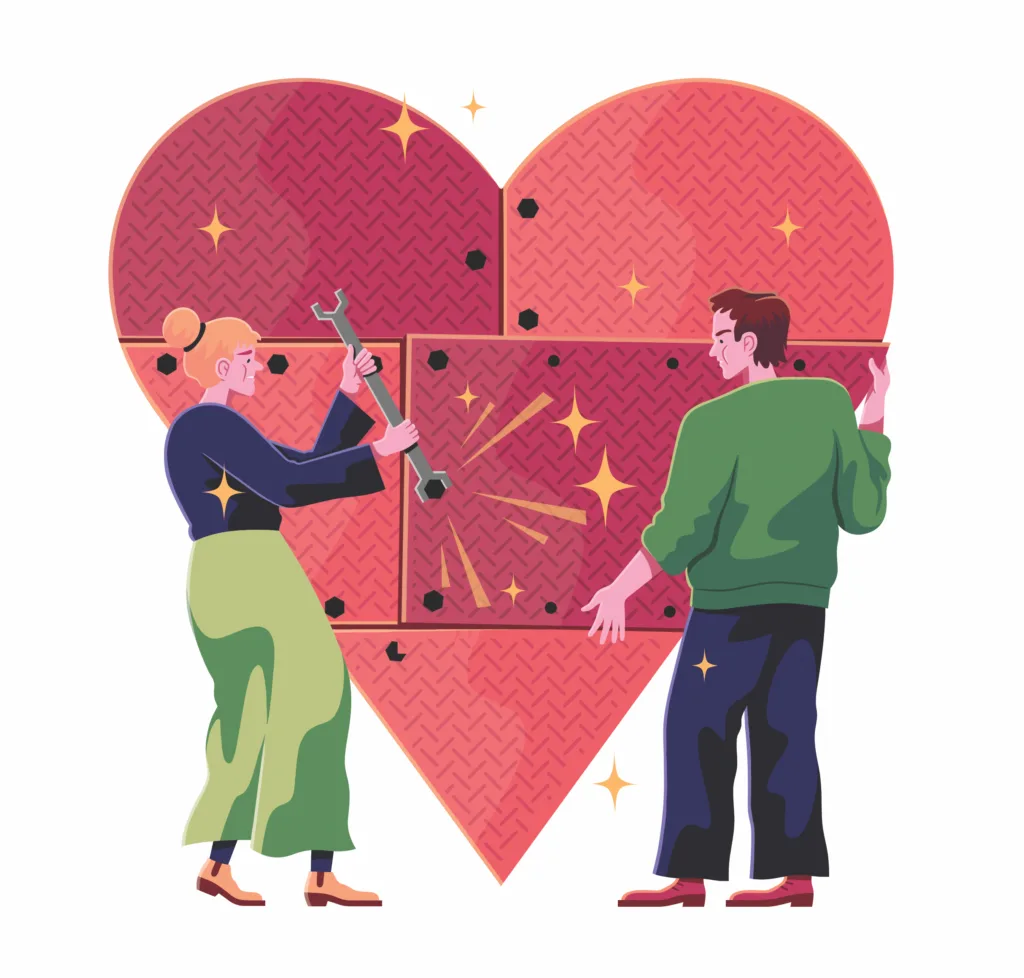
But not all perspectives on love are rosy. Some prefer a more practical lens. It’s not glamorous or romantic to dissect love, but Feeser does exactly that in her Psychology of Love course.
“Any two people who want to be married or be together can be,” Feeser says. “If they’re willing to overcome differences and make compromises—whatever it takes over the long haul—it’ll work, no matter how different they are.”
Feeser acknowledges that true love exists, but she’s also pragmatic. One idea she proposes: contractual marriage.
“I personally think we should have contractual marriage—maybe a five-year agreement that can be renewed,” she says. “If it doesn’t work, no harm, no foul.”
The Wedding Expert Elopes
Feeser notes that many of her students assume bigger engagement rings mean stronger marriages.
“You know that’s not true,” Feeser says. “And you ask any little girl when she started thinking about her wedding? The average age is 10.”
But reality often paints a different picture. Melissa Hauser, 33, an event designer and sales lead at Main Event Caterers in Arlington, has seen firsthand how stressful weddings can be.
“I just have seen how stressed people get and how much money they would spend,” Hauser says.
She and her husband met at an Alexandria sushi restaurant in 2019, dated for nearly five years, and tied the knot in October 2024.
“I wanted to celebrate just being with the man I want to be with forever. I’ve seen brides crying on their wedding day—that just doesn’t look fun
to me.”
So instead of the grand production she often helps plan for others, Hauser and her husband slipped away to Colorado to elope. For her, it was a celebration of simplicity, joy, and love—without the tears or the price tag.
“That decision was very, very easy,” she says. “I have absolutely no regrets.”
She Loves Me, She Loves Me Not
And so it goes—love wears many faces. Maybe it’s a soft touch, a soothing word, or an alluring perfume to draw one in. For some, it’s the lingering gaze of star-crossed lovers, for others, it’s compromise and showing up when it’s hardest. Sometimes it begins with a valentine sent to a stranger, sometimes with a second chance after saying no the first time, and sometimes with a quiet “I love you” whispered before the other is ready to say it back.
There’s no single formula, no perfect definition. And maybe that’s the point—love means different things to different people. But it’s something most aspire to find. As Dr. Seuss tells us, “You know you’re in love when you can’t fall asleep because reality is finally better than your dreams.” Still, people dream on, hoping that someone special will come dashing in, bringing true love, light, and laughter.
And as Elaine, age 5, reminds us: sometimes love really is simply giving away the best piece of chicken.
May we all love so deeply that we don’t think twice about giving away the drumstick.
This article originally appeared in the February 2026 issue.