
It’s hard to imagine Richmond as prime real estate for a hunting lodge, but, in the 1880s, when the sprawling Tudor that graces the west end of Cary Street Road was constructed, that’s exactly what it was. The six-bedroom lodge was built among lush gardens originally designed by landscape architect Charles Gillette.
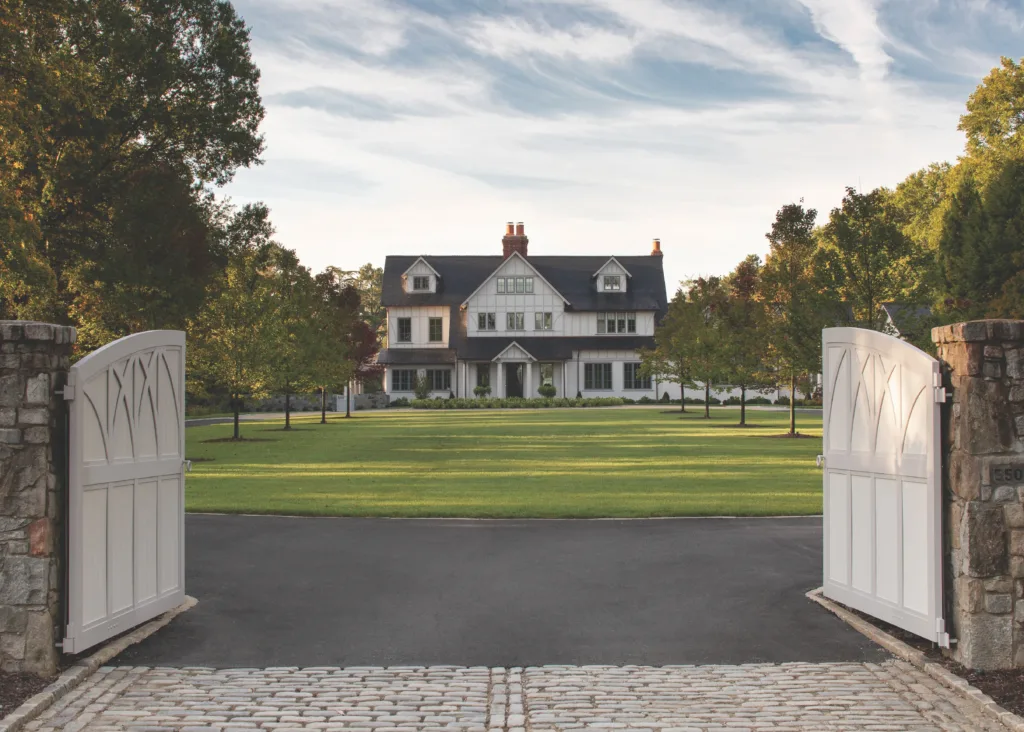
Many Richmonders know it as Windemere or the VanderHoof estate, after the physician who turned it from hunting lodge to home. It passed through the hands of multiple prominent Virginia families and also served as a temporary governor’s mansion. In darker chapters, it was sold at auction. But through the decades, the home has become a landmark for Richmonders as they travel the Cary Street corridor. Its size makes it impossible to miss, and its generous setback gives it a stately presence.
Now it’s landed in the hands of its most recent stewards—a philanthropy-minded couple with three grown children and a dog.
Together since college, the couple’s love for each other and their city is clear. As they navigated how to make this house a retreat for their family, they aligned on a desire to preserve the integrity of this imposing structure. But where they began to diverge was their vision of the actual design. The husband is drawn toward historical architecture, particularly Tudor style, hence the excitement over his new home. The wife, on the other hand, is partial to spaces that are modern, light, and airy.
To marry the two—and create a Tudor home with a modern aesthetic—the couple brought in architect Dan Ensminger, builder Dunkum, Inc., landscape designer Marcia Fryer, and interior designer Anne Hulcher Tollett and her firm Hanover Avenue. The multi-year project was an exercise in achieving levity within the inherent warmth and structure of classic architecture.
The collaborative energy was powerful among architect, builder, and designer. As the designer, Tollett’s goal was not to remove the weight of the Tudor history, but to distill it into a version that felt palatable for both husband and wife. “We wanted to give a beautiful nod to modern design and freshness while honoring the bones of the house,” explains Tollett. “You don’t want to strip a building of its heart and soul, and we wanted to keep the integrity of the Tudor-style architecture.”
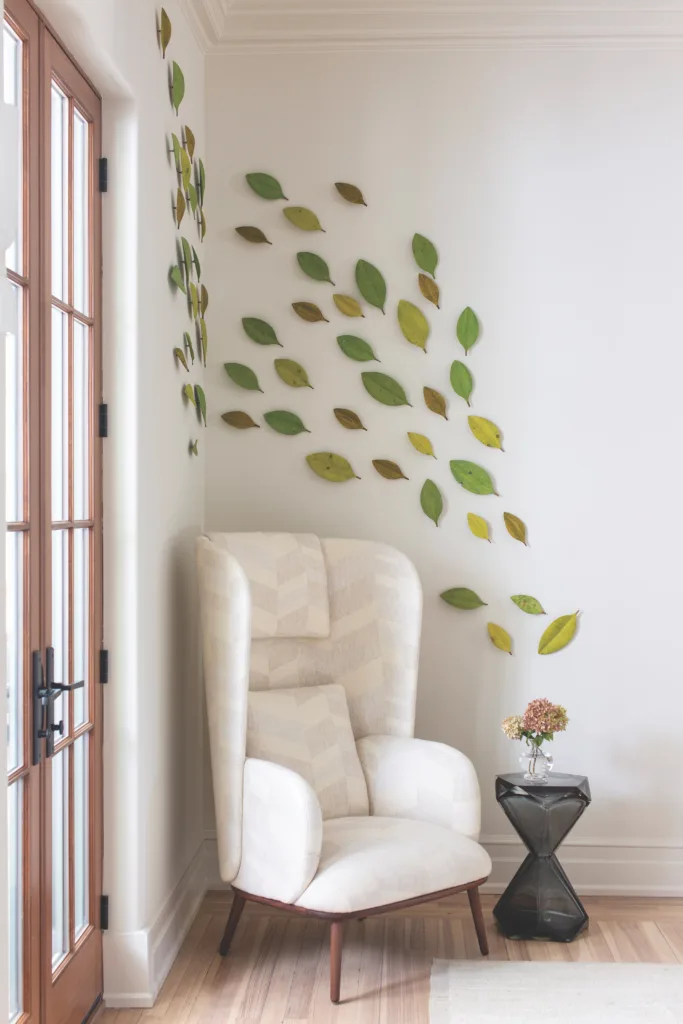
In the living room, a collection of dancing leaves by artist Raul de Lara speaks to the couple’s love of nature.
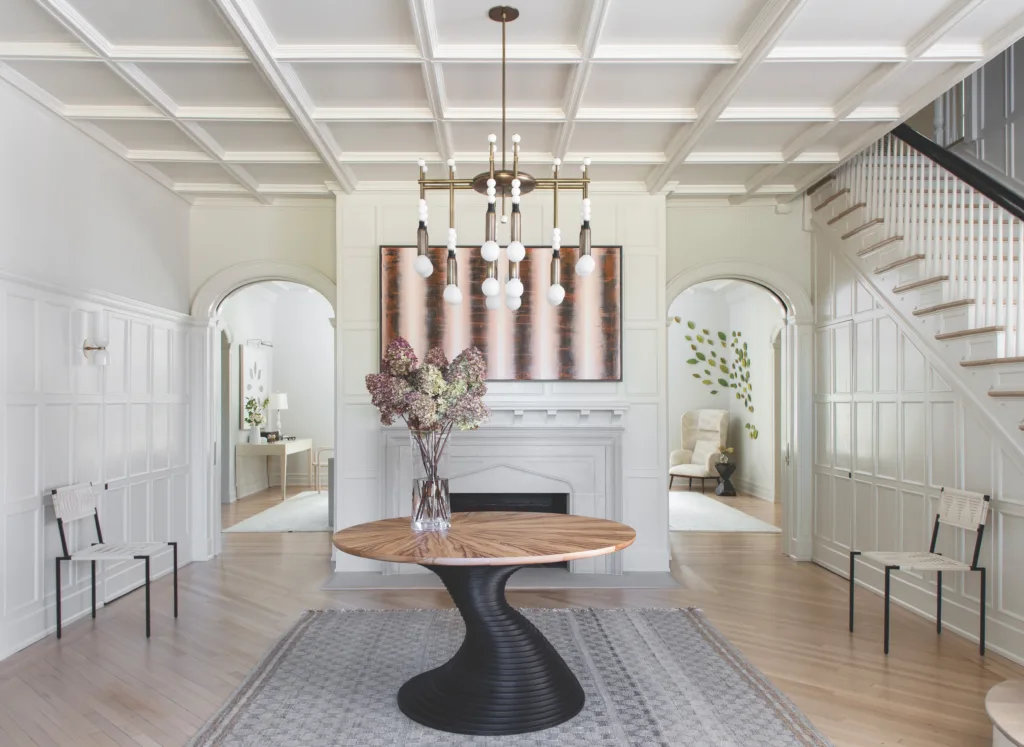
A custom table by Daniel Rickey and Robert Stuart painting above the fireplace function as dramatic anchors in the entryway.
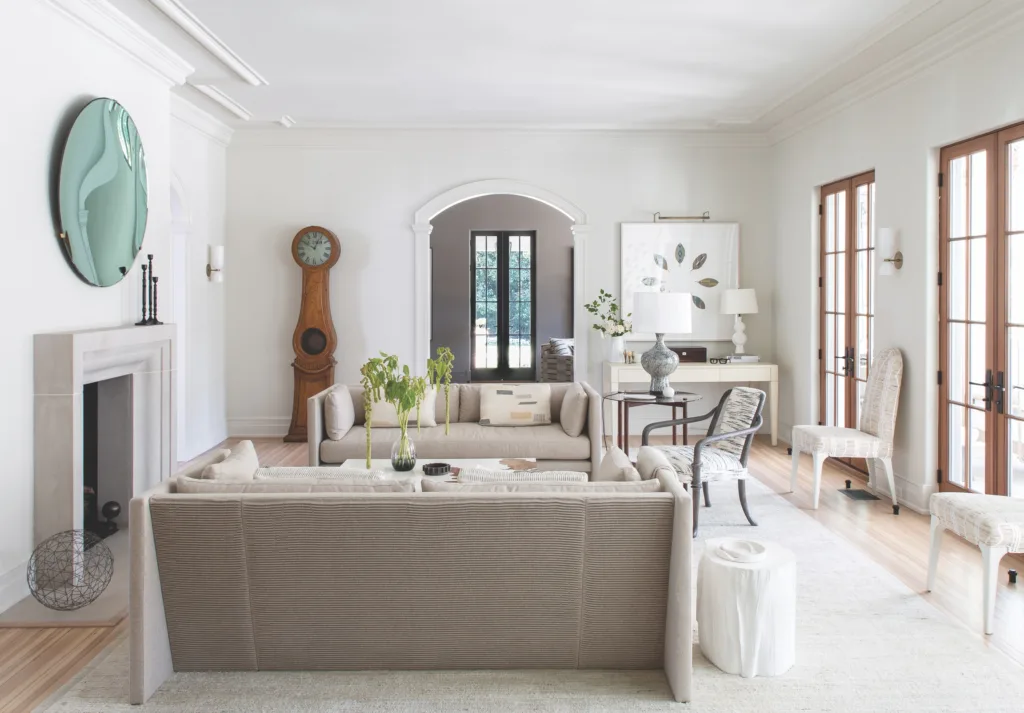
An antique tall clock is juxtaposed in an otherwise modern living room that showcases a monochromatic palette and textures.
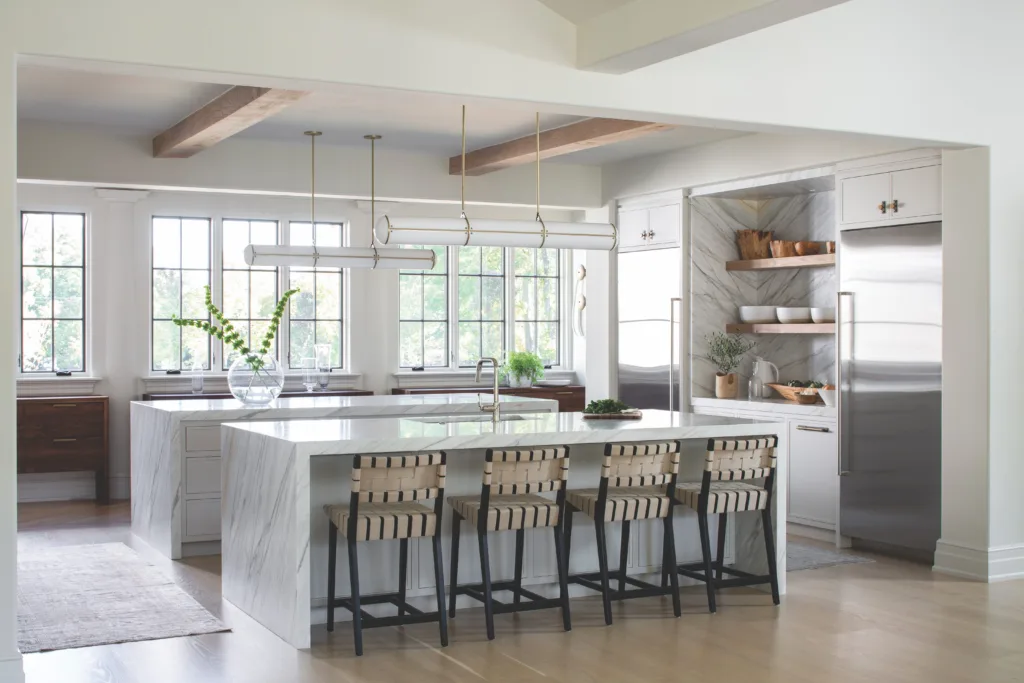
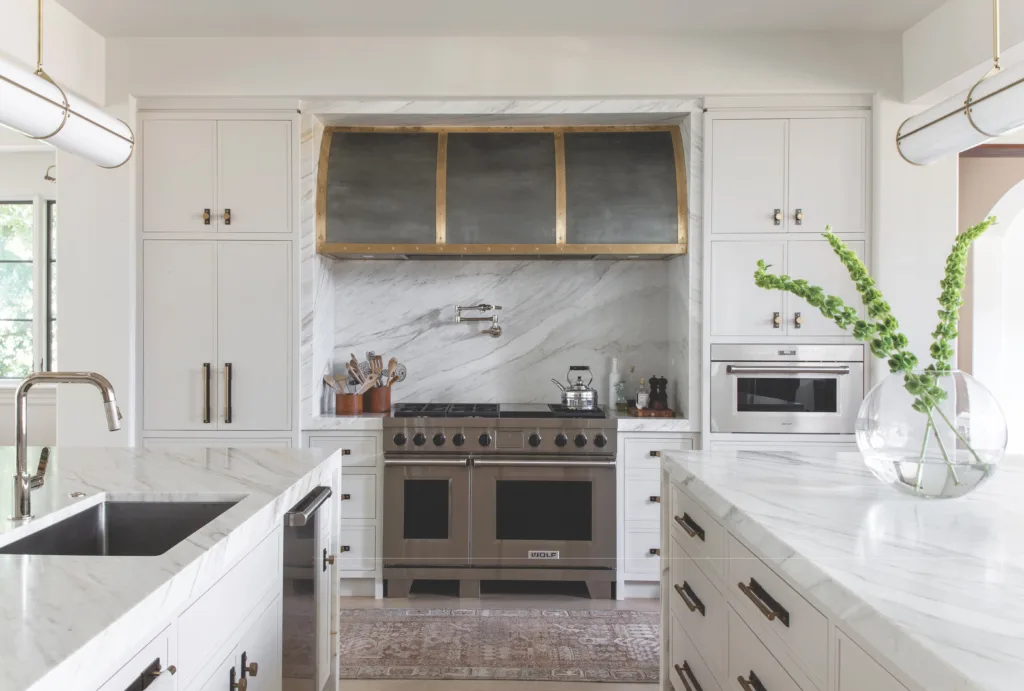
The kitchen’s two islands afford plenty of seating and storage. The light-filled room includes stainless appliances, open shelving, and marble countertops; wooden beams nod to the home’s Tudor roots.
A Proper Tudor Entryway
As Tollett describes, this home had a proper Tudor entryway, and they wanted to preserve the millwork and coffered ceiling, both of which spoke to the husband’s love of a historic aesthetic. But, in the process, they made a bold decision.
“Sometimes it’s hard to paint millwork, but it felt like the right call,” says Tollett. The entire space was cloaked in white, giving it a modern feel while also letting the light draw attention to the details within the intricate woodwork. A Tudor-inspired fireplace was integrated into the grand entry, and a contemporary spin on a medieval chandelier takes center stage.
The anchor of the room is a custom entry table by Richmond furniture maker Daniel Rickey, designed to feel like a sculptural tornado, echoing the sweeping curve of the stairway. Behind it, a piece from Reynolds Gallery by Staunton-based artist Robert Stuart speaks to the energetic movement of the table. Each of these details could exist on its own against the stark white background, but together, they add a modern take on drama.
A New Language for Living
Describing the process of marrying two starkly different styles throughout the project, Tollett explains, “We had to come up with this new language that echoes both of their design sensibilities.”
The contemporary-minded wife had one foundational requirement: The rooms should be all white, as should the furniture. However, old-world elements, which speak to the husband’s style, would be layered in through wood, exposed heart pine beams, art, and textiles. There is one antique throughout the entire home, but bespoke furniture design was used again and again to fit both the scale and unique needs of the couple.
In the living room, there were particular challenges. The room functions both as a primary living space and an effective hallway, with egresses leading to the foyer, billiards room, and stunning outdoor space. Tasked with creating spaces for conversation within the open layout, Tollett first turned to the seating. She flanked the fireplace with two sofas featuring boiled wood backs. “The backs are visible when you enter the room, so we created an arresting effect with the fabric,” she explains. “We wanted them to feel like a beautiful sculpture.”
Accents of wood and color make an impact against the white paint, from the clock inherited from the husband’s family to the resin and wood coffee table to the turquoise mirror and a framed medicine bag that Tollett found while traveling in New Mexico. The natural textures create a dialogue with the dancing leaves by Raul de Lara that move across the wall.
Dining for Two or Twenty
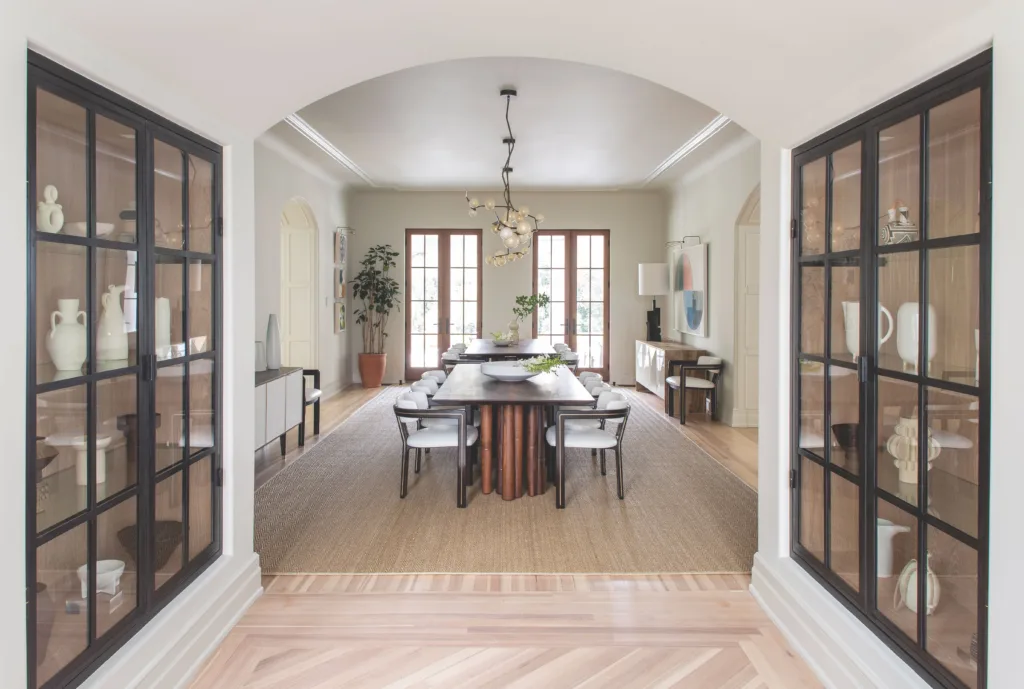
The couple hosts often, inviting family, friends, colleagues, and clients into their home, and the expansive space lends itself to these gatherings. But, on a day-to-day basis, they needed a space that feels comfortable for two. Tollett landed on working with Rickey to create two custom tables rather than one long banquet table, allowing the space to evolve with the occasion.
Similar to the living area, the dining room is open to other spaces, and Tollett took inspiration from a rich forest to draw the walls in. From the base of the table resembling tree trunks to the Lindsey Adelman light fixture that stretches out like branches above the tables and the vibrant colors of the art by Leigh Suggs, the experience of dining here is connected directly to the greenery of the landscape just outside the windows.
Fit to Scale
True to its grand hunting lodge roots, the rooms within the home are large. What works in an average-sized home would be dwarfed by the square footage, yet the couple envisioned a place that would feel cozy despite its size. The kitchen and family room are two areas where Tollett took care to go big to fit the space, but in a way that draws the room in.
Together, she and Ensminger designed a kitchen that included two large islands and appliances and lighting to match the scale. A metal hood gives another nod to the Tudor style, and the architectural lights command the room without overwhelming it. Everything down to the hardware, with its blend of black and brass, was carefully considered.
The kitchen opens up to the family room, where many of the pieces were custom-designed to fill the room. A stone fireplace is another distilled Tudor reference, as are the narrow sconces that riff on an old oil lamp. The Casamidy chairs in the breakfast nook are metal with a leather jacket that pop over the top. With seats covered in a hunter green wax fabric, they feel like a futuristic reference to the home’s hunting history.
Embracing the Dark Side
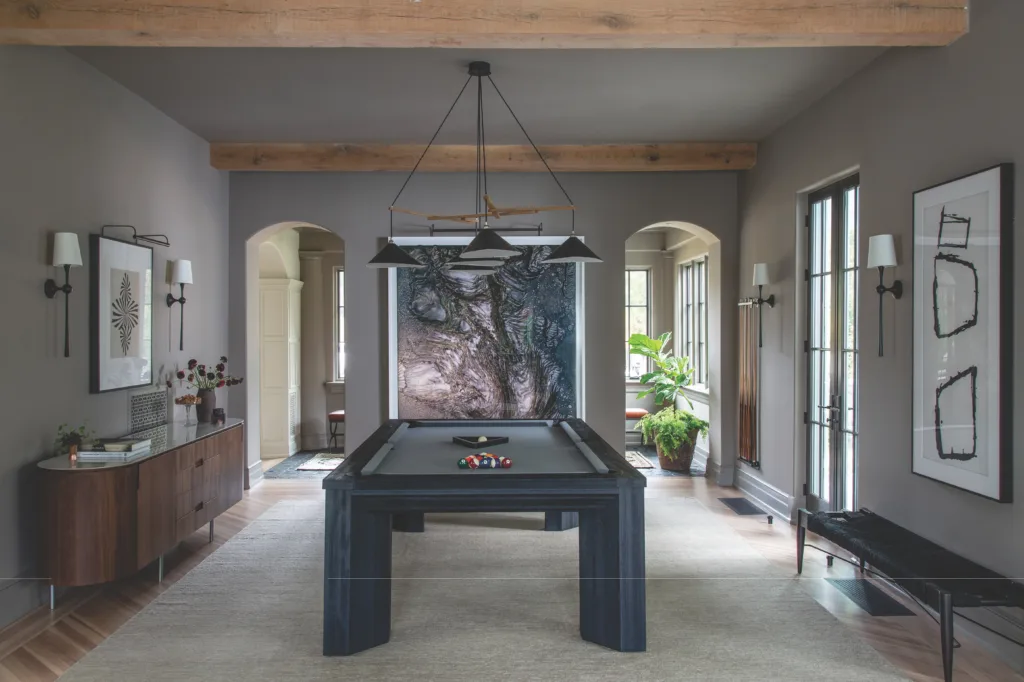
While the main living areas are limited to white walls, the dark, Tudor-forward look that the husband gravitates towards is on full display in the billiards room and pub. Within these spaces, the dark colors evoke a warm, masculine feel that extends from the game area to the bourbon-centric bar that occupies a former bathroom space.
Within these spaces, both designed for entertaining friends and colleagues, there’s modern art and furniture designed for lounging, including a cowhide ottoman that is one of the first pieces the couple bought together. The rooms were built to flow together, going from making drinks while standing at the mahogany bar in the pub to watching a game in the billiards room.
Mascara on the White Palette
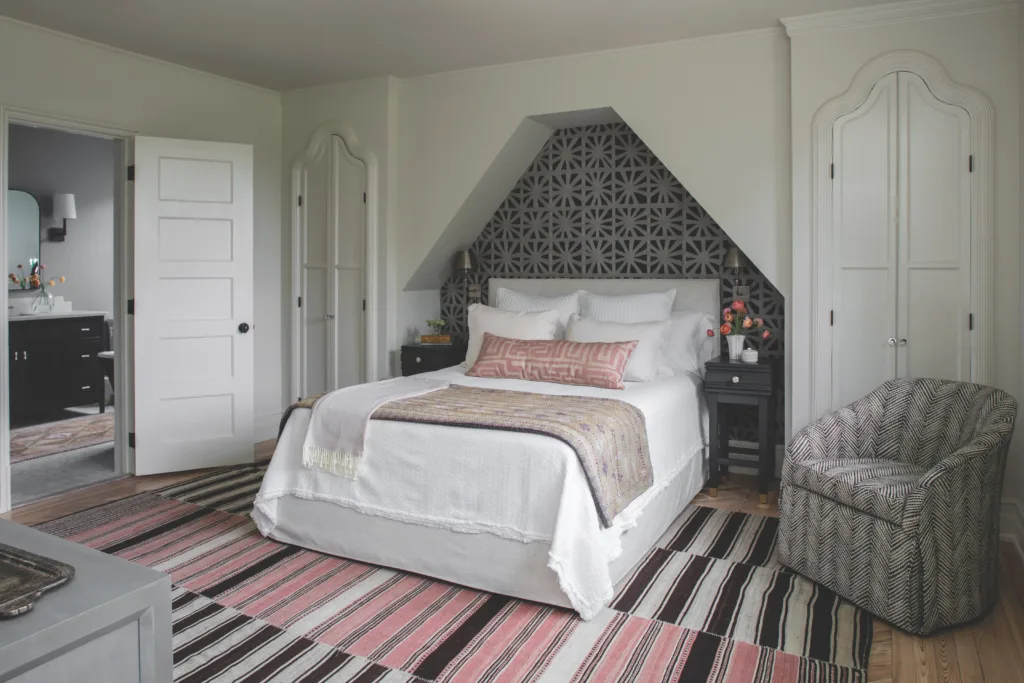
The light and airy look returns upstairs in the primary suite, where the palette is built upon a backdrop of all-white. Yet there are intentional black accents throughout. As Tollett says, “The touches of black are what make the room. It’s the mascara! I was inspired by the concept of chiaroscuro, thinking about the dark and light, Matisse’s line drawings, and direct contrast moments.”
The room is anchored by those black accents, from the bed to the marble fireplace, but the overall look remains bright.
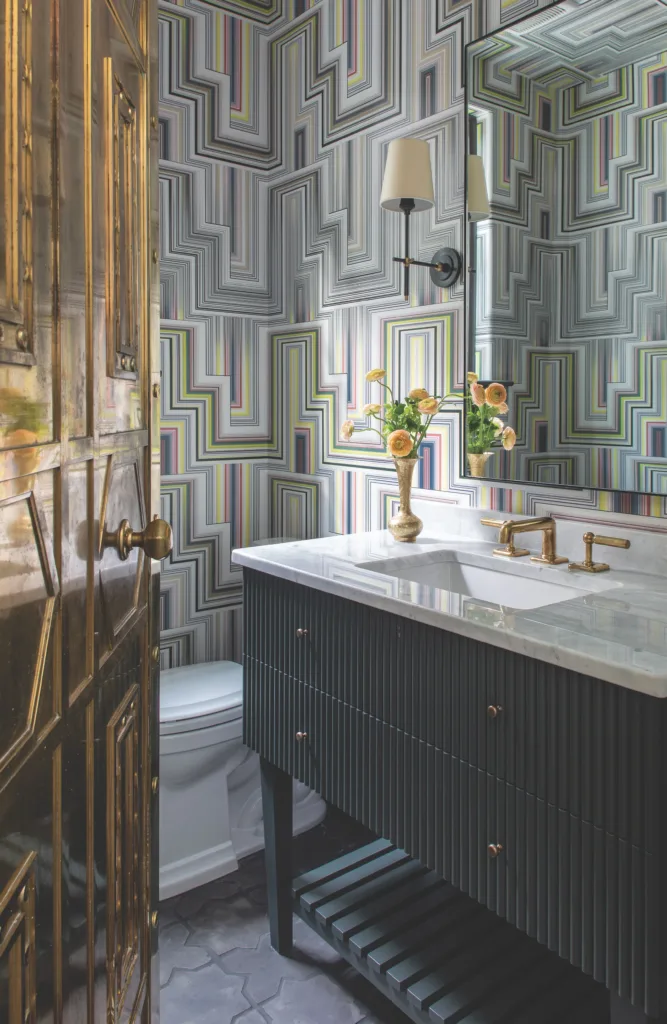
Leading into the bathroom, the contrast continues, with the tile floor as the showstopping moment. But it’s a moment that happened entirely by accident while designing the custom tile. “The software glitched in the middle of a design and did this weird stretch. We looked at each other and said, ‘Oh my gosh, that’s it!’” says Tollett. “The design gods were looking out for us there.”
Connected to Past and Present
Throughout the extensive renovation and décor project, the couple was intentional about giving back to the artisans, artists, and craftspeople within the Richmond community. The project kicked off at the same time that the Covid pandemic brought many industries to a halt, and the couple saw this as an opportunity to invest in their own community. Wherever possible, they sourced furniture, art, and custom items from makers and local vendors, showcasing the talent of Virginia, both of 140 years ago and today. Altogether, the home represents more than a collection of beautiful pieces; it’s part of the story of both Richmond and this family.
“These clients opened their hearts to us in the process of designing this home,” recalls Anne. “It’s so wonderful to see the space being used exactly how we hoped and wished.”
Making an Entrance
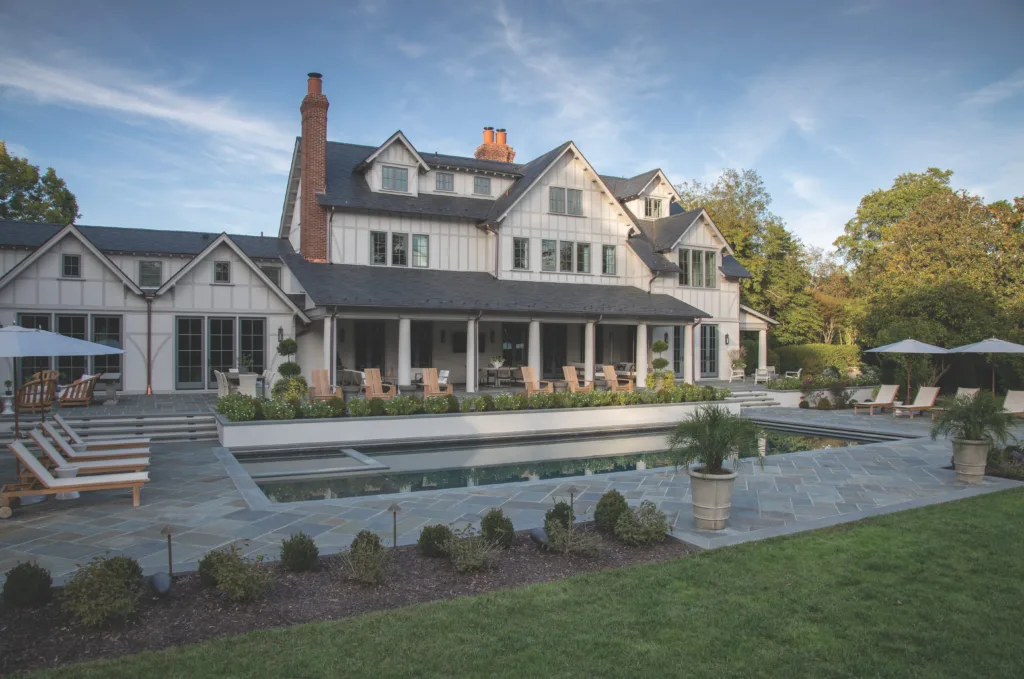
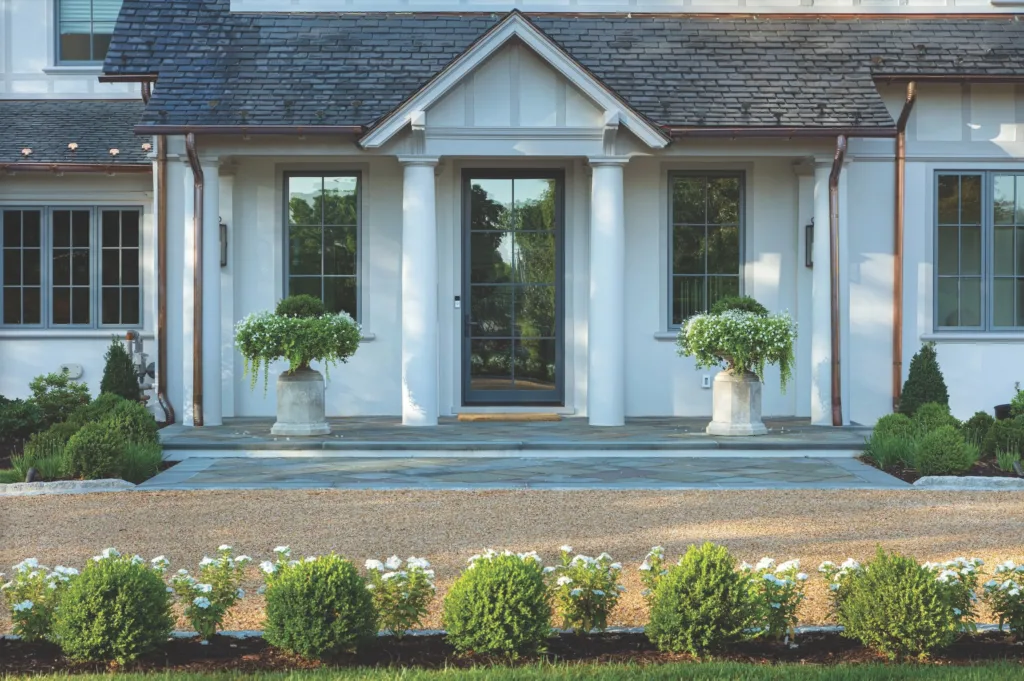
“What I’m most proud of,” says Richmond-based landscape designer Marcia Fryer of the Cary Street Road landscape renovation, “is the entrance.” By adding a custom Tudor-inspired gate at the original stone entrance, she brought both privacy and period charm to the property. She rejuvenated the driveway by edging it with Belgian brick and adding pea gravel for a double-dose of elegance. Split at the street, it wraps around an expansive lawn with the two courses converging at a seasonally planted island garden that anchors the front motor court. A parking courtyard enhances the space.
Fryer and architect Dan Ensminger collaborated to give the home’s entrance greater presence, which had been diminished through decades of renovations and additions. “The house had a little landing,” she recalls, “and it was so insignificant for a house of its scale.” Ensminger added a gabled pediment and entry portico—a classic Tudor/Colonial Revival detail that brings a formal and welcoming elegance to the entrance. Then Fryer set about creating the gravitas this architectural landmark deserved.
In addition to the garden bed and motor court, Fryer designed expansive bluestone landings for a seamless arrival experience. Antique French urns she discovered at the Dallas Market Center feature seasonal plantings that change throughout the year. Trellises cleverly camouflage side-by-side porte cocheres, keeping cars tucked away so the arrival court never becomes a parking lot.
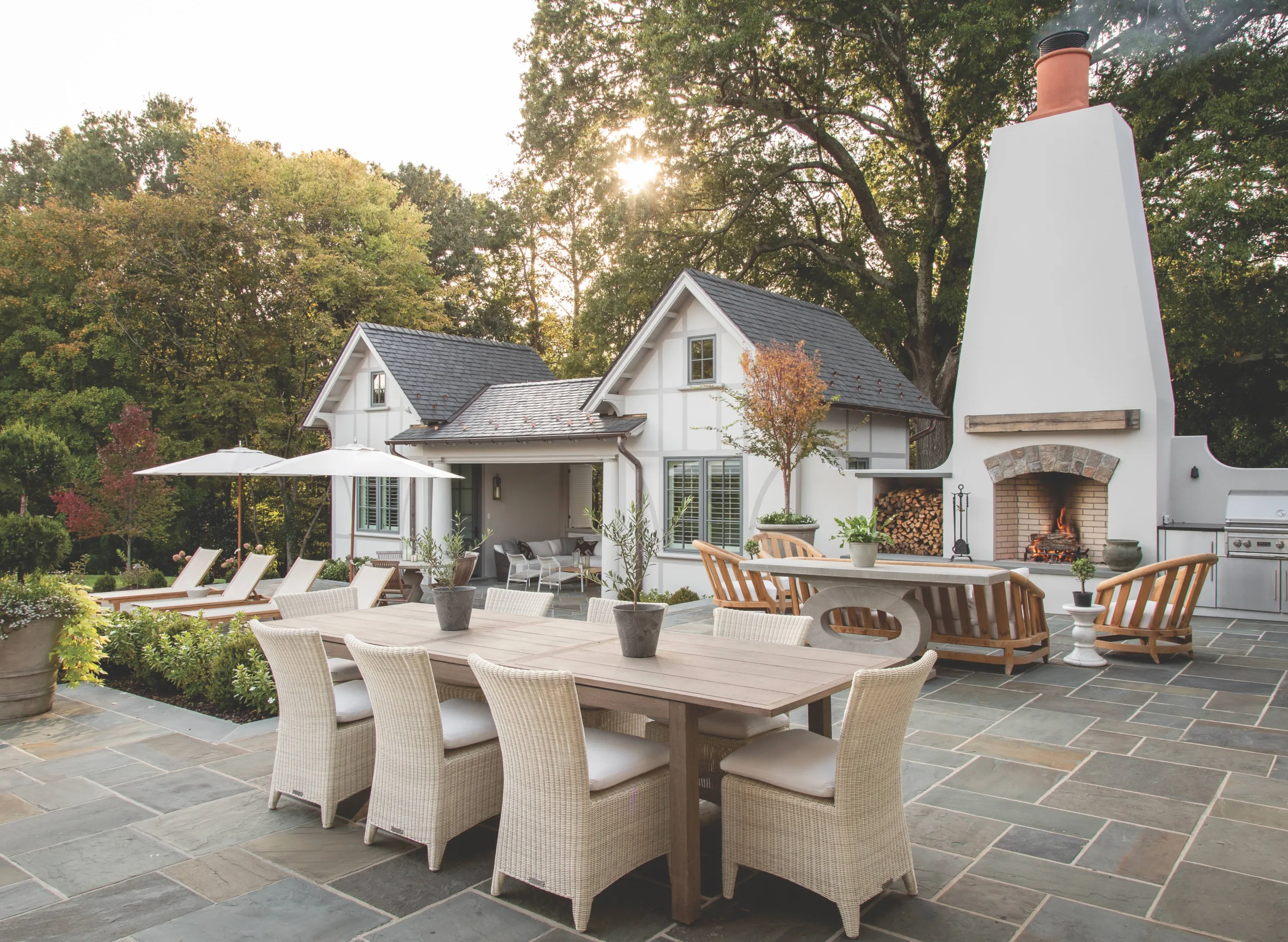
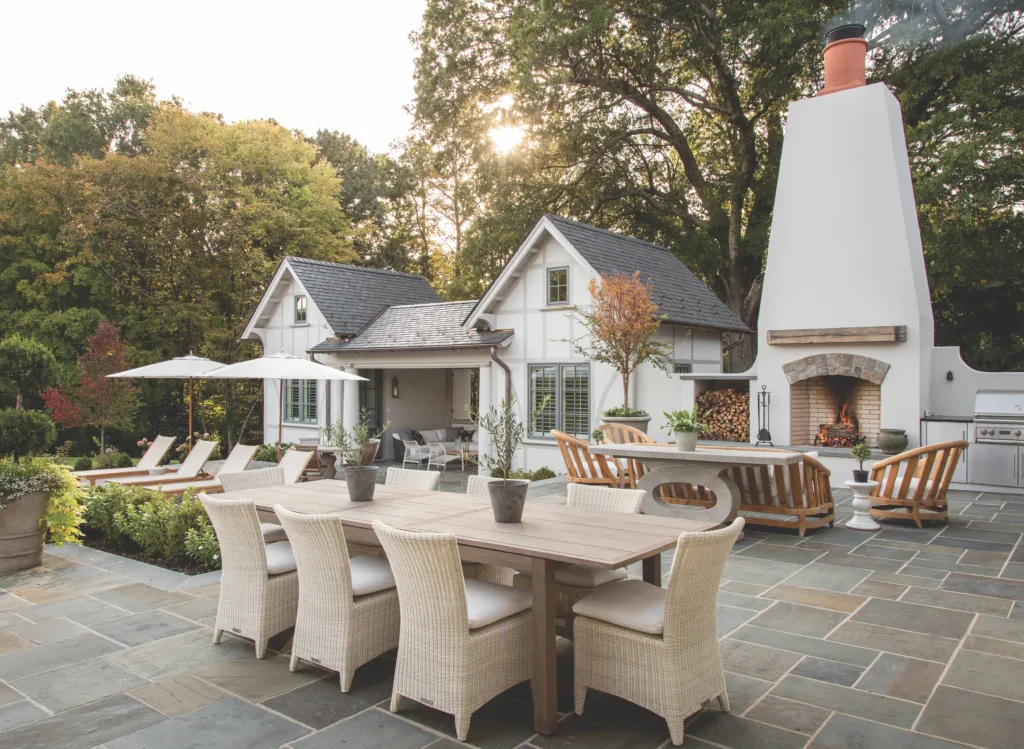
Yet, the entrance is just the beginning. Fryer’s expertise is evident throughout the property—from the pool and pool house to the secret garden rooms she designed. She chose plant material for aesthetics as well as for low maintenance, proving that timeless design can be both beautiful and practical. MarciaFryerLandscapeDesigns.com
This article originally appeared in the February 2026 issue.