
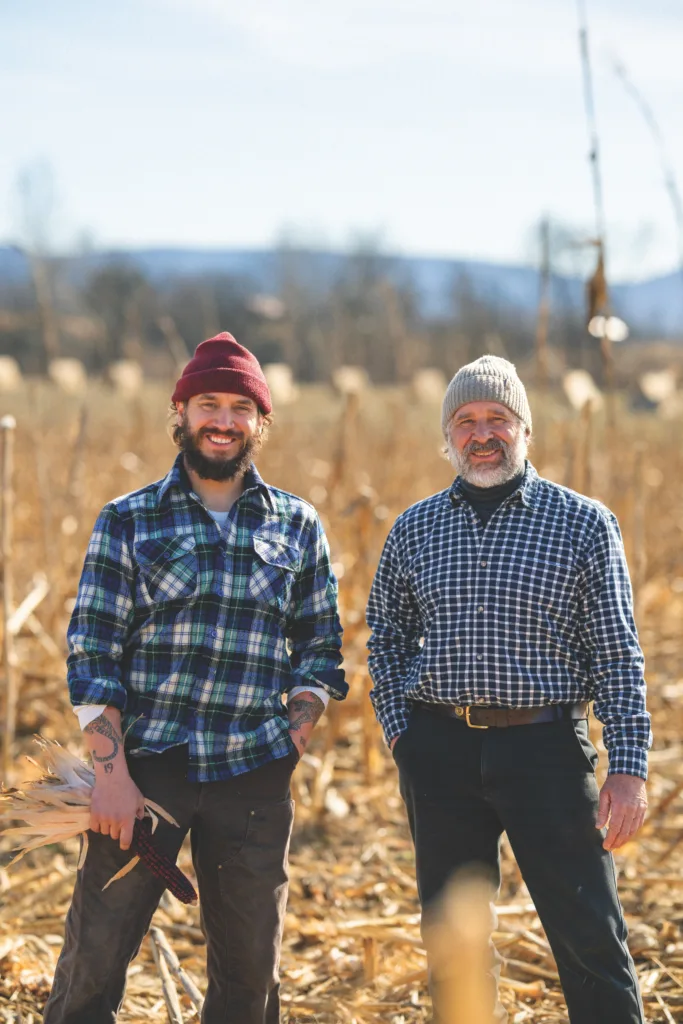
A chilly fall breeze rustles through the Waynesboro cornfield as Autumn Olive Farms heir apparent Tyler Trainum grabs a 12-foot stalk and shakes hard. The ears rattle like strange bells.
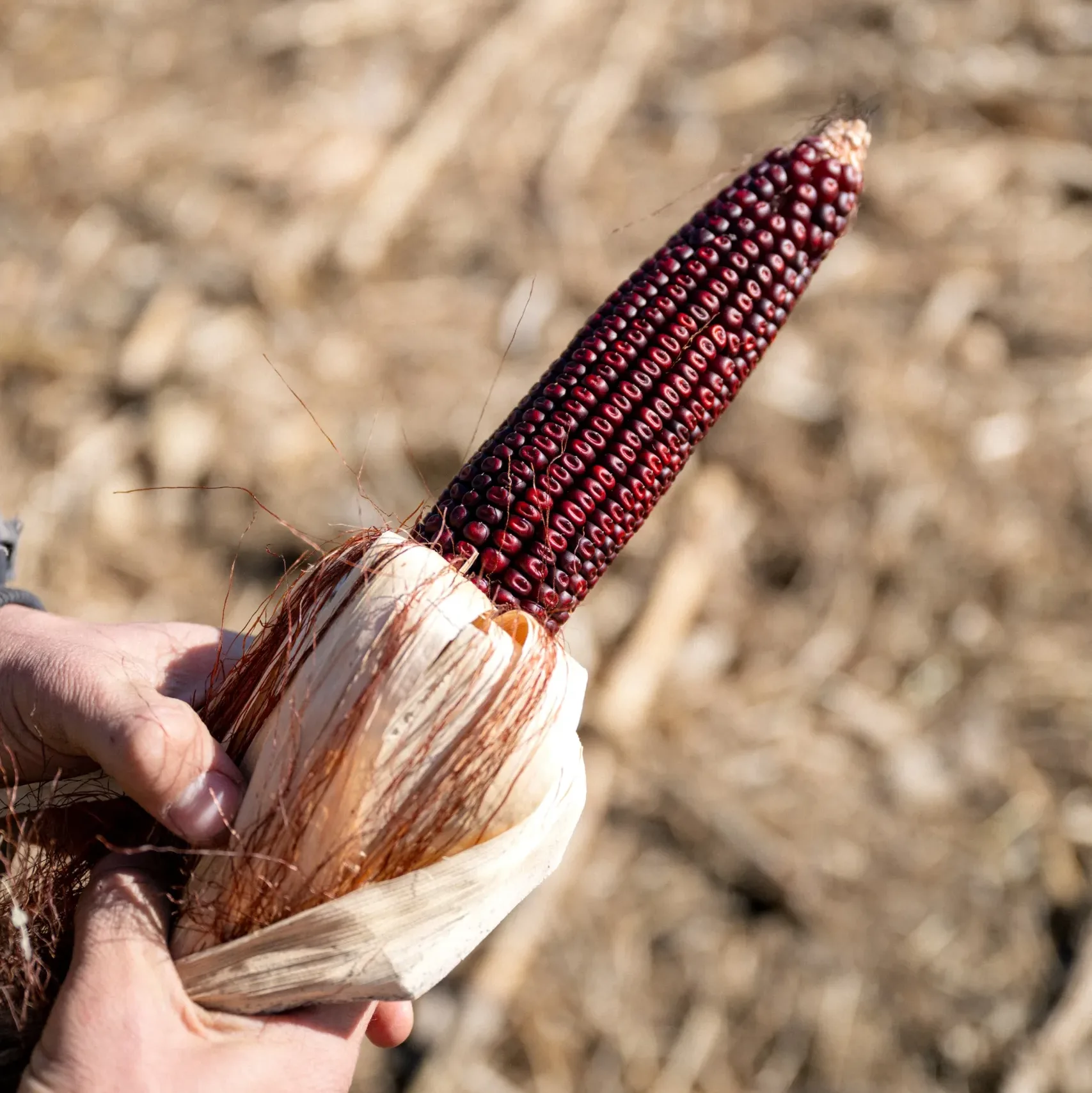
“It’s insane how straight and strong these guys are,” he says, grinning. The 36-year-old—blaze orange cap, thick beard, flannel shirt, jeans, and leather boots—points to exposed roots where foraging pigs have dug. “The root structure on these old heirlooms is just incredible.” He snaps an ear and strips it, revealing burgundy kernels that gleam like rubies.
“Look at these ears,” says Trainum, eyes bright. “They’re as big as your friggin’ forearm and about as red as the devil’s unmentionables! But seriously, isn’t that coloration beautiful?”
Trainum emotes with earnest awe and pride. He’s not selling anything; he’s just passionate about his family’s husbandry. And for good reason.
Chow of Champions
The 20-acre stand of heirloom bloody butcher corn is the outgrowth of a six-year R&D project aimed at making what many star chefs already regard as the finest terroir pork in the U.S. even better. Trainum says the variety has a flavor profile similar to American chestnuts and more than double the protein of conventional corn. Seeds can be saved and replanted, while deep roots and drought hardiness minimize erosion. Tall stalks produce upward of a dozen ears, each yielding a pound of dried kernels. These attributes made bloody butcher a favorite among 18th- and 19th-century Appalachian livestock farmers.
“You’re getting all this amazing, healthy flavor with a bonus historical conservation element,” says Trainum as he weaves through felled stalks toward a rabble of porcine squeals. “And as long as you rotate the plantings right, it’s more sustainable too.”
We come upon a dozen waist-tall, black-and-white Berkabaw pigs munching on ears. One positions itself parallel to a row, then nuzzles into a flop, sending stalks crashing down. Rather than get up, the animal wriggles giddily from ear to ear.
“I never get tired of watching these guys,” Trainum chuckles, kneeling to give a pig a vigorous belly rub. A couple hundred of the heritage Berkshire-Ossabaw crossbreeds have been wild-foraging for about 12 weeks to fatten up. Other plantings are harvested for milling, slashing the need to purchase supplemental feed.
“This is the only program of its type that I’ve ever heard of, and it’s a huge accomplishment,” says longtime customer Ian Boden, whose Staunton restaurant Maude & the Bear was a James Beard Foundation semifinalist for 2025 Best New Restaurant. The approach creates a 100 percent estate product “and enhances the flavor profile while shining a light on historic regional foodways. What they’re doing is a case study for raising perfect proteins.”
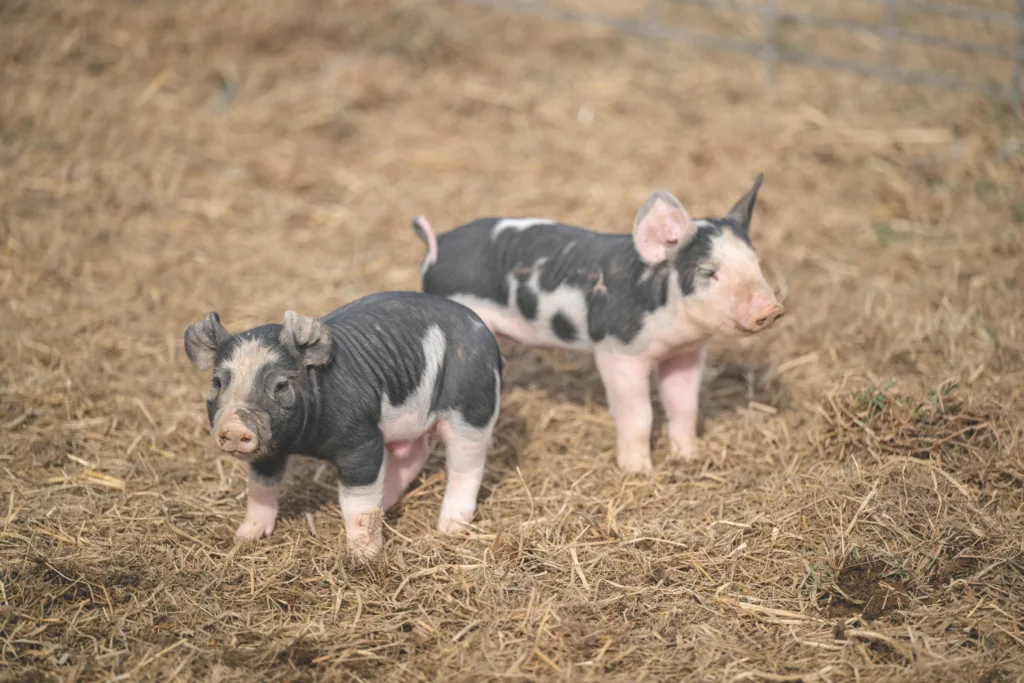
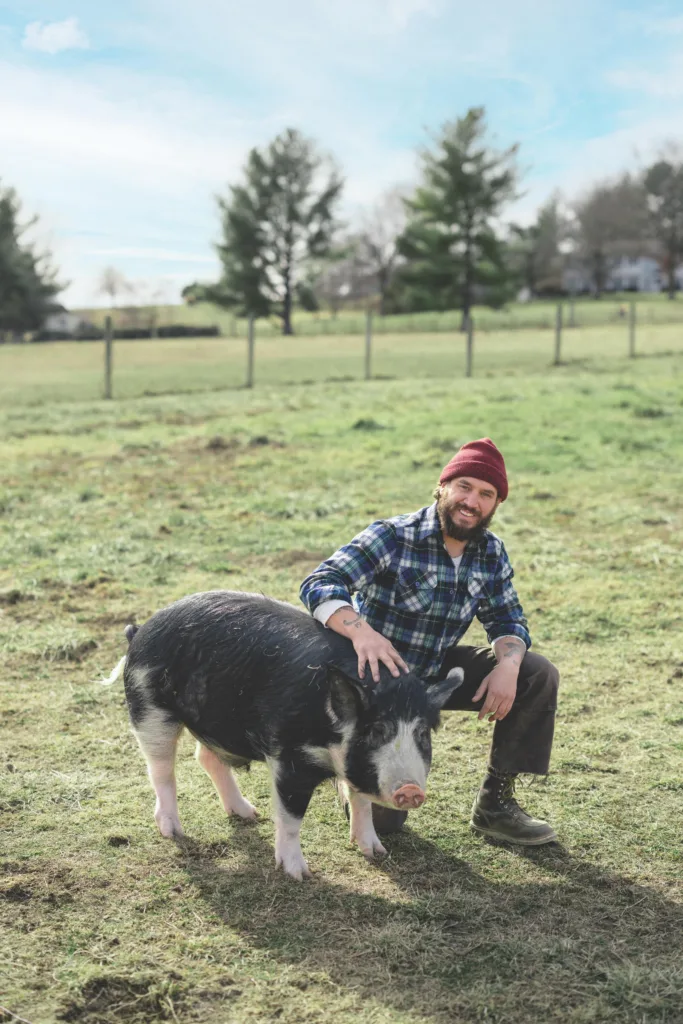
Tyler Trainum gives a head scratch to a good-natured Berkabaw.
Across Generations
The groundbreaking innovation is the kind of thing that catapulted Autumn Olive Farms (AOF for short) into the culinary limelight in the first place—and it’s just one among a parade of major upgrades brought by recent years. The string of successes, says owner-founder Clay Trainum, has much to do with a deepening partnership between himself and son, Tyler.
“He’s really found a stride and come into his own over the past few years,” says Clay, now 64. “It’s been a long process and, for me, such a privilege and joy to get to watch and be a part of.”
Tyler came on board part-time at the farm in 2011, a few years after it launched.
“I was studying marine biology in Wilmington and realized that, while I loved animals and conservation and learning, the classroom environment wasn’t for me,” he says. “I grew up hunting and fishing and gardening, and I love to be outside and engaged. I don’t do well sitting still, and I like it when there’s a constant mix of things to do. So, I thought, ‘You know, farming checks a lot of those boxes and dad could use some help, so why not give it a go?’”
The farm Tyler arrived at, though, was not the Autumn Olive of today. The operation covered 80 acres and focused on heritage breed goats. Pigs had only just entered the mix, “and that was really more of a homestead type of thing,” says Tyler.
“Dad had read this obscure article about the health benefits of pork, and we happened to take home an Ossabaw from the Frontier Culture Museum in Staunton as a quote-unquote ‘gift,’”
he continues. “Only, it proved to be more of a joke-on-us situation, because that thing was flippin’ crazy and you couldn’t get near it without it trying to kill you!”
Irony aside, the development sparked a firestorm of curiosity and inspiration. Clay happened to be reading Peter Kaminsky’s porcine love letter, Pig Perfect, and was floored to learn, “he’d traveled the world looking for the best bite of pork and decided Ossabaw was it.”
Guesswork & Godfathers
Clay threw himself into relentless experimentation centered on a singular mission: “How do you create a perfect bite of pork that’s regenerative for the environment, allows the animals to live a happy life, and is commercially viable for both the farmer and the restaurateur?”
The answer combined old-school breeding techniques and free-range husbandry focused on cultivating ideal animal characteristics, well-being, and diet while protecting the land. Local chefs tasted early products and were stunned, offering feedback on texture, flavor, and marbling.
“We didn’t pretend to be experts, and while it sort of felt like a liability, that humility proved extremely valuable,” says Clay. “These chefs can taste things most of us mortals can’t, so applying their suggestions seemed like the smart thing to do.”
“There was no guarantee of success at all,” adds Tyler. “We were just listening closely, adapting, and working our asses off. It’s like a bus pulled up, and my dad stepped onboard and said, ‘I’m taking this thing as far as it goes, who’s with me?’ After a while I just felt so happy and honored to be along for the ride.”
Rave reviews from celebrity chefs like Boden and The Inn at Little Washington’s Patrick O’Connell poured in. Demand surged. The Trainums grew their herd to about 1,200 pigs and donated whole hogs in exchange for attending charcuterie classes with “Godfather of American Charcuterie” Brian Polcyn. “That was a game-changer,” says Tyler.
“It opened my mind to a whole different realm of possibility.”
Delivery duties to cities like Charlottesville and D.C. meant loading trucks at 3 a.m., but brought facetime with top chefs and invites to tasting events. “Experiencing what these guys and gals were doing with our meat blew my mind,” says Tyler. “I felt really inspired and wanted to incorporate more of that creativity into the farm umbrella.”
A Frank Breakthrough
In 2019, the Trainums bought an ailing horse farm from an elderly neighbor—109 acres on the South River banks with a 1780s farmhouse, old barns, and outbuildings.
“That was such a blessing and vitally necessary for us to grow,” says Clay. The structures needed repair, but they could renovate bit by bit and use them to store feed, work on equipment, add freezers, and centralize nursery operations.
Then the pandemic struck. “We lost every account we had in 36 hours and had to pivot our entire business in 19 days so we wouldn’t go bankrupt and lose the farm,” says Clay. He, Tyler, and about six other employees spent 14-plus-hour days cutting and packaging meat at their processor’s facility, launched a retail line, marketed directly to customers online, and created delivery routes from scratch. “It was brutal,” says Tyler. “We were up against the wall and it was like, we’re either gonna hold this hill or die on it.” The Trainums survived through “a mix of luck, incredible customer loyalty, and my dad’s total and stubborn refusal to give up.”
Early the following year, Tyler had a breakthrough. “I was down in Wytheville and stopped by a hot dog shop that’s been open for a century,” he says. “I ate a dog, and it hit me, ‘Why the hell aren’t we doing this?’”
He developed a line of franks—including a pork belly option—bought a used cart, and launched Fat Tyler’s Meat ’n Such, selling dogs, baked beans, and banh mis at concerts. The concept inspired whole hog roasts, pop-ups, and educational tastings. One catering request turned into a game-changer: Grammy-winning artist Sierra Ferrell messaged him out of the blue after seeing his hot dogs on social media.
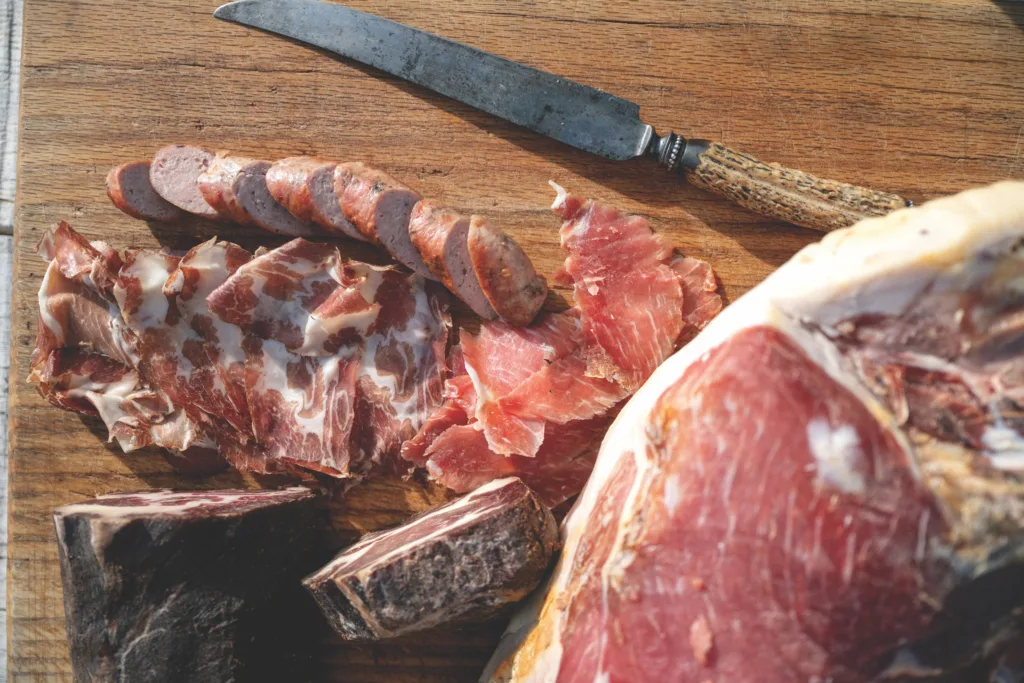
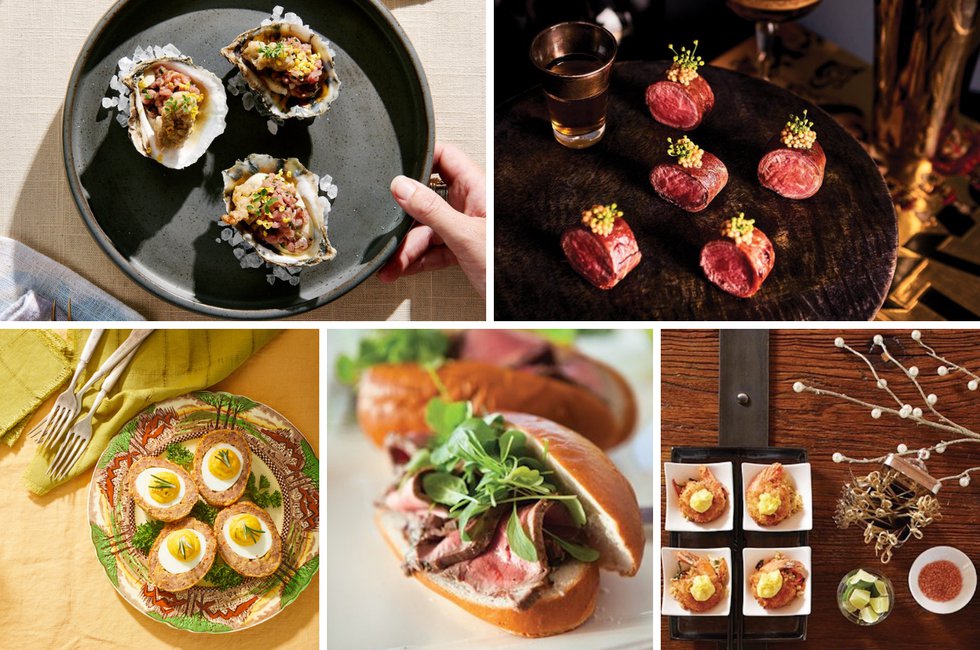
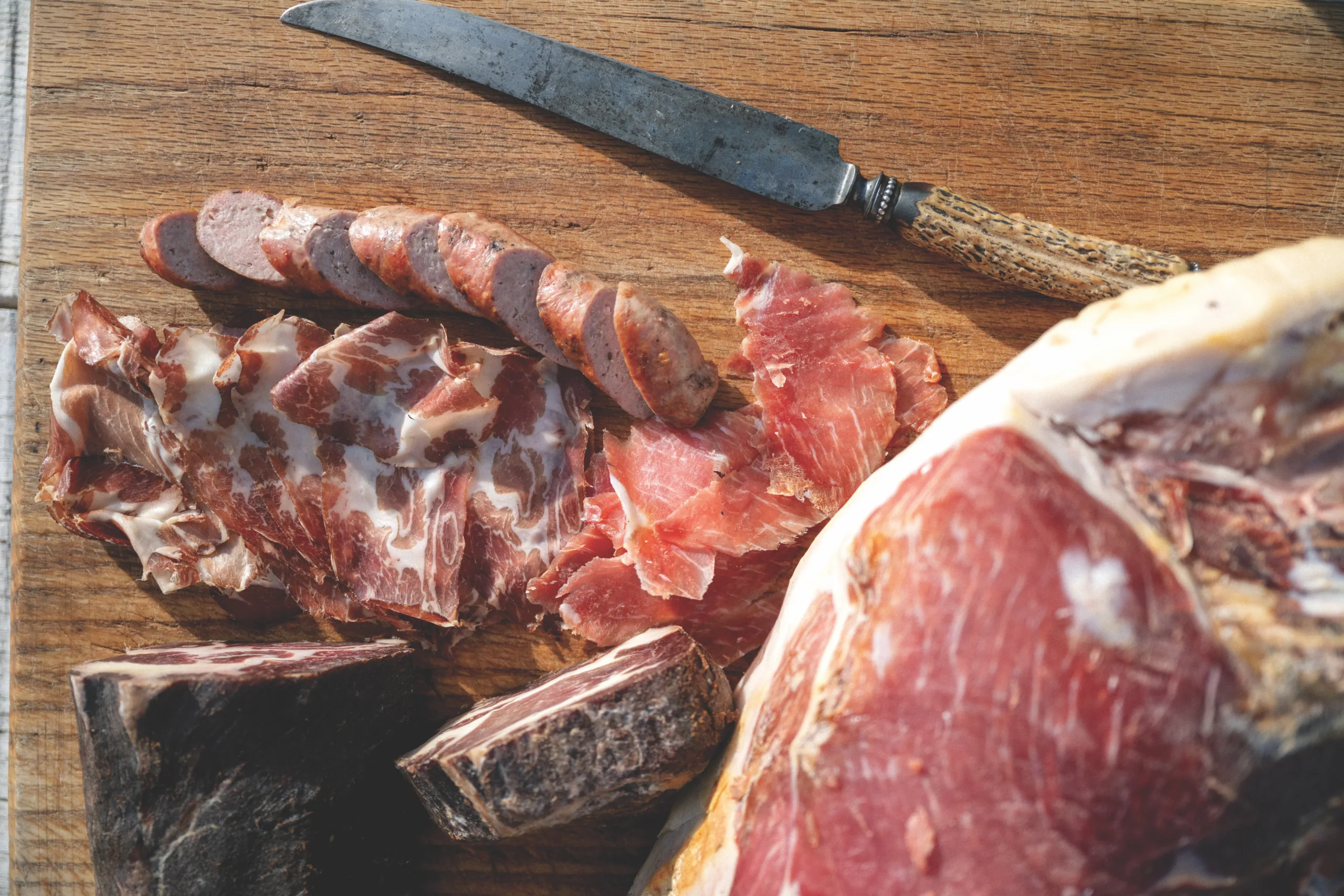
Aged and dried coppa and proscuitto from Autumn Olive hogs make delectable additions to charcuterie boards.
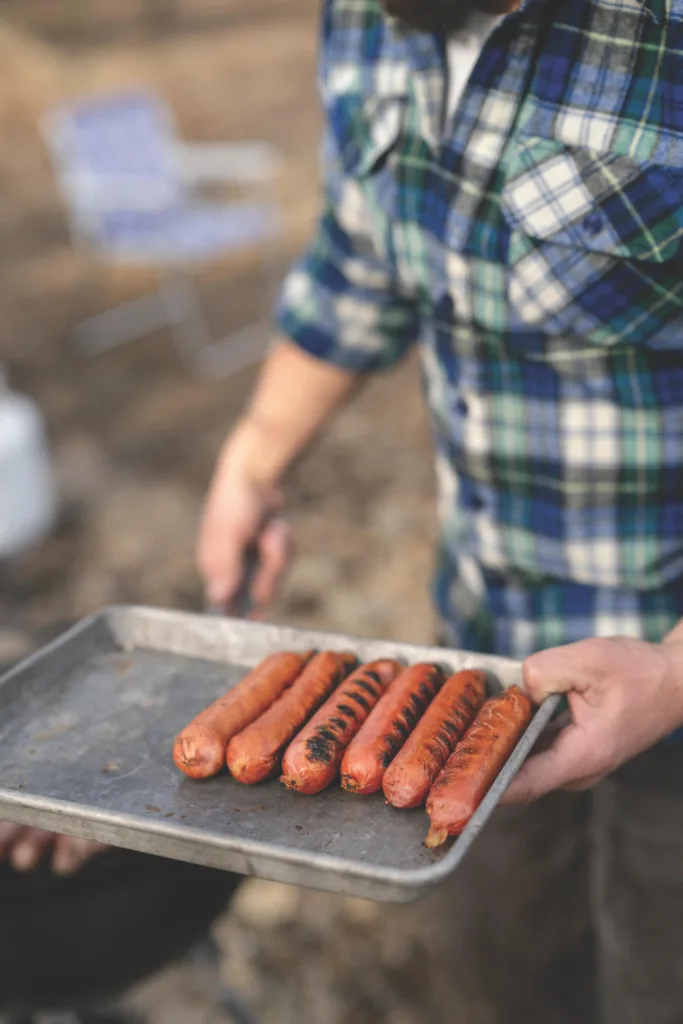
Pork belly hot dogs emerged during the pandemic as both a direct-to-consumer offering and a practical solution for utilizing excess pork belly from AOF’s pigs.
Simply Spectacular
The Trainums look back now and see the pandemic as a turning point.
“It was like a trial by fire, in that it brought us closer together and, at least for me, 100 percent drove home the fact that this farm really means something and it’s what I want to dedicate my life to,” says Tyler. And that sense of renewed strength and purpose has helped fuel a push to take things to the next level.
Between life on the farm and the bloody butcher project, a blossoming events schedule, catering concept, pop-ups, and a farm store on the horizon, it’s a busy life.
“If you follow Tyler’s Instagram feed and see the sheer immensity of everything he has going on, it’s like, ‘Wow. Does this guy ever sleep?’” says Boden. Jokes aside, “He works incredibly hard and it’s been awesome to see him really find his niche and shine. What he’s been doing with these dinners is ****ing delicious. It’s simple and absolutely spectacular.”
And like the rest of us Autumn Olive devotees, Boden says he can’t wait to see what comes next.
This article originally appeared in the June 2026 issue.