
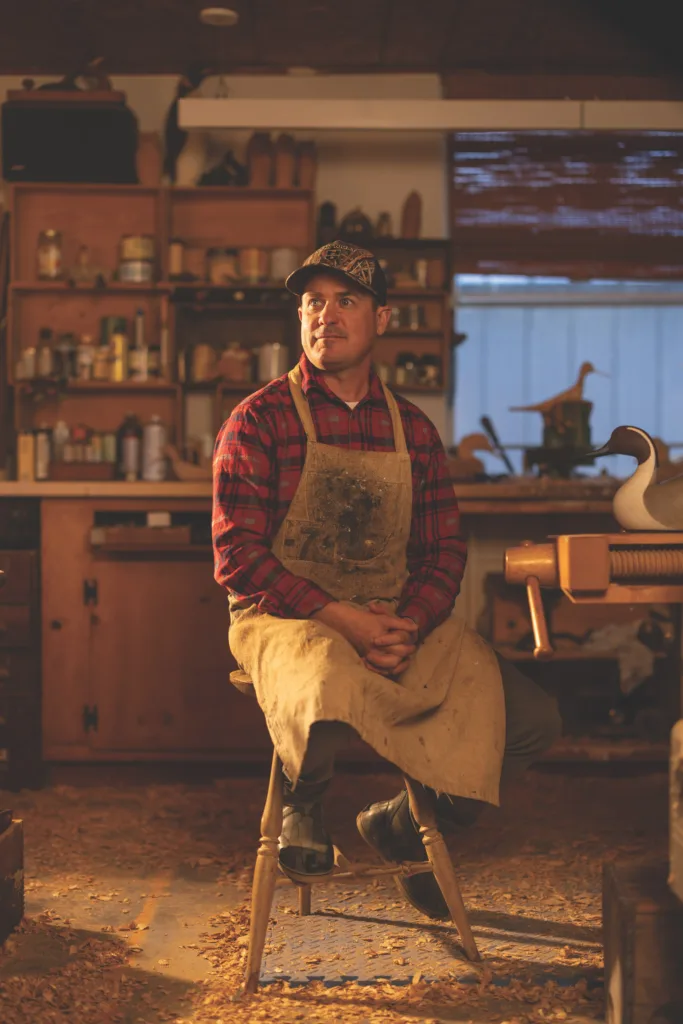
For decoy carver Grayson Chesser, hand-painted birds are memories of his youth on the marsh made tangible. As a child on Virginia’s upper Eastern Shore, he recalls, “I found it awesome to watch my dad put out decoys and then see the live birds fly into the water to approach them.”
Though he’s aware most who buy his carvings want them for display, he says his ideal for his works is “to have them get wet.” Framed photographs of him with his dogs on hunting outings line the walls of the hunting lodge behind his home, reflecting his own days of “getting wet” in the marsh. The images give truth to his saying, “You can’t beat a day you’ve shared with your dog—or shared with a friend in a duck-blind.”
Like many decoy makers, Chesser was carving even before adolescence. He explains, “Some people work all their lives to be able to do what they want to do. I’m fortunate to have been able to make a living all my life at what I love to do.”
Not far from Chesser’s place in New Church, decoy carver Cameron McIntyre’s studio, brimming with 200-year-old carving tools, stands just a stone’s-throw from his equally old farmhouse. He displays the outline he’s drawn of a teal’s curved head, traced on red cedar and ready to be worked.
He enjoys being self-reliant, living like his ancestors, and being able to take a day off to go hunting when he wants to. He can afford to—his consignments have included a $60,000 piece, the product of five months’ work for a California hunt club. It’s a long way from the first decoy he carved, sold for just $50.
The Pull of the Story
Like hunting, fishing has its pull on carvers. All three involve storytelling. In Exmore, Ian McNair, whose father is also a carver, says, “A decoy tells a story. It connects us to our past, to the marsh, and to other people.” His own upbringing is proof of that. He spent his high school summers on the water with his dad: “When the tide was high, I’d say, ‘Hey, let’s go fishing’—and we’d be off.’
Today, McNair divides his time between carving and managing his company, High and Dry, which he started years ago with his best friend. The company sells chest waders, clothing designed to keep watermen dry in the marsh. “I love making stuff,” he says, “but you can’t scale decoys—you can make only so many in a year.” For him, that’s about 25; but the family interest in carving continues, with his oldest daughter, Esme, age 4, already wanting to carve a decoy.
The Spirit of the Eastern Shore
Since the 1960s, David Ward, 83, has been carving and painting wooden waterfowl from his small workshop in Bloxom in Accomack County. At first he carved for the hunt, creating functional, working pieces built for the water. But with family and friend encouragement, what started as a functional necessity became a lifetime practice.
With every strike of his chisel and stroke of his paintbrush, Ward captures the essence of the Chesapeake Bay in the ducks, geese, and shorebirds he carefully carves by hand. A chicken farmer by trade, he nevertheless manages to spend hours a day in quiet dedication to his craft.
While Ward is known for his talent and patience, what makes him unique among his peers is that he’s color blind. “He developed a rich, detailed painting style with the help of my mother,” says his son, Jason. “She mixed every shade of paint for him until she died in 2023.”
Today, Ward is among those preserving a vanishing folk art tradition. His creations embody the spirit of the Eastern Shore: humility, creativity, and passion.
Finding a Happy Spot
On the bayside, in Machipongo, Peter Henderson started decoy carving 14 years ago when he was searching for relief from the stress of working long hours. “Carving helped me find a happy spot,” he says, gesturing to his carving woods—small logs of cottonwood, juniper, and white cedar. “I lose track of time when I’m out here in the shop.” Soon, his tally will include 200 hand-carved decoys.
Meanwhile, on the seaside of Route 13 in Capeville, five miles north of the Chesapeake Bay Bridge-Tunnel, Pete Peterson hangs a shingle proclaiming “Petetown” on the studio behind his house. A big fan of writer John McPhee, he takes pride in having no computer, no website, and no TV. He began carving at 12, making decoys for hunting black and pintail ducks.
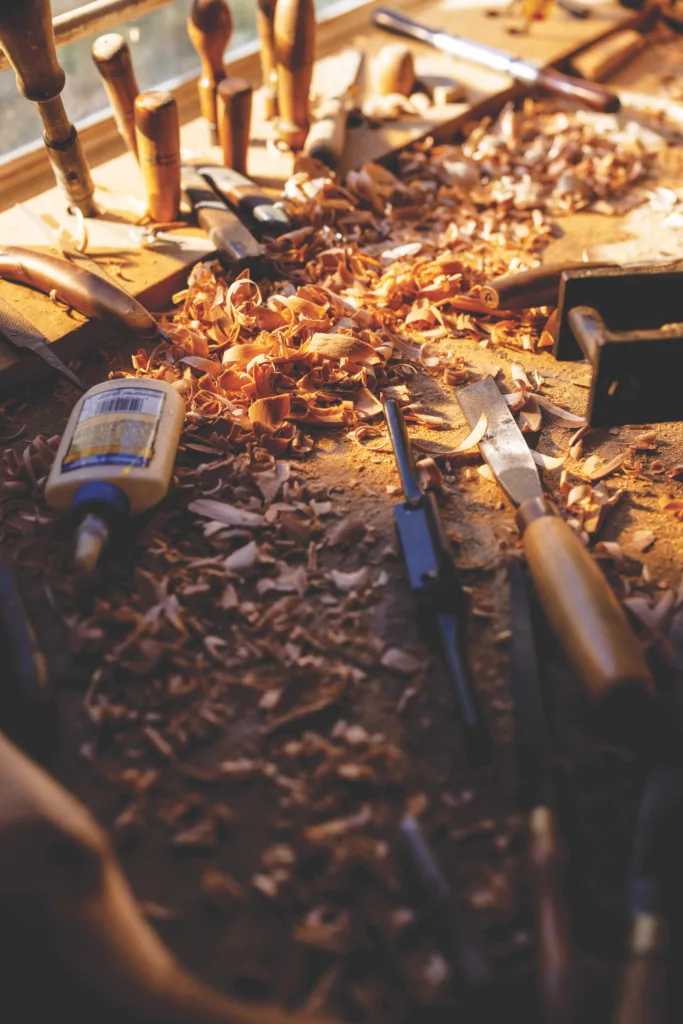
Now Peterson enjoys fishing for trout and spot in summer and rockfish in winter. Also a gardener, he considers the smell of turnip greens the smell of fall; but it’s the aroma of wood chips piled at least 2 feet high that dominates his shop—a familiar smell to all wood carvers. The scent leads him to a soliloquy on various types of wood.
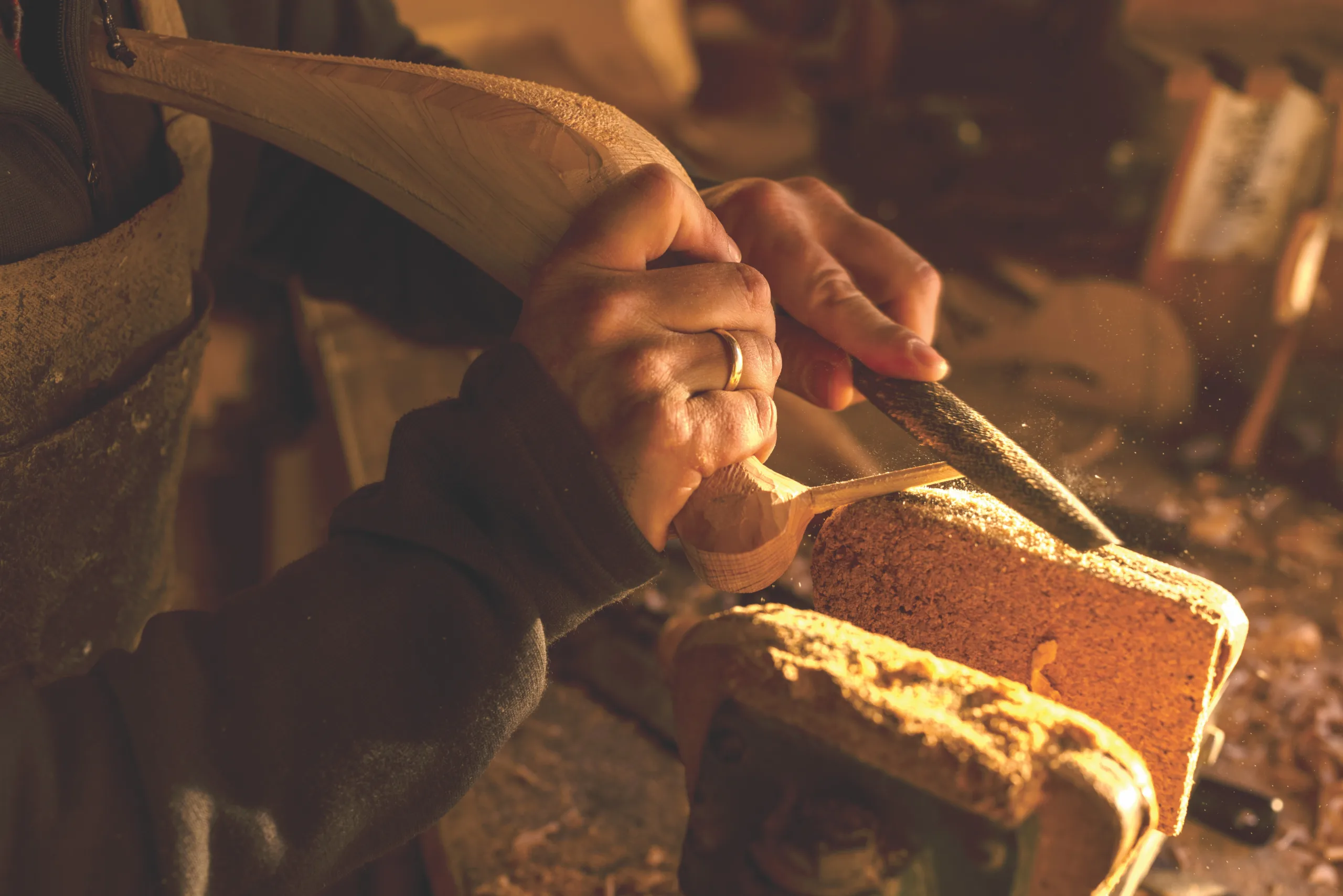
Unlike oak, which is heavy and “would sink like an iceberg in the water,” he says, northern white cedar floats well. There are “no rules” for him in decoy carving; but like most carvers, he uses a bandsaw on the cedar—or juniper, when he can get it—to start on the heads and bodies. After this blunt beginning, he switches to hand-tools. He estimates he’s made 8,000 decoys over 70 years of craftsmanship.
Carvers are a very independent lot. Historically, each one on the Eastern Shore has a distinct style. “A decoy,” Peterson says, “is a person’s signature in wood.”
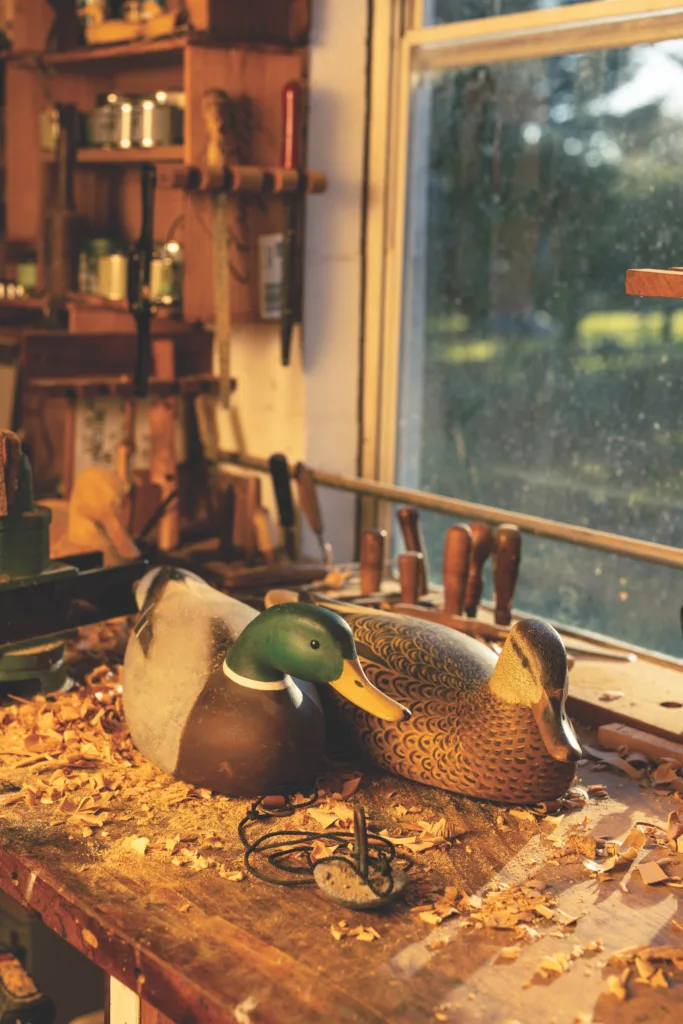
A finished pair of mallard decoys with a weight attached.
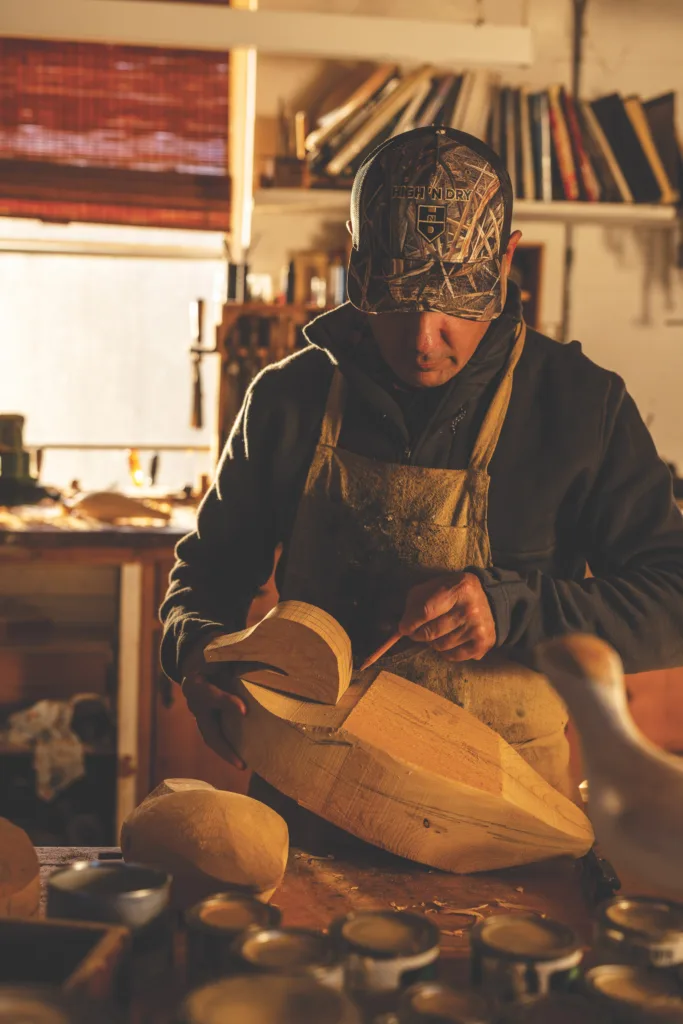
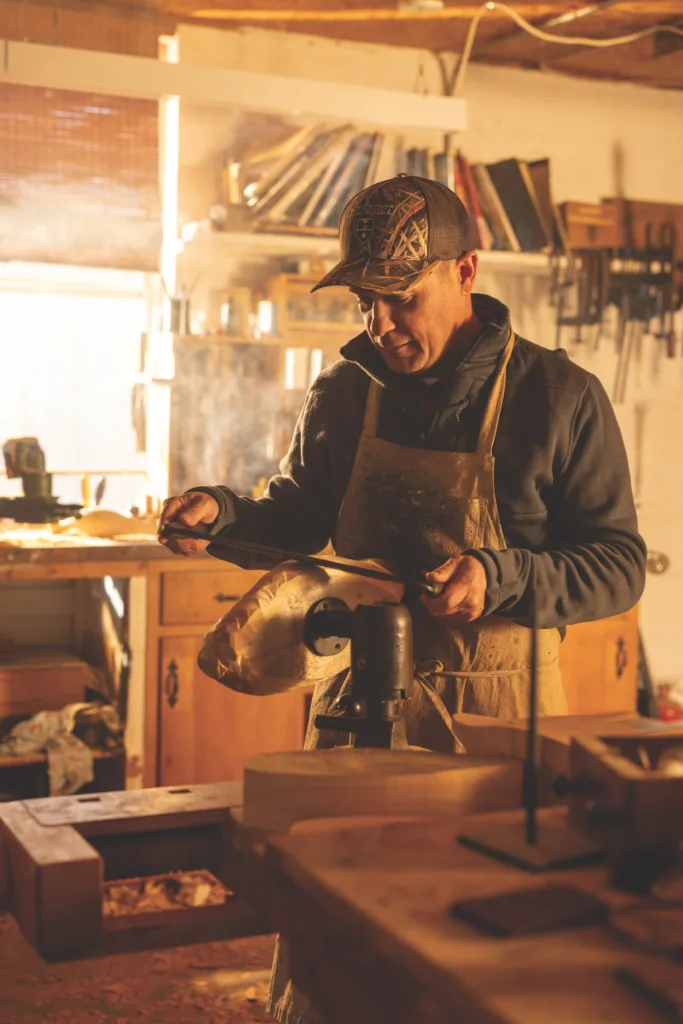
McNair begins a new decoy starting
with a roughly cut block of cedar.
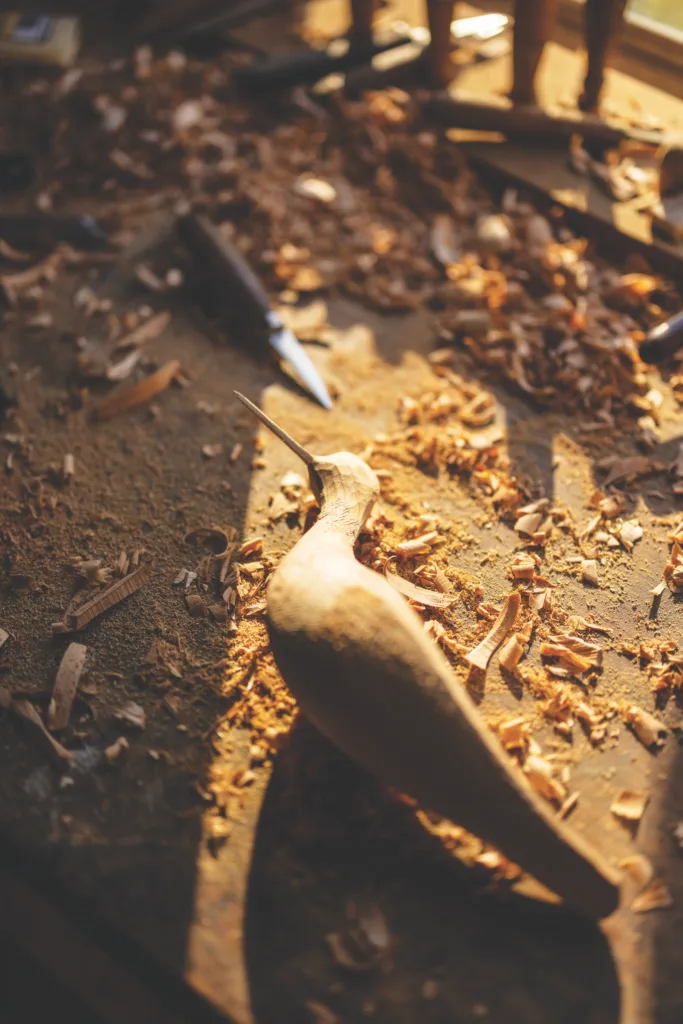
A shorebird sits among shavings from past carvings.
What Does a Decoy Actually Do?
Decoys are duck impersonators often carved from wood, used to lure real ducks into a particular spot, giving the impression that the water is already full of company and helping hunters get the perfect shot. They are weighted to stay put as they float. Today, decoys are also prized as collectible art, representing an important tradition in North American folk art.
This article originally appeared in the February 2026 issue.