

Growing up in Virginia meant growing up in a monsoon of style for menswear designer Reuben Shaw. His watchful childhood gaze relished the creativity of his mother, a dressmaker and owner of a bridal boutique, and the coolness of his older brothers. Everywhere he turned in Chesapeake was a new inspiration—schoolmates, churchgoers, friends, film stars, musicians. It was a fashion upbringing, he explains, and one that was utterly Virginia.
Today, Shaw’s custom clothing and tailoring house, Oxblood Zebra, is creating buzz afar, its first collection debuting at New York Men’s Day—the opening act of New York Fashion Week—in September 2025, and drawing attention from fashion voices including GQ, Esquire, and Women’s Wear Daily. At this precipice of momentum, Shaw reflects on how the Commonwealth has shaped his ethos—in design and in character.
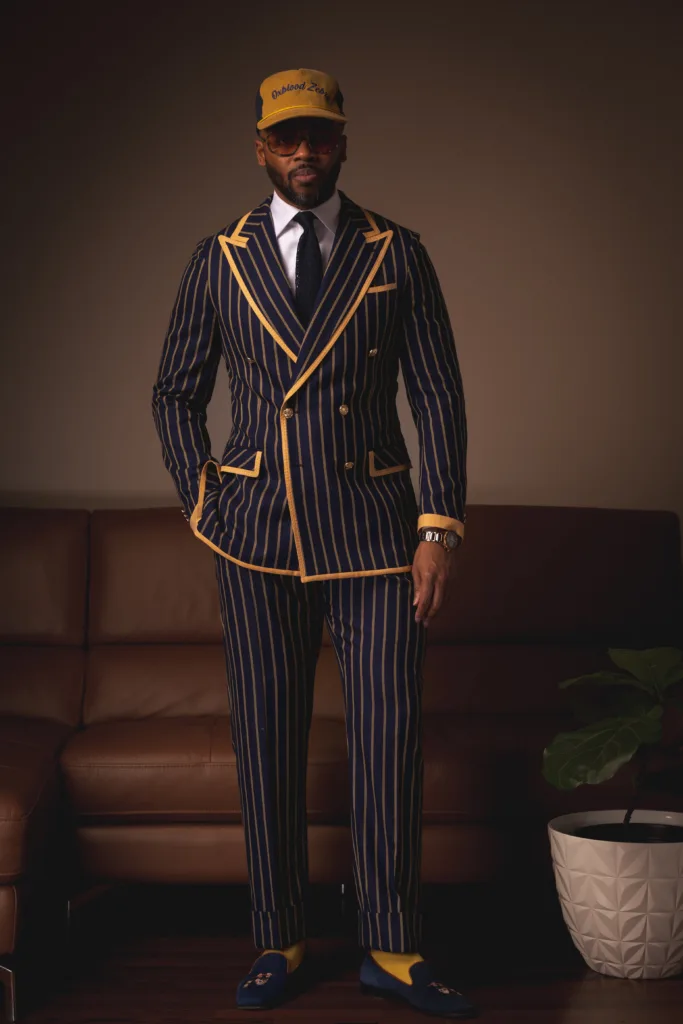
Hope Cartwright: Can you walk me through the trajectory of your career—from your early interest in fashion to creating Oxblood Zebra?
RS: When it started out, I just wanted to dress fly, to be cool.
When I got my first retail job out of high school, I started to see the impact that clothing had on other people. I thought it was just me. Then I got my first job in tailoring, which was more technical. I realized the power of elevated dressing—wearing a suit, for a guy, you could feel like James Bond instantly.
But when you work with a company, you have to stick within the brand guidelines. I worked for an incredible gentleman in downtown Norfolk, Verrandall Tucker at Details on Granby, but I wanted to create something on my own.
In 2015, I was working at his tailor shop and part-time at the Hilton in Virginia Beach, doing valet parking. One night, sitting in the valet box, I told myself, “I’m going to start my own business.” I started writing down names on a tablet. I wrote down Oxblood Zebra—the word “Oxblood” in burgundy red, “Zebra” in black, and I circled it. That’s when I knew I was going to start my own fashion brand.
HC: What inspired that name, Oxblood Zebra?
RS: At the time, a lot of brands were named after people: Ralph Lauren, Calvin Klein. I wanted something bigger than me.
In 2015, the Pantone color of the year was red, so burgundy, wine, oxblood, and merlot were showing up on runways all over the place. In a textile production class, I learned that oxblood, among all the variations of red, was closest to purple in terms of significance—purple was always associated with royalty, and oxblood was a variation of that. There’s a lot of emotion to that color.
And growing up, whenever we had an in-class project, and you could choose a subject, I would always research zebras. I came to realize, over the years, that you can’t domesticate them, you can’t put them in a cage. They’re free-spirited animals. Each zebra’s stripes are unique. They’re individuals.
I like those two ideals—a royal, passionate, fiery color, mixed with the untameable nature of a zebra. The more I think about it, the zebra really does fit me as a person. If you try to put me in a box, then I’m just gonna tear the box apart and create my own. There’s a beauty to that.
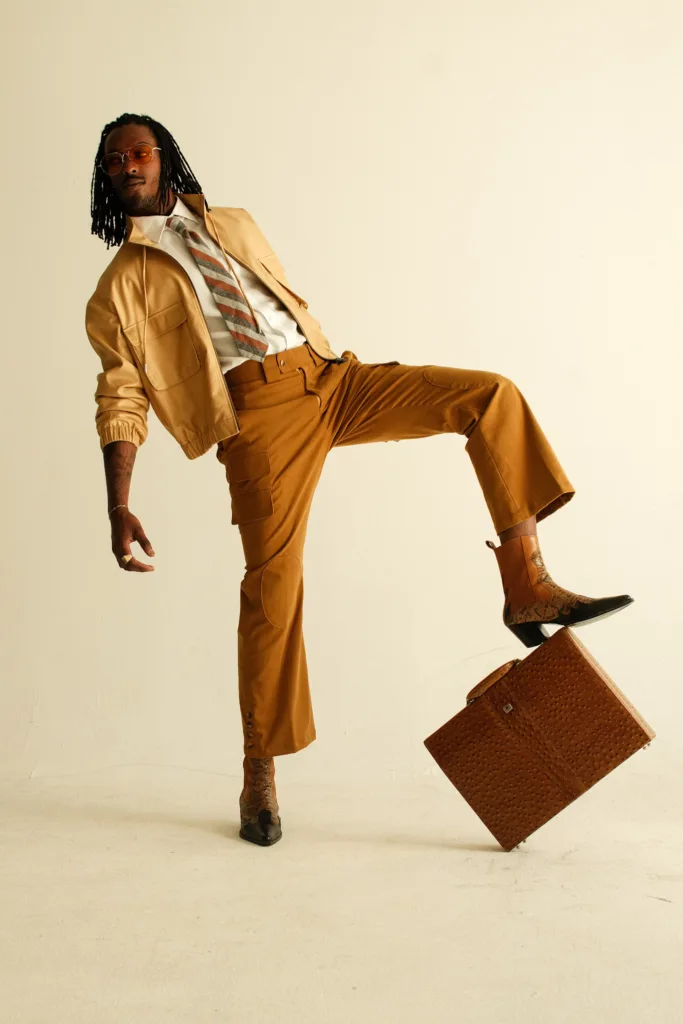
HC: What got you to where the brand is today?
RS: You’ve got to be a little crazy. You will fall so many times, and logic will tell you to stay down. I would credit an insane level of persistence and being able to look past failure. I know that I’m going to fall again, but I’m so invested that I’ve got to see it through.
HC: How do you feel you represent the 757 in your work?
RS: If you talk to anybody who knows me, the first thing they’ll say: “That guy’s pretty fly. He’s from Virginia, right?” I talk about it with the same pride that people from New York, LA, Miami have about their cities. And I want them to see that in the clothing.
A lot of what you see in my garments goes back to church people. Being from Chesapeake, people got dressed up on Sundays to go to church. I still have that Sunday-best mentality with the way that I design clothing. What I’ve done with Oxblood Zebra, in terms of its aesthetic, is specific to Virginia.
HC: And how would you describe that aesthetic to someone unfamiliar with the brand?
RS: Think structured tailoring, almost British, but with a Southern sensibility in terms of some playfulness to it, a welcomeness to it. I never want people to look at my garments and be like, “I could never wear that.”
There’s also military influence in the garments, because I grew up around the naval base. Think men in uniform—clean cut, structured, confident, but we sprinkle in streetwear elements and high fashion elements as well. We season it perfectly, like a great Southern meal.
HC: What are you excited about moving forward?
RS: I want to have a presence in the 757, not just through retail but community outreach. I would love to go back to my high school in Chesapeake and talk about creative careers. A big goal of mine is to have an imprint on Virginia, then the United States. We told ourselves we’re the best menswear brand in America. Now it’s time to back that up.
This article originally appeared in the April 2026 issue.