

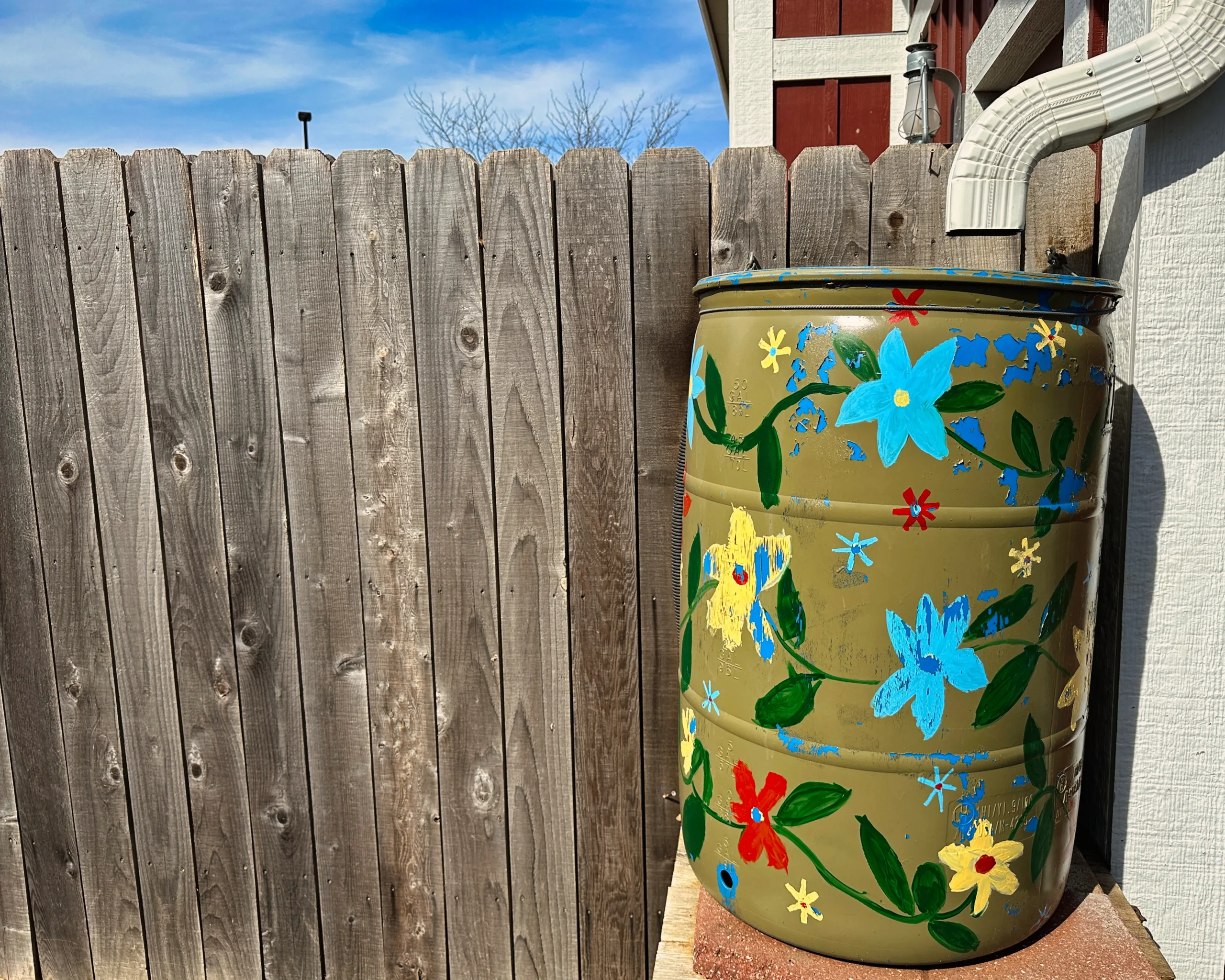
Your garden loves a good ol’ rainstorm: It has nitrates, the ideal pH, and is free of salts, minerals, and nasty chemicals. But once rain hits the ground, it is easily contaminated by oil, grease, fertilizer, pet waste, and sewage, picking up a multitude of harmful bacteria. Luckily, there is a containment system for rainwater that’s easy to maintain and superbly sustainable. Enter the rain barrel.
By connecting a rain barrel to your downspout, water conservation becomes easier than ever. The advantage is that rainwater and stormwater run-off flows directly from your roof into the barrel, collecting water before it can be spoiled by pollutants.
Rain barrels are not only eco-friendly, but they are also wildly versatile. Over time, your rain barrel can work hand in hand with other conservation practices and collect enough water for irrigating gardens; refilling bird baths; and cleaning tools, cars, and patios—ultimately reducing the cost of your water bill. To maximize water capacity, you can create a “daisy chain” by connecting multiple rain barrels.
Keeping your rain barrel clean is important to prevent odors and reduce slime and insects. In addition to regular rinsing, toss in a handful of copper pennies (minted before 1992), or copper wire. Copper acts as a natural microbial agent, reducing algae growth, killing mosquito larvae, and deterring pests. Use a lid or mesh cover to discourage algae.
Organizations like the James River Association and the Virginia Lakes and Watersheds Association offer information and workshops about using rain barrels, even DIY rain barrel projects. Join the movement—your garden will thank you.
Did you know that during an average summer rain shower—typically 1 inch of rain—your roof may drain over 600 gallons of water across shingles, into gutters, and down through downspouts? To learn more about the beauty of rain barrels, visit
AllianceForTheBay.org.
This article originally appeared in the August 2026 issue.