
One of the most intriguing themes that belies the dusty mythology of the Founding Fathers is that they were not mere duffers in some Colonial golf club. In their hour upon the stage, they were known for fractious disputes, which made their wrangling to unify the colonies all the more divisive and tenuous. They were human, with all their victories and foibles on display.
That humanity is perhaps nowhere more poignant than in the final hours of both men. Jefferson and Adams died on the same day—July 4, 1826, the 50th anniversary of the signing of the Declaration of Independence. Jefferson passed first, at roughly 12:50 p.m. at Monticello. Adams followed that evening in Quincy, Massachusetts, unaware that his old friend and rival was already gone. His last whispered words—“Thomas Jefferson survives”—were a testament to their complex, enduring bond.
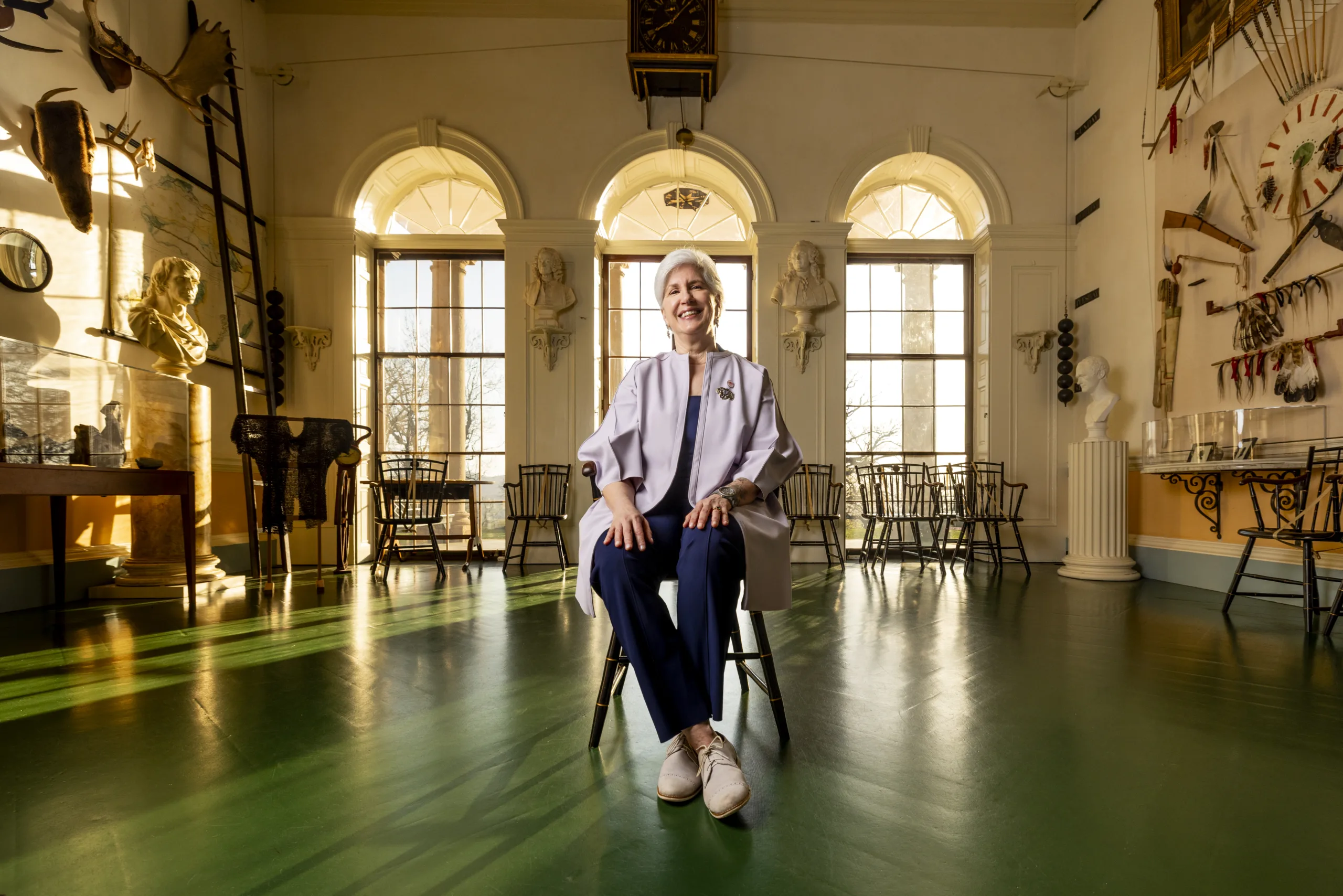
To capture some of this captious energy, Dr. Jane Kamensky, president and CEO of Monticello/Thomas Jefferson Foundation, has overseen the launch of the new “Founding Friends, Founding Foes Tour” at our third President’s home. Based upon the epistolary duel between Thomas Jefferson and John Adams, the tour brings to life their letters from their early alliance to their bitter falling-out and reconciliation in their final years.
The relationship is a fascinating one. The tour is just one of the measures at Monticello that addresses dwindling high school curricula in civics and history classes. To fill the void, she and her team are generating an array of engaging content for all those who visit the mountaintop estate and want to explore its multilayered history.
Some visitors find a reset, an epiphany where Jefferson himself would look out. “We talk a lot here about the power of place,” she says, and with some 40,000 students visiting every year. “With every student you reach, you may ultimately reach three or four generations.”
“I love the quote, ‘Democracy is not your dream date; democracy is public transportation.’” And getting to your destination entails “that skill of holding contradictory ideas in your mind at the same time.”
“We have a very demanding form of government, and we need to be able to deal with complexity. That is the overarching civic skill, to build coalitions …. We want people to think of themselves as founders.” Kamenseky says. “It’s not just about looking up to a founder, but asking, what do you bring to a particular moment to serve this great national experiment? We’re making founders. We’re a foundry.” While Virginia’s presidential estates present themes of leadership and governance, Monticello embodies philosophy.
From the views at Monticello, which inspired Jefferson, each of us, friends, foes, and founders alike, can look out and imagine something new.
Featured photo of Jane Kamensky by Kyle LaFerriere. This article originally appeared in the June 2026 issue.