
On a sweltering summer day, few things taste as satisfying as a scoop of ice cream. Like chocolate chip cookies and Boston cream pie, ice cream is the all-American treat. But the frozen delight is not a native. The dessert’s journey to American tables may have begun in antiquity, possibly in ancient Rome or in China, during the 7th century. The knowledge may have even traveled through the Silk Road routes, but its exact origins remain uncertain.
So how did it reach the American colonies? The story told by Colonial Williamsburg food historian Frank Clark is this: During a 1758 ice storm, Gov. Francis Fauquier had servants collect sleet so he could enjoy ice cream that very night. Having likely encountered it in England, the governor sought it out during his time in the colonies from 1758–1768.
At that time, the desired sweet treat was reserved for those who had the means to store ice in large quantities. By the early 1800s, it gained popularity in part thanks to President Thomas Jefferson, who returned from spending five years in France with a written recipe for vanilla ice cream.
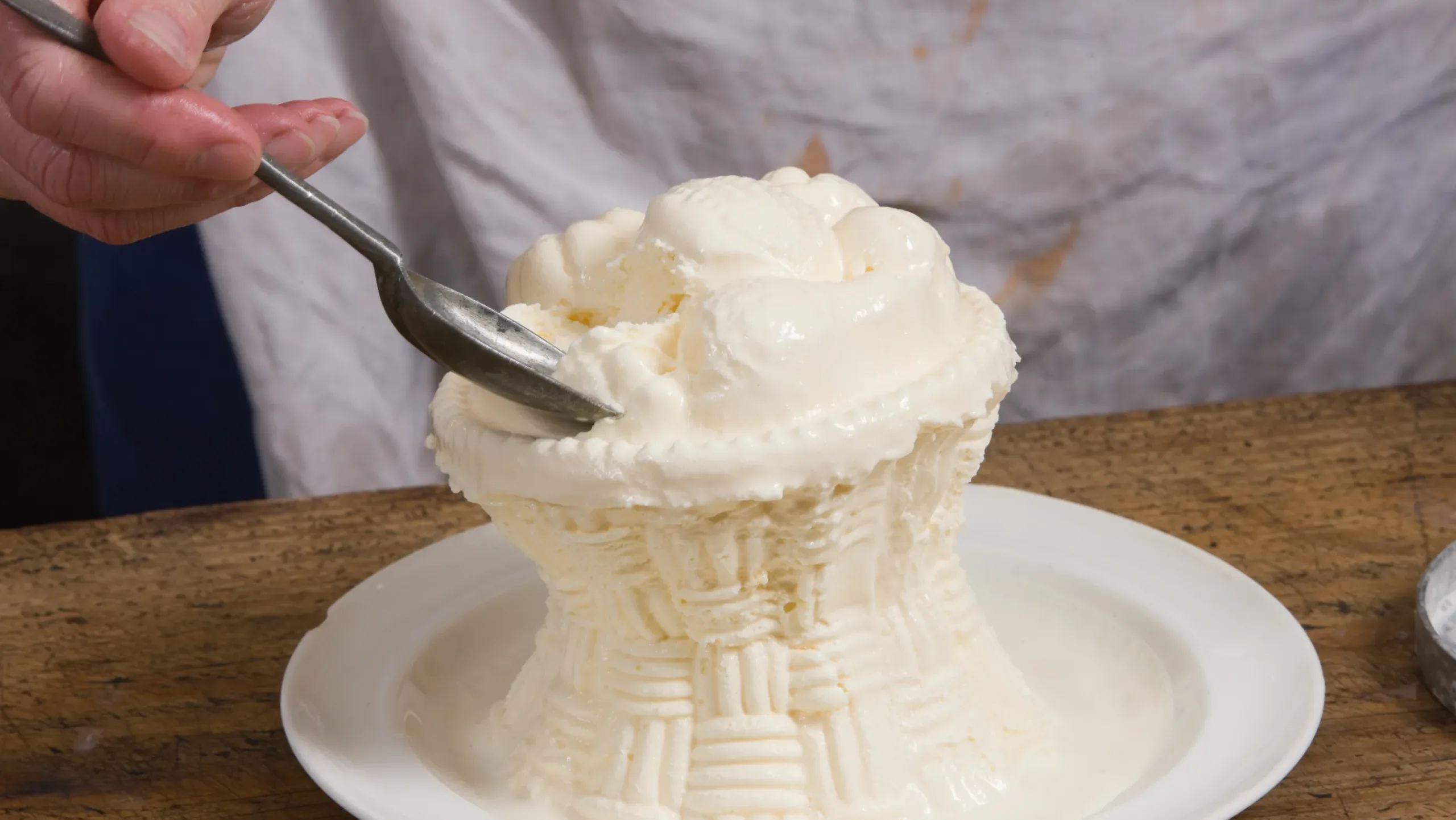
Jefferson was not alone—President George Washington enjoyed it, too. Mount Vernon records mention that he purchased two “dble tin ice cream moulds” in 1792 and two more in 1795 and 1796.
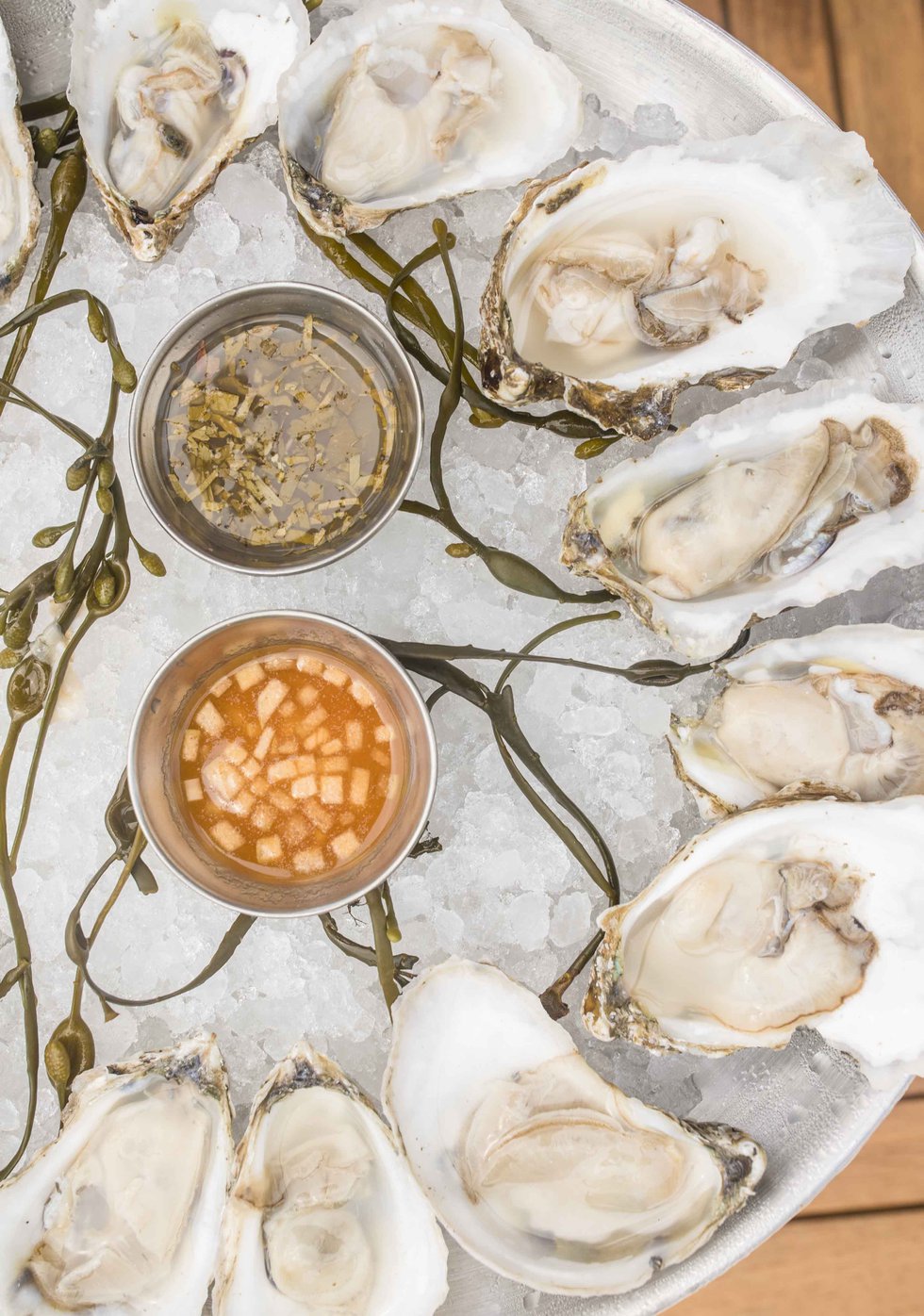
As the dessert gained in popularity, spreading far and wide, so did the types of flavors: coffee, vanilla, pistachio, varieties of chocolate, even parmesan. The most interesting? Oyster ice cream, which comes from Mary Randolph’s 1842 cookbook The Virginia Housewife, although Clark describes it more as “frozen oyster stew.”
Ice cream’s early history proves it has always been a favorite—no matter how unexpected the flavor.
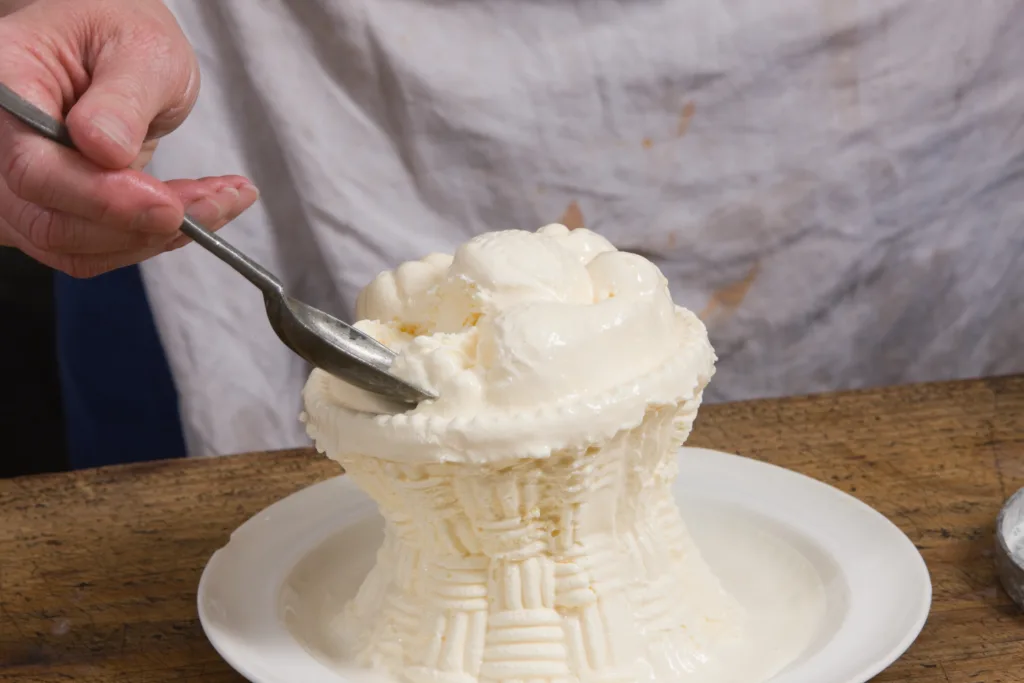
Thomas Jefferson’s Ice Cream Recipe, courtesy of Monticello
Edited for brevity. Read Jefferson’s original writing here.
2 bottles of good cream.
6 egg yolks
1/2 pound sugar
Mix the yolks and sugar.
Put the cream on a fire in a casserole, first putting in a stick of Vanilla.
When near boiling, take it off & pour it gently into the mixture of yolks and sugar. Stir it well.
Put it back on the fire, stirring it thoroughly with a spoon to prevent it from sticking to the casserole.
When near boiling, take it off and strain it through a towel.
Put it in the Sabottiere (A “Sabottiere” is an ice cream maker—in its simplest form, it is just a mould or small bucket.)
Then set it in the ice for an hour before serving. Put a handful of salt into the ice. Put salt on the coverlid of the Sabottiere & cover the whole with ice.
Leave it still for half a quarter of an hour.
Then turn the Sabottiere in the ice for 10 minutes, open it to loosen with a spatula the ice from the inner sides of the Sabotiere. Shut it & replace it in the ice. Open it from time to time to detach the ice from the sides
When well taken (prise), stir it well with the Spatula.
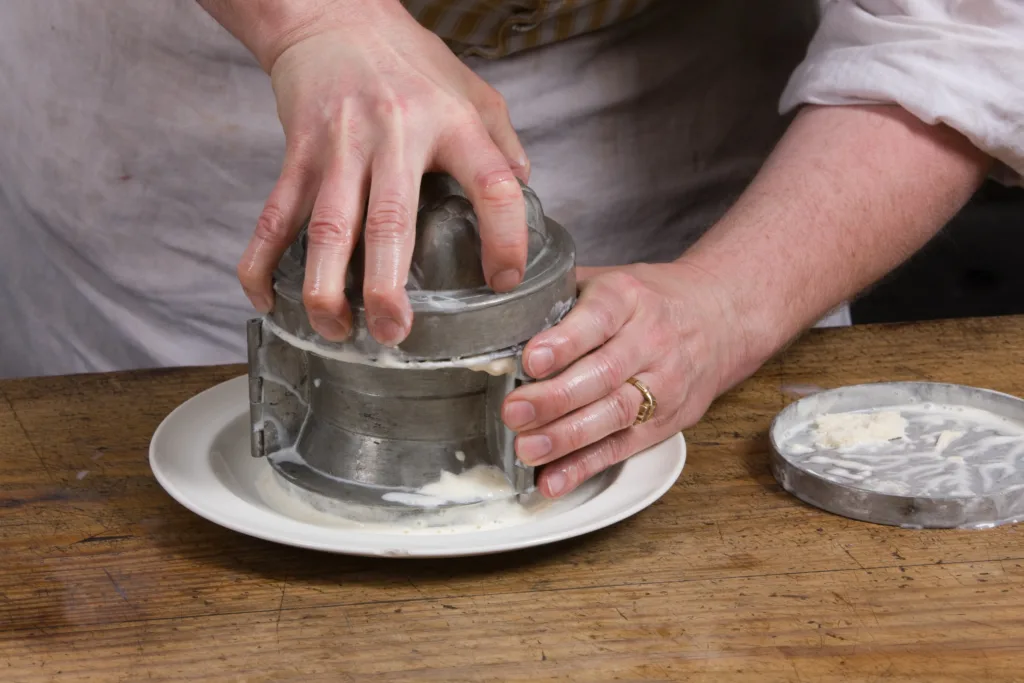
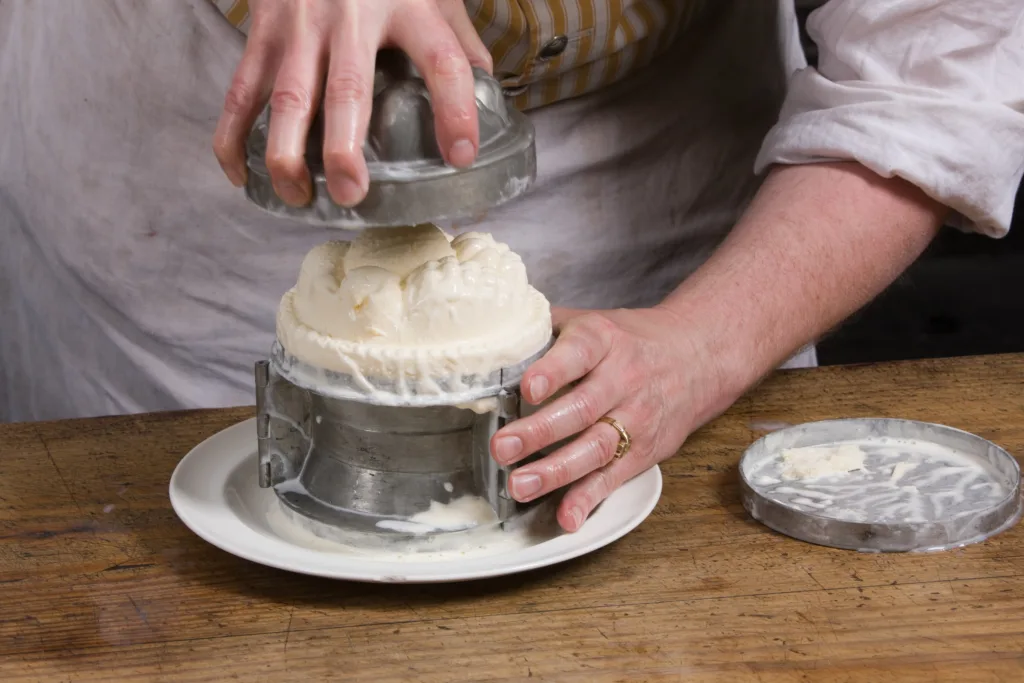
Put it in molds, justling it well down on the knee. Then put the mould into the same bucket of ice. Leave it there to the moment of serving it.
To withdraw it, immerse the mould in warm water, turning it well till it comes out & turn it into a plate.
This article originally appeared in the August 2026 issue.