
When more than 60 tall ships and military vessels from 30 countries glide into Virginia waters this June, they’ll carry centuries of seafaring history—and usher in one of the most ambitious celebrations America has ever staged.
Sail250 Virginia, the Commonwealth’s landmark commemoration of the nation’s 250th anniversary, runs June 12–23, transforming Norfolk and 11 affiliate harbors across the Chesapeake Bay into a living, breathing testament to America’s maritime heritage. The event is one of just five official national partner ports—alongside New Orleans, Baltimore, New York, and Boston—chosen to anchor the country’s semiquincentennial celebration on the water.
“We are creating a once-in-a-generation event and an extraordinary opportunity to honor our naval heritage, strengthen global partnerships, and welcome millions of visitors to the Commonwealth,” said Karen Scherberger, president and CEO of Sail250 Virginia. “The ships, the sailors, and the stories they carry will inspire millions. Together, we are making history again.”
The Fleet Arrives
The spectacle begins days before the main events kick off. Starting June 16, the international fleet gathers at the Lynnhaven Anchorage off Shore Drive in Virginia Beach—the only moment when all ships in the Parade of Sail can be seen together, in one place, from both land and water.
On the morning of June 19, the centerpiece of the entire celebration launches: a spectacular 26-nautical-mile Parade of Sail, commanded by the Virginia Pilot Association, winding from Virginia Beach to docking locations in downtown Norfolk and Portsmouth, with 15 public viewing sites lining the route. In a moment that will define the day, the U.S. Navy’s legendary Blue Angels will conduct a flyover during the parade.
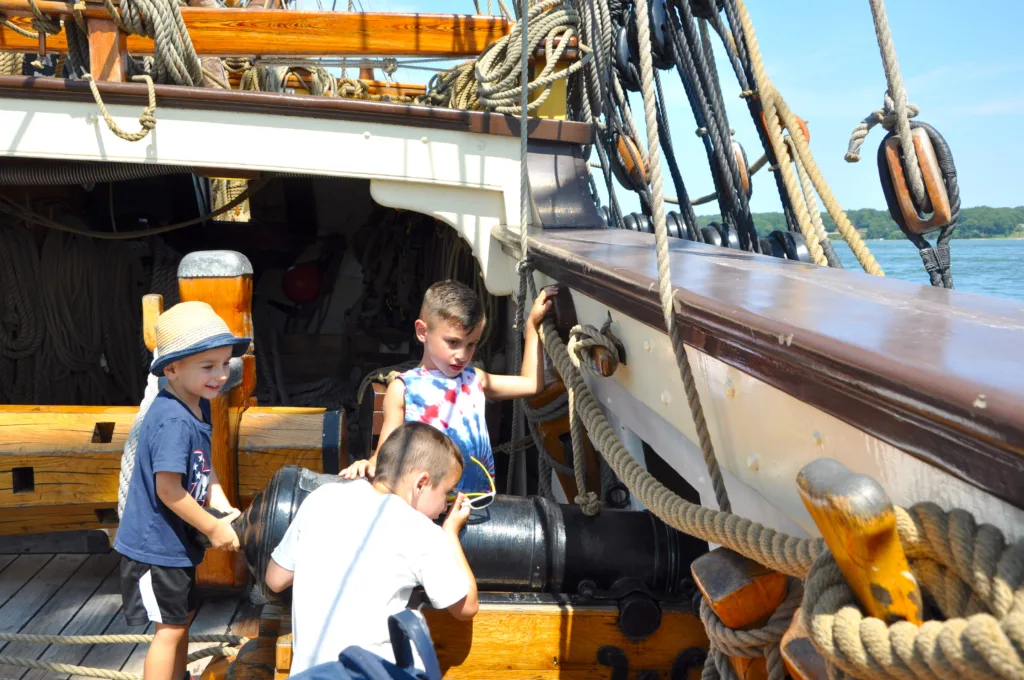
Aboard the Kalmar Nyckel exploration is encouraged. Here, little sailors check out the ship’s cannon. Photo courtesy of the Kalmar Nyckel
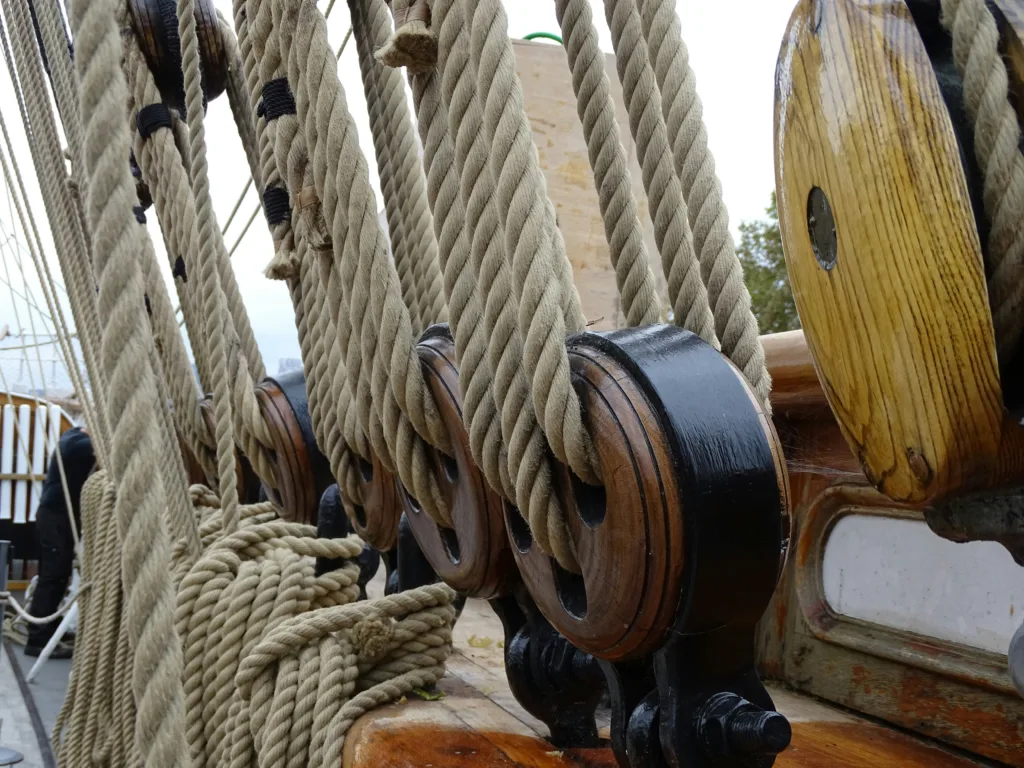
Rigging, including wooden blocks and thick lines/ropes, typically found on historical vessels
An Armada Like No Other
What makes this fleet extraordinary is the sheer variety of vessels rubbing shoulders across the harbor. You’ll see full-rigged ships, barques, barquentines, schooners, and sloops—a floating museum of sail power spanning four centuries of maritime evolution. Nearly all of the international vessels serve double duty as navy training ships, meaning their crews are active military cadets gaining real-world seamanship experience, adding an entirely different dimension to meeting the sailors up close.
Among the American ships, none carries more historical weight than the Godspeed, a replica of one of the three vessels that brought the original Jamestown settlers to Virginia in 1607. Sailing alongside her will be the Virginia, a replica of America’s first warship of that name built in 1776, and the Providence, a replica of John Paul Jones’ famous Revolutionary War sloop, among the first vessels of the Continental Navy.
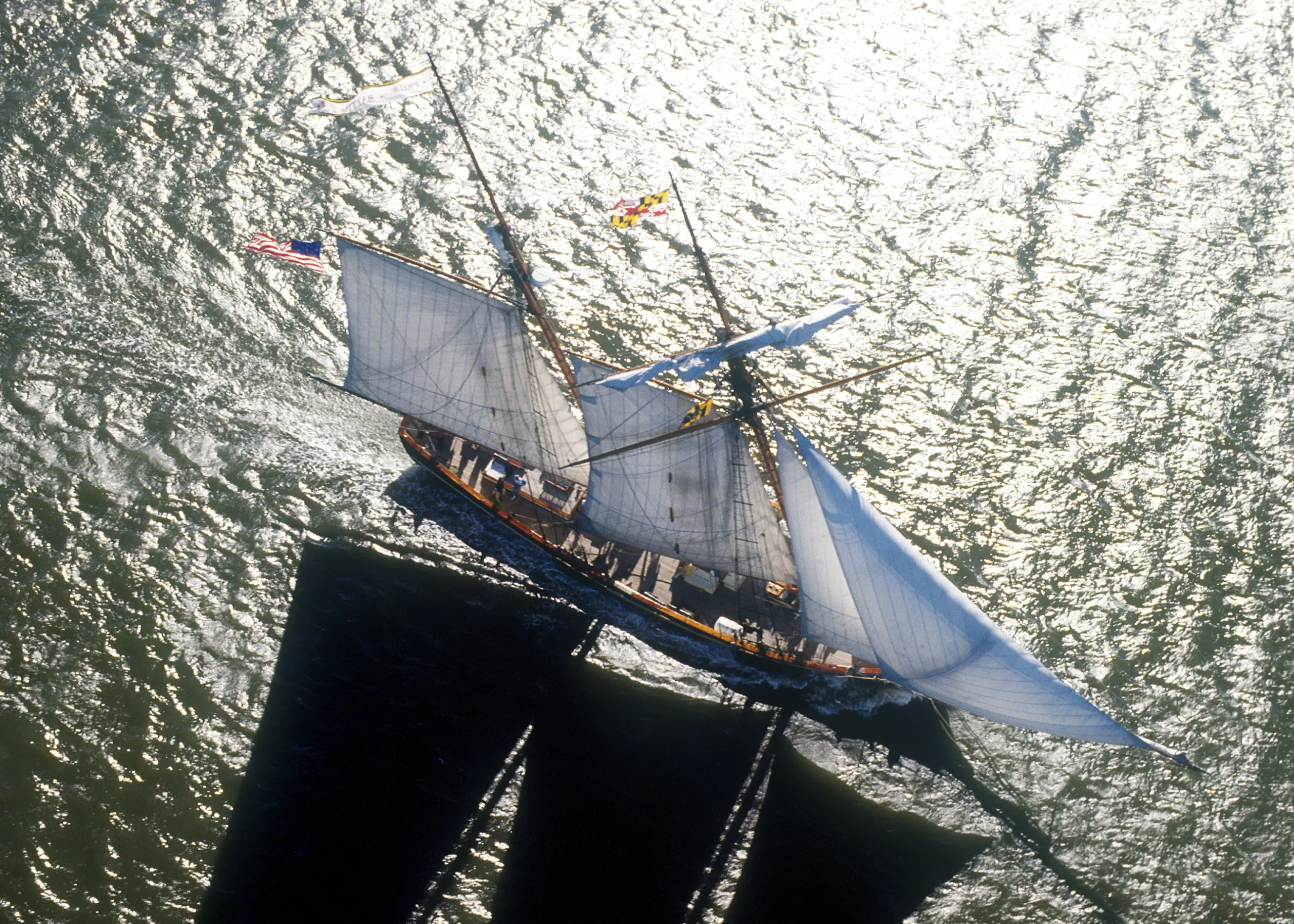
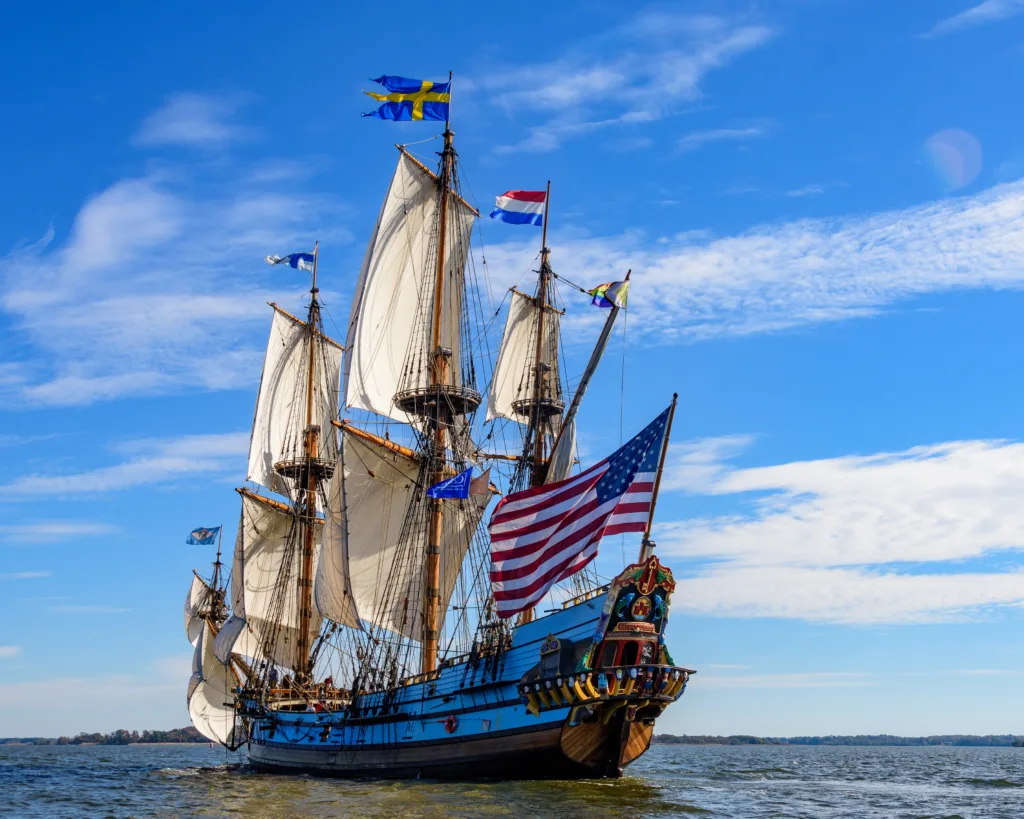
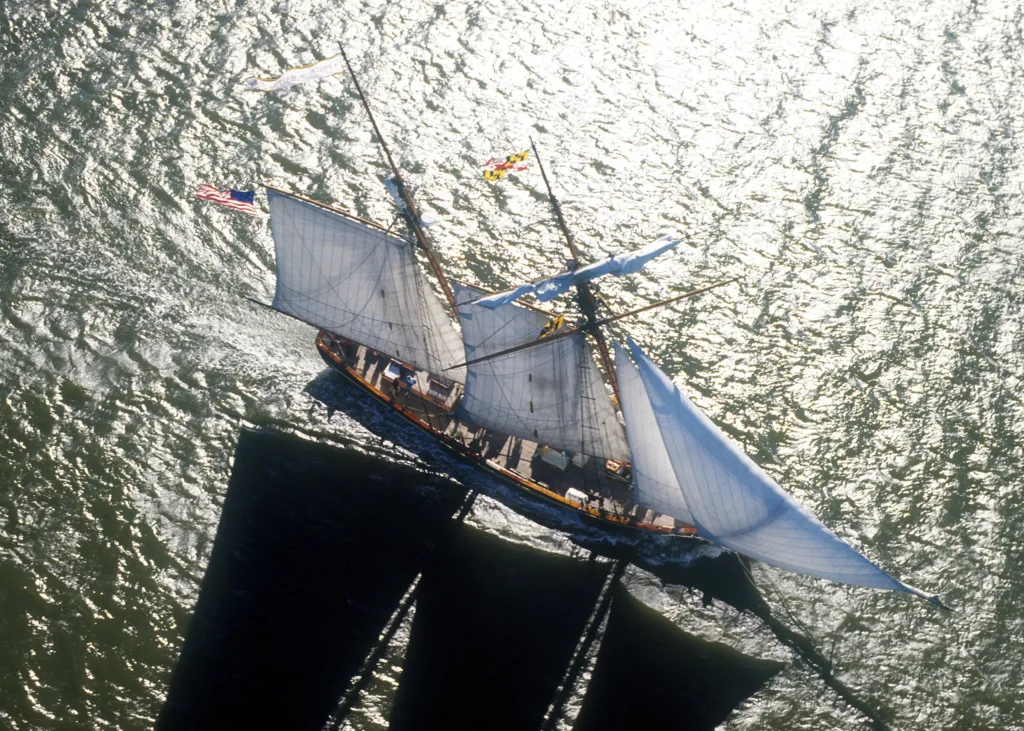
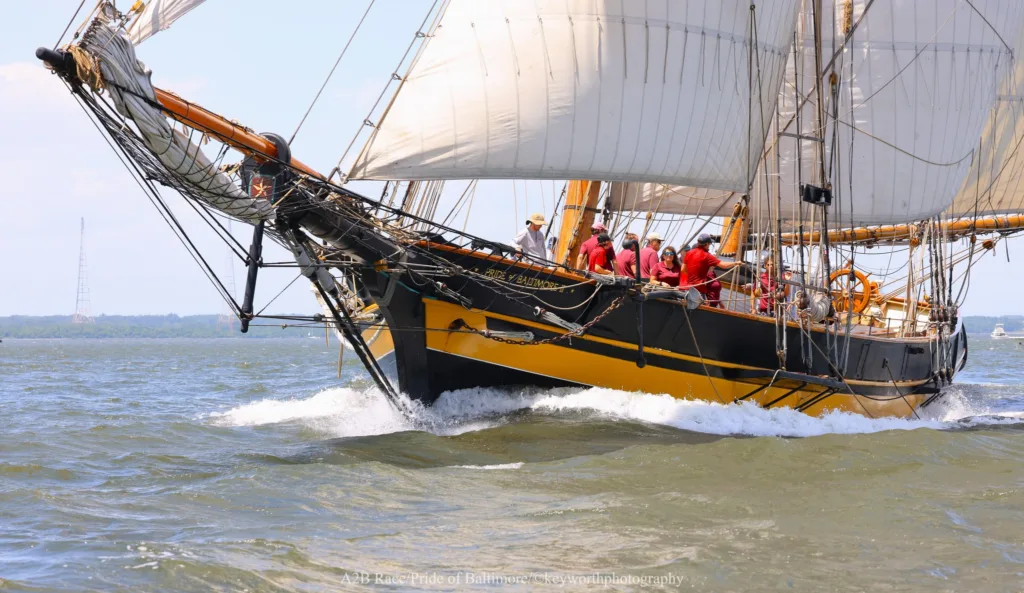
The Pride of Baltimore II, a replica of the fast Baltimore Clipper privateers that helped defeat the British in the War of 1812, brings the early republic to life on the water. The Kalmar Nyckel recalls an even earlier chapter—a replica of the Swedish vessel that carried the first European settlers to Delaware in 1638. And the Picton Castle has a story all her own: A Welsh fishing trawler turned British minesweeper in World War II, she was reborn as a sailing barque in the 1990s and has since completed multiple world circumnavigations. Rounding out the American contingent are beloved Chesapeake Bay vessels including the Sultana, Lady Maryland, Maryland Dove, and others—historic schooners and working watercraft that embody the region’s deep seafaring soul.
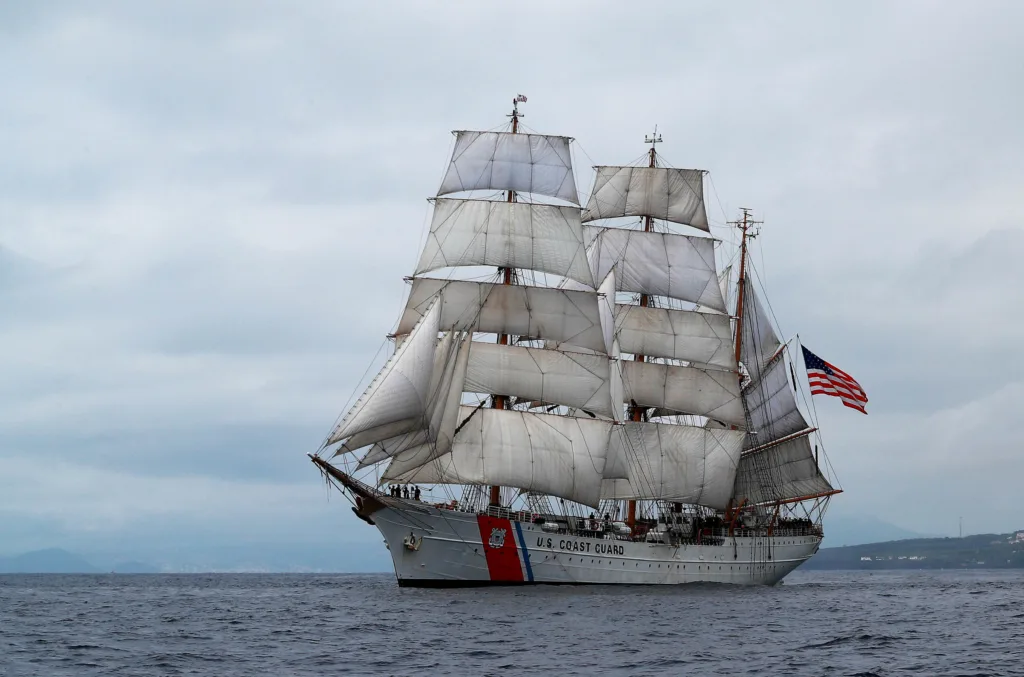
From the international fleet, France’s Belle Poule carries perhaps the most dramatic story—she transported Napoleon Bonaparte’s remains from St. Helena back to France in 1840. Chile’s Esmeralda, nearly 380 feet of four-masted barquentine glory, was transferred from Spain to Chile after a fire nearly bankrupted her shipyard, her purchase price partly the forgiveness of debts from the Spanish Civil War. America’s own USCG Barque Eagle—built in Germany in 1936, seized as a war prize after World War II, and the only active tall ship in U.S. military service—completes a parade lineup that is genuinely unlike anything most Americans will ever see again.
Norfolk and Beyond
As host city, Norfolk offers free ship tours, concerts, fireworks on the Elizabeth River, and Juneteenth celebrations woven alongside the 50th annual Harborfest. The celebration extends across the state, with affiliate harbors from Alexandria to Yorktown to Cape Charles each welcoming vessels and hosting their own events. Patty Harris, Cape Charles Main Street vice president, captures the spirit shared across all the harbor communities: “This celebration will provide a wonderful means to tell the story of the contributions of the Eastern Shore during the Revolution and the establishment of the new nation.” More than 3 million visitors are projected, with an anticipated economic impact exceeding $150 million, and more than 70 schools are already enrolled in the Adopt-A-Ship program, which connects K-12 schools, homeschoolers, and civic groups with international tall ships visiting during Sail250 Virginia. Participants become ambassadors, communicating with crew, learning about the ships’ home countries, and welcoming them to Virginia, fostering global education.
“Virginia will welcome the world in 2026,” Scherberger says. “Host city Norfolk and the affiliate harbors are reaffirming their place as harbors of history and ports of international friendship.”
For a complete schedule, ship lists, and viewing location details, visit Sail250Virginia.com.
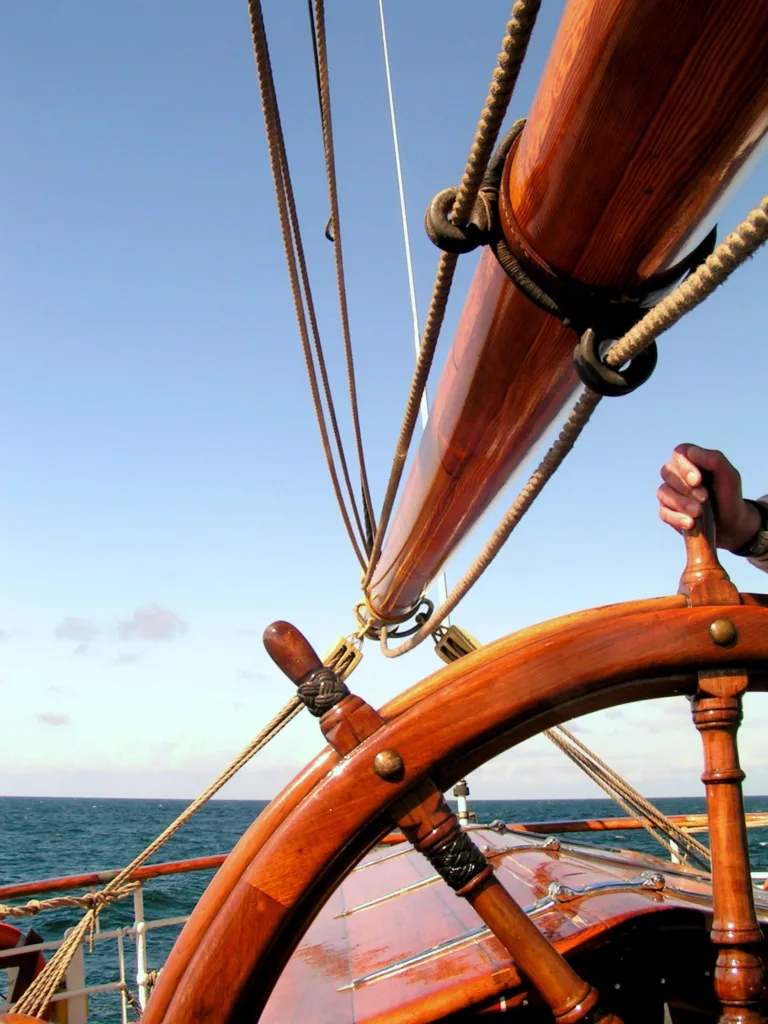
A ship’s wheel, or simply the helm, represents the ship’s entire steering mechanism.
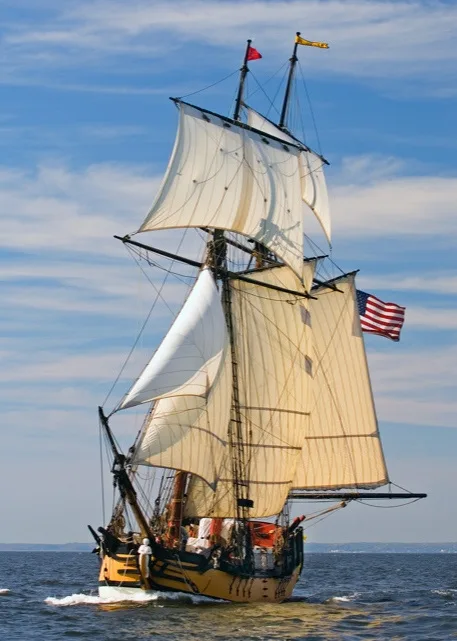
The Schooner Sultana at full sail. At 60’ bow to stern, this replica of the original Sultana that dates to 1768 sails as a school ship, taking more than 4,500 students onto the Chesapeake Bay. Photo courtesy of the Sultana
This article originally appeared in the June 2026 issue.