

Long before Secretariat blazed into the realm of legend, Virginia could boast Bulle Rock, Diomed, Sir Archy, Boston and many other exceptional horses who left indelible hoofprints in the history of American thoroughbred racetracks.
That illustrious history had rather humble—and rowdy—beginnings. In the early 1600s, the Colonists, lacking open land for racetracks, hacked quarter-mile paths through the dense wilderness to stage high-stakes, boisterous horse races. Their mounts, who might be pulling a carriage or plowing a field one day, would be sprinting for glory the next. Their bloodlines were as varied as their duties: British, French, Spanish, and even Chickasaw, a Native American breed.
Then, in 1730, a game-changer arrived on the scene. The first thoroughbred in America, Bulle Rock, landed in Virginia, ushering in a new era of racing. Samuel Gist, a Hanover County planter, purchased the English stallion to stand at stud. With a pedigree tracing back to the Godolphin Arabian, Byerley Turk, and Darley Arabian, thoroughbreds infused the English racehorse with more speed, incredible stamina, and a refined beauty when bred with English mares. At the ripe age of 21, Bulle Rock proved to be a successful sire in his new home, producing heirs who would shape the sport for generations.
As the racing bug spread, Virginia’s elite clamored to lay claim to some of the most influential thoroughbreds the world had seen. Among them was Janus, a grandson of the Godolphin Arabian, who came to Gloucester County in 1756. A breakneck-speed stallion, Janus also found fame as a foundation sire for the American Quarter Horse—whose name, you might guess, originated from those early quarter-mile races. John Randolph of Roanoke, a Virginia senator and horse breeder known for his sharp tongue, displayed a marked preference for Janus’ foals.
The Sport Catches On
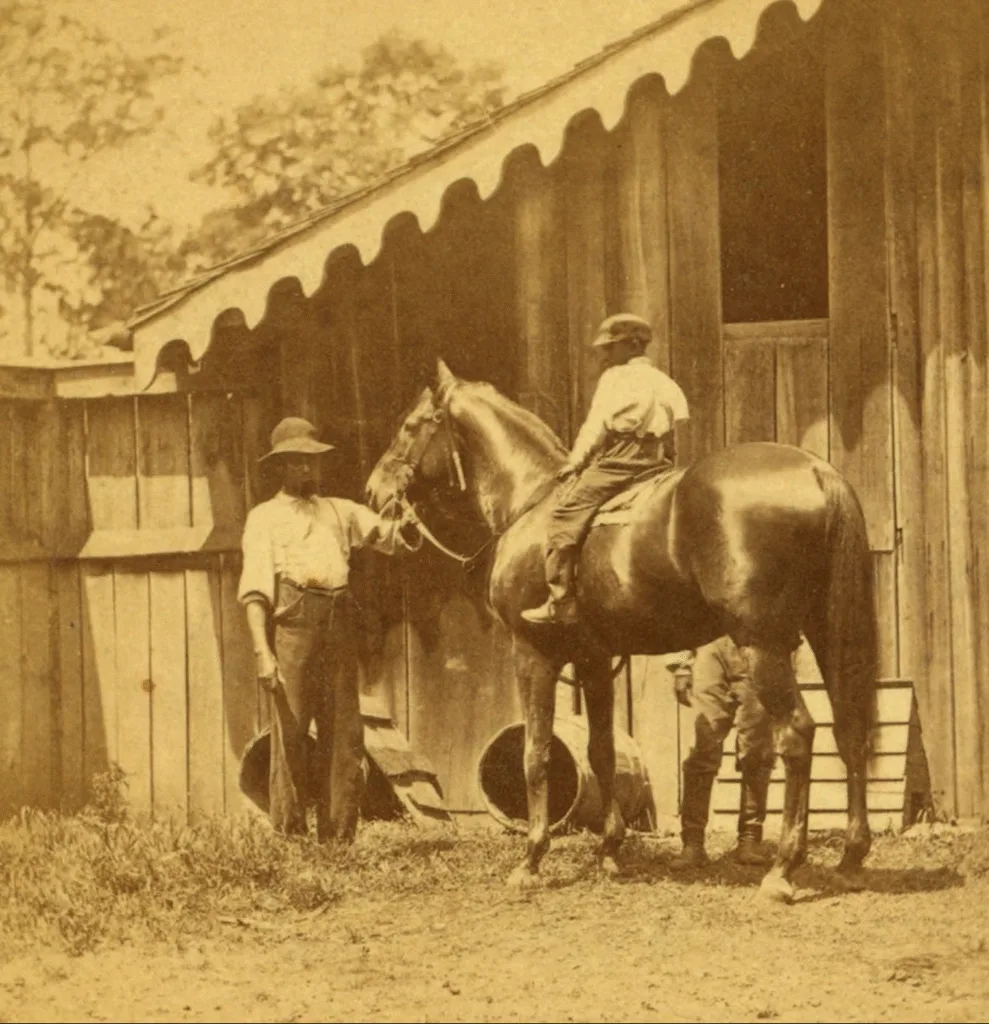
As the racing breeds evolved, so did the sport. The English trend of longer racetracks with longer races soon caught on in the Colonies. In 1737, John Pinkerton’s Old Field in Hanover hosted Virginia’s first documented long race. Williamsburg followed suit, establishing Virginia’s first official long racetrack in 1739, followed by many others across the state. Competing in heats of four miles each, horses sometimes ran an astonishing 12 miles in a day. Many of the jockeys were slaves, whose skill and expertise in the saddle earned them a rare measure of respect in the Southern racing world.
The competitive spirit of racing sometimes spilled over into outright feuds. In 1752, the race mare Selima, a daughter of the Godolphin Arabian, inadvertently sparked an interstate controversy. Owned by Maryland’s famed Belair stable, Selima soundly defeated the favored Tryal, owned by William Byrd III of Westover, at a memorable match in Gloucester. The defeat stung so badly that Virginia promptly banned all Maryland horses from competing in the state.
Unbothered by the drama, Selima later returned to Virginia to the farm of prominent breeder John Tayloe II at Mount Airy. There, her prodigious success as a broodmare eclipsed her racing record. Racing historian John Hervey lauded Selima as “one of those majestic matriarchs whose greatness is monumental.”
Another powerhouse, Fearnought, came to Caroline County in 1764, purchased by John Baylor of Newmarket Farm. Dubbed the “Patriot’s Choice,” Fearnought sired offspring so formidable that they carried several leaders of the American Revolution, including Thomas Jefferson himself.
Racing Royalty
Then came Diomed, winner of the inaugural Epsom Derby in England in 1780. Col. John Hoomes of Bowling Greene, with his keen eye for talent, purchased the aging stallion in 1798 for a mere $250—a bargain even then. Virginia seemed to miraculously rejuvenate Diomed, and he resumed his stud career with vigor until his death in 1808 at the age of 31. His name is now almost synonymous with American racing royalty.
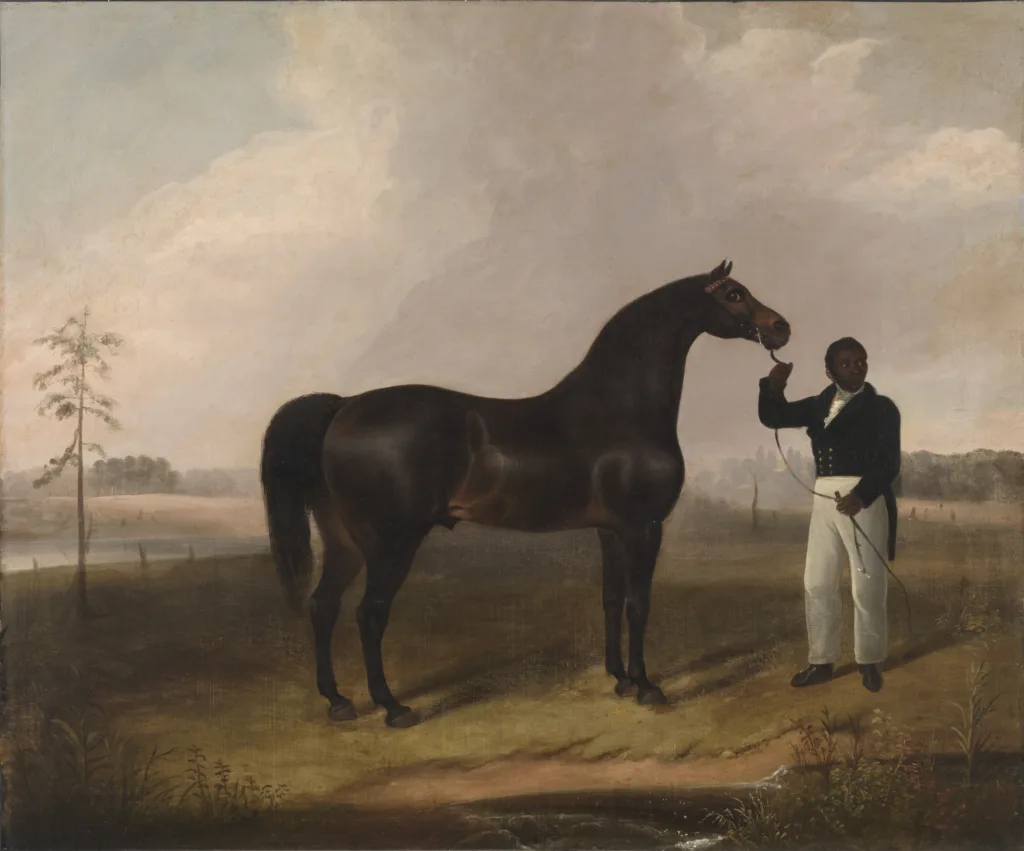
Diomed’s most famous son, Sir Archy, was born in Goochland County in 1805. With momentum as swift as his running speed, Sir Archy became known as America’s first great thoroughbred stallion, the big bay colt amassing an impressive record on the track, exceeded only by his stellar success as stud. The American Turf Register boldly declared in 1829 that most of the best stock in the country was “either immediately from the loins of Sir Archy” or from his sons and daughters.
Boston soon burst onto the track. A grandson of Sir Archy, he was foaled in Henrico County in 1833 at John Wickham’s Hickory Hill. At first, Boston’s racing career didn’t look promising, as his terrible temper prompted one trainer to declare that he “should be castrated or shot.” Placed in training with William Ransom Johnson, the fabled “Napoleon of the Turf,” Boston hit his stride. Winning 40 of 45 races, he earned accolades as the greatest racehorse of his time. Yet Boston’s highest achievement was his son Lexington, the designated top sire in America for 16 years.
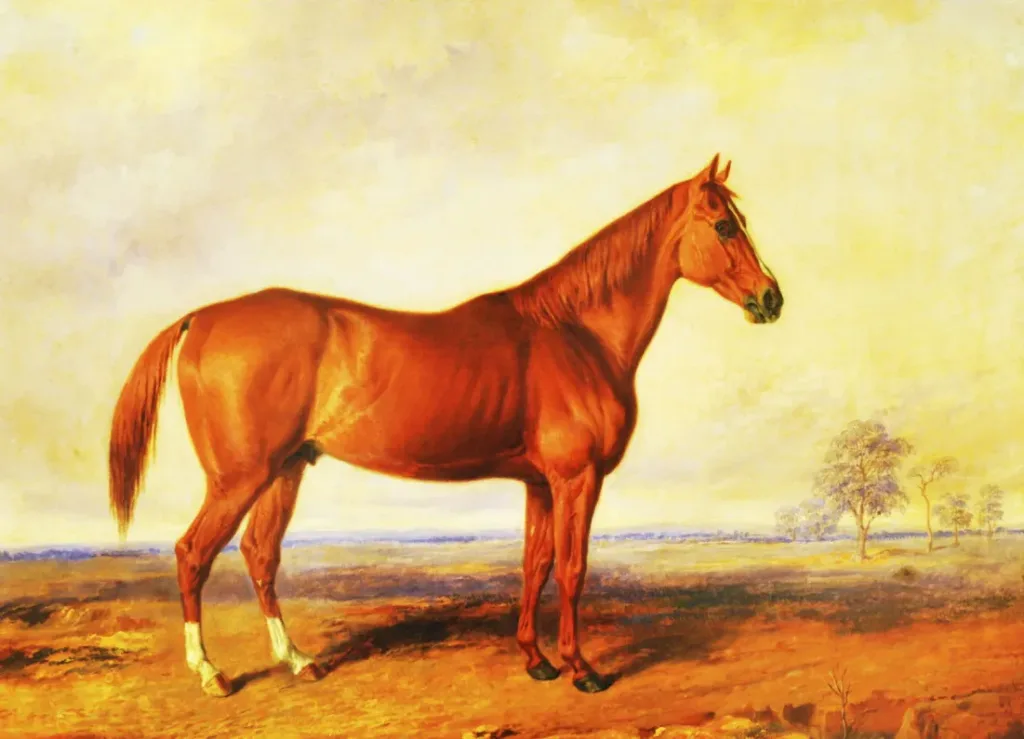
Boston’s grandson Planet would become nearly as famous as Boston and Lexington. Planet was foaled in 1855 at Major Thomas Walker Doswell’s farm Bullfield in Hanover County. In its heyday, Bullfield was called the “mecca of Virginia turfmen” by the New York Sportsman. The fiery chestnut colt, nicknamed the “great red fox,” tore up the track with 27 wins out of 31 long races, raking in nearly $70,000, an unimaginable sum at the time (around $2.5 million today). That record stood for 20 years. Doswell was so enamored with his champion steed that he commissioned the Swiss-born American equine artist Edward Troye to immortalize Planet in a portrait, complete with his Black jockey, Jesse, in the saddle.
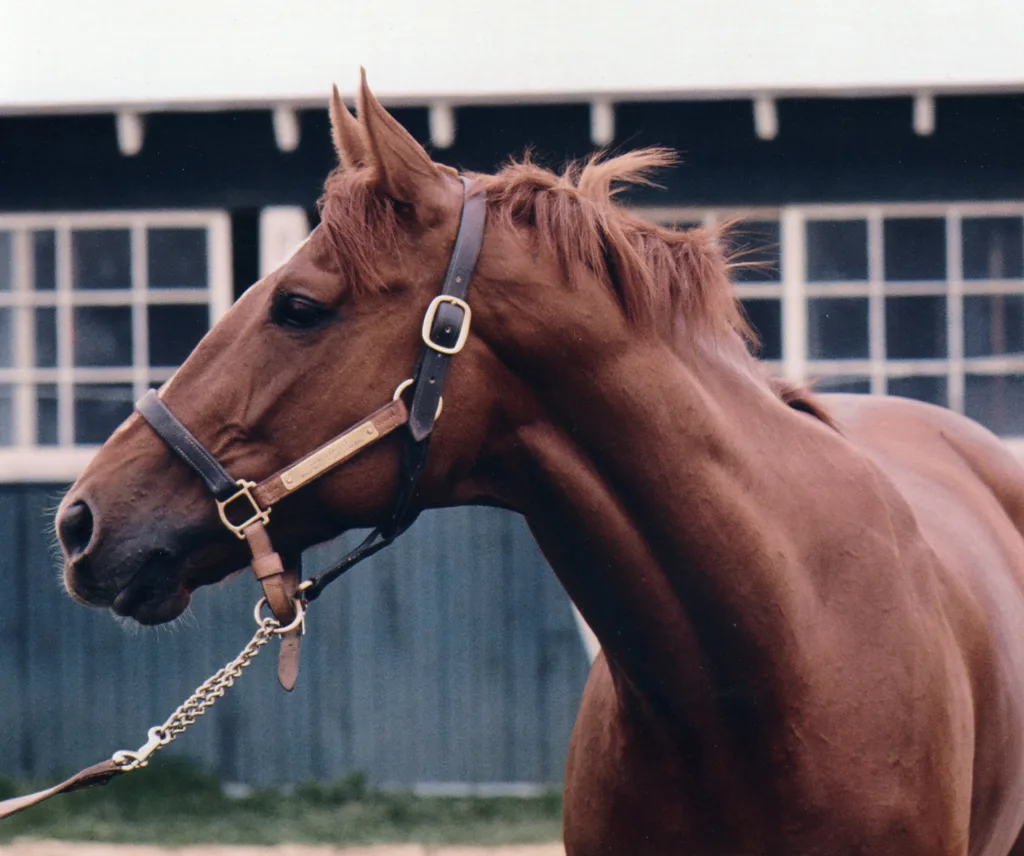
The glory days of Bullfield didn’t end there, igniting the dreams of a horse-crazy boy named Christopher Chenery of Ashland, with historic results. Young Chenery spent his days helping exercise the few remaining racehorses owned by his cousin Bernard Doswell in the early 1900s. This sparked his ultimate goal to someday have his own thoroughbred farm. In 1936, Chenery founded Meadow Stable in Caroline County, not far from the old Bullfield site. And in 1970, the stable produced a strapping, bright-red chestnut colt with an undeniable presence.
They Called Him Big Red
That colt—Secretariat—was superior from the start, quickly earning a reputation as not only an extraordinary physical specimen, but also as being a kind and intelligent horse. His string of victories by the age of two earned him Horse of the Year in 1972, an honor never before bestowed on a juvenile. Then, in 1973, he charged through the Triple Crown, forging track records that still remain unassailable. His breathtaking Belmont Stakes win still stands as one of the most electrifying moments in sports history.
And standing as pillars in the pedigree of Secretariat and many champions today are Boston, Sir Archy, Diomed, and an entourage of thoroughbred titans who created Virginia’s lasting legacy in racing history, an ever-present reminder that greatness comes in many forms—even hooved ones.
Victors On & Off the Race Track
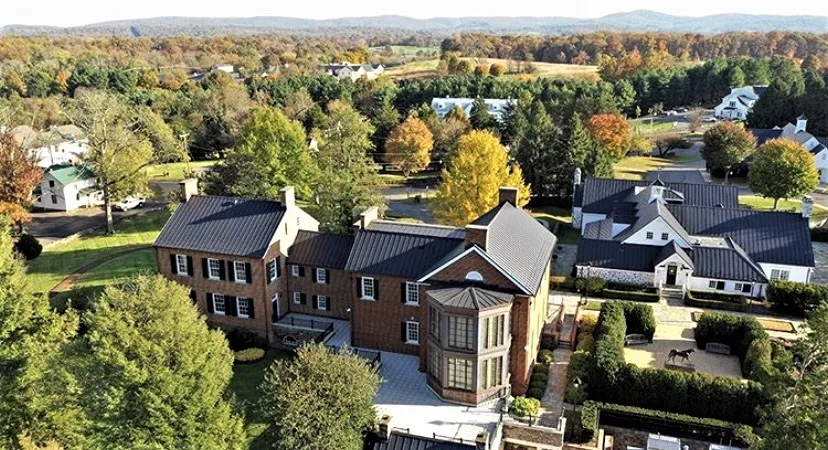
Middleburg’s National Sporting Library & Museum earned a prestigious spot on Condé Nast Traveler’s 2025 Best United States Museums list, recognized as Virginia’s top museum among the nation’s finest. Open Thursday–Sunday, 10 a.m.–5 p.m., the museum celebrates the legacy of traditional country sports, including angling, horsemanship, polo, and steeplechasing. NationalSporting.org
This article originally appeared in the June 2025 issue.