
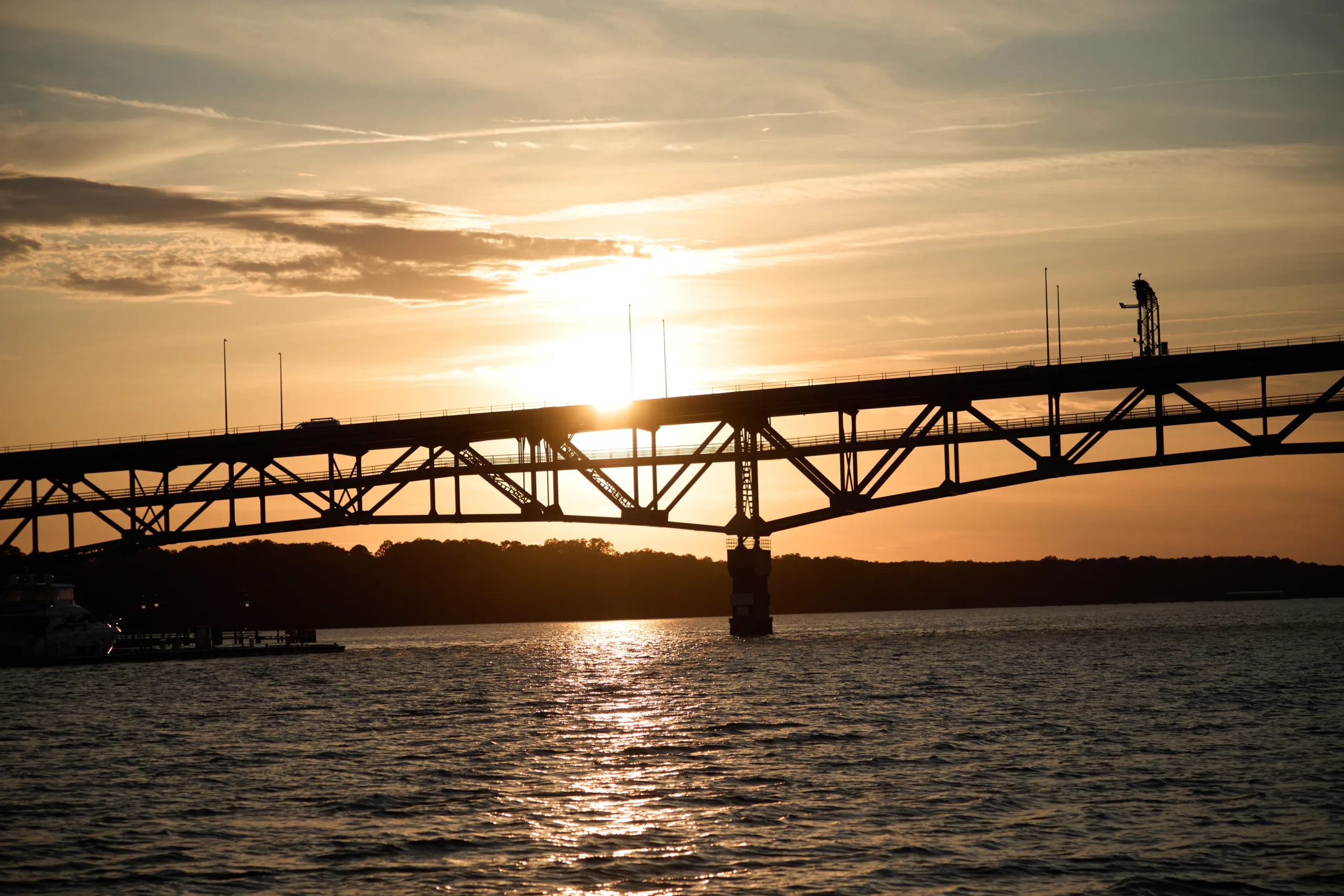
While many historic sites claim to be “where it all began,” Yorktown’s distinction is rarer: It is where it all ended—and began again. As America celebrates 250 years of independence, this small town deserves a spotlight and renewed recognition as the figurative birthplace of our nation. It was here that the British laid down their arms, ending the Revolutionary War. The flip side of Yorktown’s historic coin is its friendly, modern-day persona that welcomes visitors with open arms, fun things to do, and, thankfully, lots of free parking—a sure sign of hospitality. I’m on a quest to know this town better and see for myself the way old and new come to weave together into something worth exploring.
Arriving in Yorktown on a picture-perfect Saturday morning, I squint in the bright sun shining on the York River, trying my hardest to envision 16,000 American and French soldiers and some 7,000 British converging on this very spot 250 years ago. It’s just too much to imagine when the streets are bustling with people who are there to enjoy the glorious river views as they step in and out of the shops and cafés.
But First, History
Sticking with history first, I take a moment to review what I know—please note that I am not a historian—about the pivotal role of this small riverside town, then called York. The last chapter in the story of the American Revolution began when British army leader Lord Charles Cornwallis and his troops moved in, as part of their Southern Campaign, and occupied Yorktown and Gloucester Point directly across the York River.
Hearing that Cornwallis was in coastal Virginia, General George Washington headed there with his army, joined by French leader Comte de Rochambeau and his troops. While Cornwallis planned his attack and awaited British reinforcements—which never arrived—the formidable American and French armies trapped Cornwallis by land with help from Marquis de Lafayette, and the French naval fleet blocked his escape by sea.
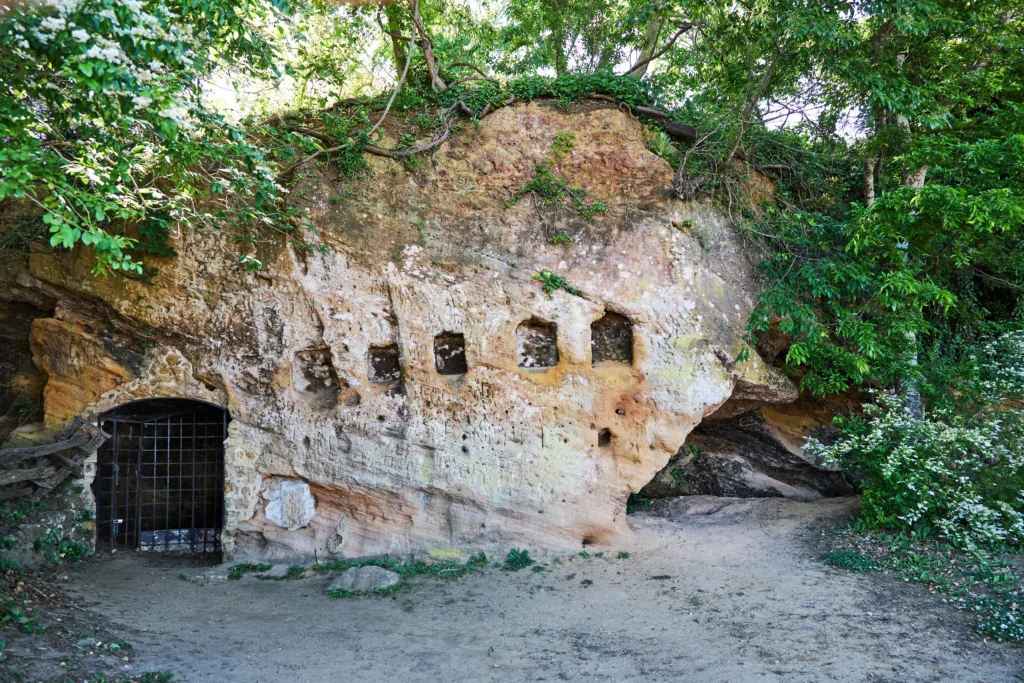
Did Cornwallis hide in this secret cave to avoid harm as his men fought on? Or was it used to store potatoes? No one knows for sure.
Legend says that Cornwallis hid in a stone cave by the waterfront, hoping to escape bombardment while his army fought on, but some say the cave was merely a place for potato storage. Potato bunker or Cornwallis’ cave? It’s still a mystery.
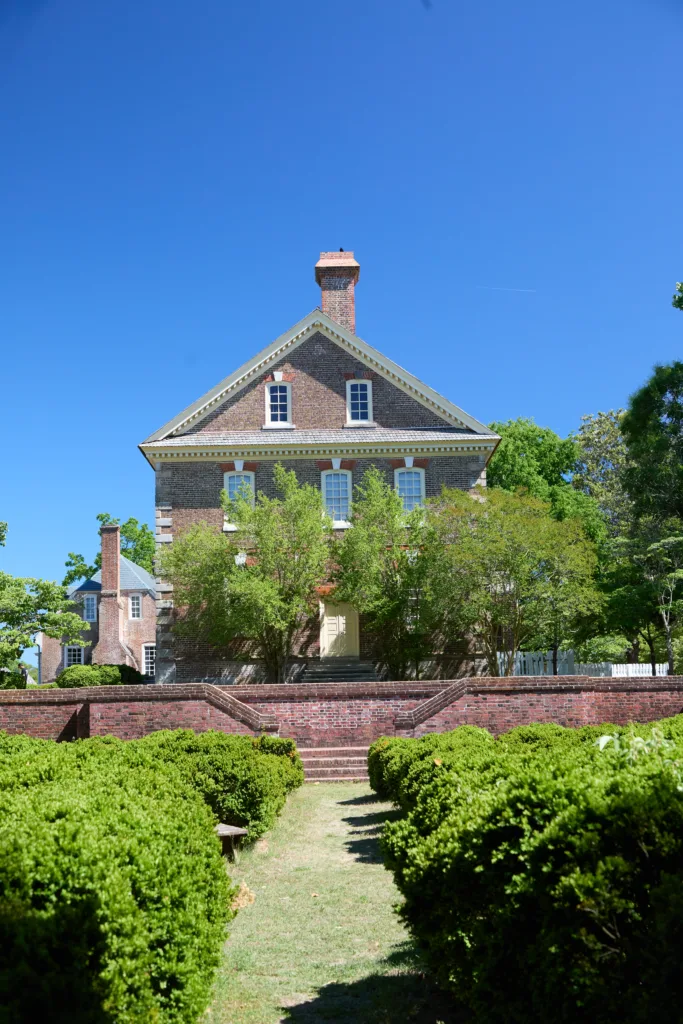
Ultimately, Cornwallis’ force of 7,000 was no match for the 16,000 troops commanded by Washington, and on Oct. 19, 1781—six and a half years after “the shot heard round the world”—Cornwallis surrendered. The Articles of Capitulation, or terms of surrender, were negotiated at Moore House, which is still standing at 228 Nelson Rd. and open to the public. The Battle of Yorktown was the last of the war, and freedom from British rule was ours.
A Revolution, Re-created
Now, 250 years later, there’s no better time to dig into the details of our final days under the Brits. The story of America’s fight for independence is best told at the American Revolution Museum, which, along with the Jamestown Settlement, is run by the Jamestown-Yorktown Foundation. You’ll find a helpful illustrated timeline, immersive environments, uniforms, dioramas, interactive exhibits, and a collection of nearly 500 artifacts, including a rare July 1776 broadside of the Declaration of Independence. The Siege of Yorktown, a film with a 180-degree surround screen and dramatic special effects, really brings the Revolution alive.
Outside, you can explore a re-creation of Washington’s army encampment, visit a simulated Revolution-era farm where you can help with chores in the house, kitchen, tobacco barn, gardens, and crops. You’ll never complain again about your 21st-century chores.
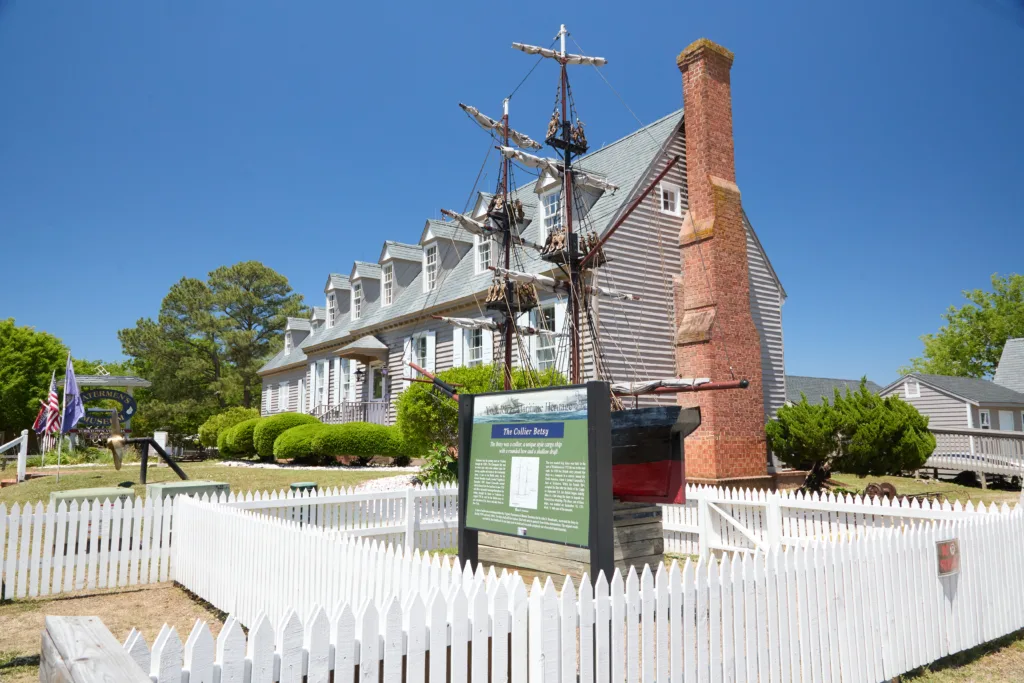
To continue learning about the Yorktown of yesteryear, there is The Watermen’s Museum, which is, not surprisingly, located on Water Street’s Riverwalk, just yards from the York River. From the street, it resembles a traditional Colonial house with a white picket fence, but the old-style cargo ship out front is a clue to its contents. A trove of artifacts salutes Virginia’s watermen whose role in historic and modern life on our rivers and the Chesapeake Bay has been essential in many ways. For 400 years, they’ve harvested seafood, piloted ships, and worked the local waterways.
Watermen are especially remembered this 250th anniversary year of freedom from British rule. During the final Revolutionary War battle in Yorktown, local watermen’s navigation assistance helped the French navy hold the British offshore. It was a pivotal moment that led to victory for Americans.
Many artifacts, maps, models, and photographs illustrate how the watermen—military and civilian—have impacted the lives of those on dry land. The museum features a working boatbuilding shop as well as a fun menu of children’s summer camps—pirates, archaeology, and maritime trades.
At the other end of the village is the Yorktown Battlefield Visitor Center, a must-stop for learning about the Battle of Yorktown before you venture out on your own. National Park Service staff can help you make a plan for exhibits and artifacts to see (George Washington’s tent!), and a film. Maps for both driving or walking tours are available, including a seven-mile audio tour of the battlefield. There is something very special about seeing with your own eyes the exact spot where the Revolutionary War ended.
Back to the Future
Yorktown in 2026 is a wonderful mix of history, charming old houses, museums, shops, cafés, and a beach. You can learn and lounge practically at the same time. This is the melding of old and new that makes the village a worthy destination.
On this sunny day, the village is buzzing with live music, families of all ages, neighbors greeting friends—and, yes, tourists like me. In the tradition of trade, when Yorktown was a thriving port, Market Days vendors set up on a grassy field (former site of the beloved Nick’s Seafood Pavilion) selling produce, baked goods, jewelry, painted oyster shells, plants for summer gardens, crafts, fresh flowers, special tasty treats like lobster rolls and empanadas, and lots more. I chose one of Podmoma’s heavenly blueberry scones and sample some freeze-dried fruit and candy made by Sweet Prints—it’s all the rage with kids at the market.
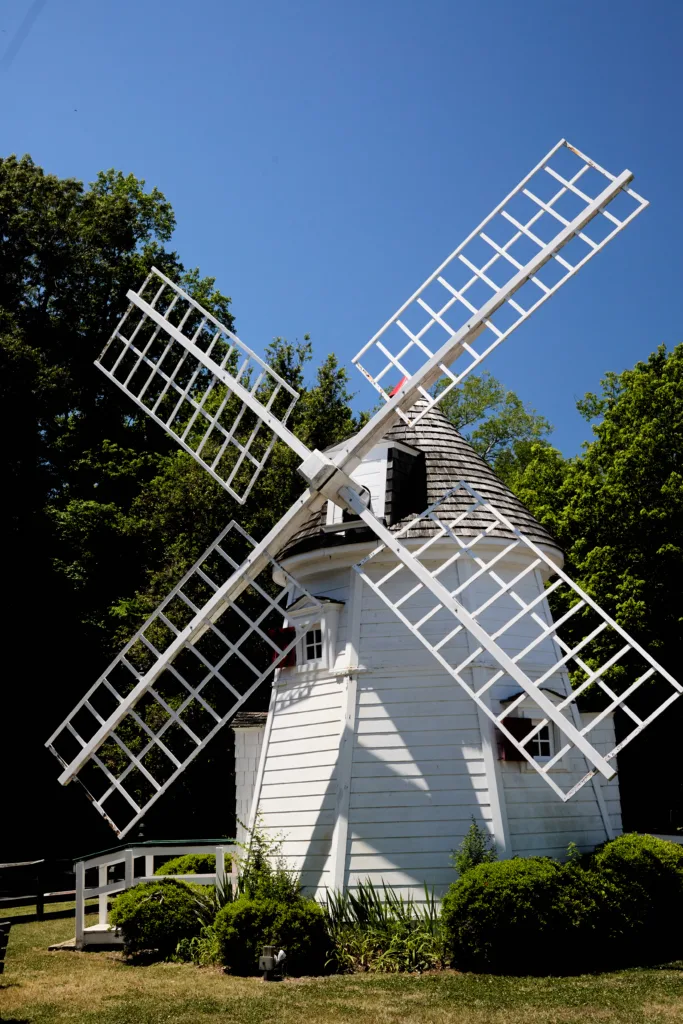
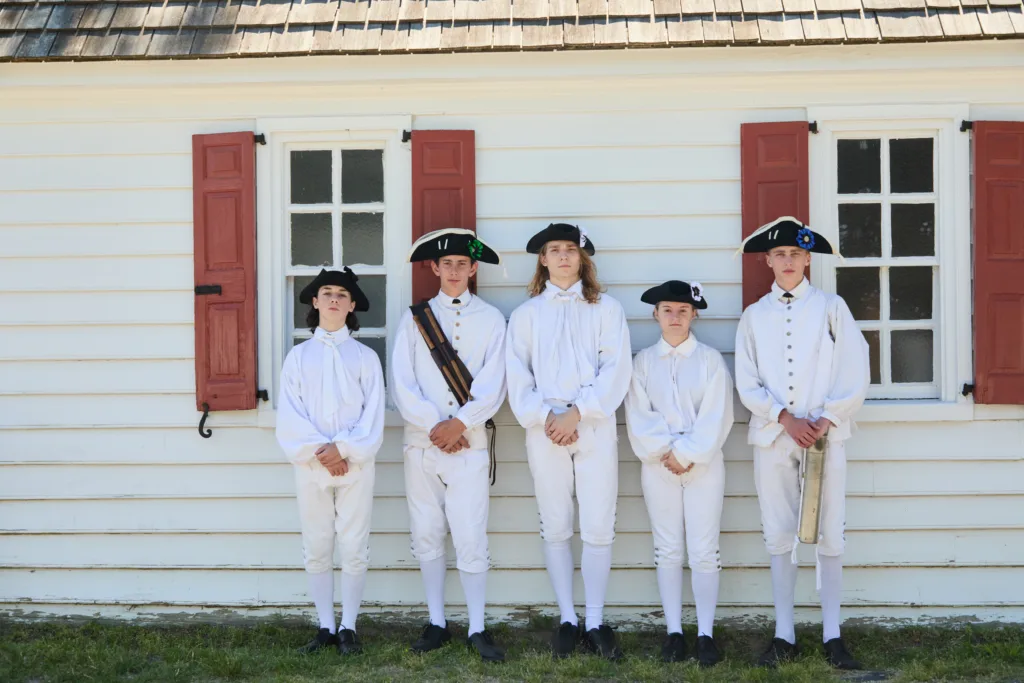
Located at the Watermen’s Museum, the Yorktown Windmill (nicknamed “Miss Evelyn”) is a replica of a colonial-era mill.
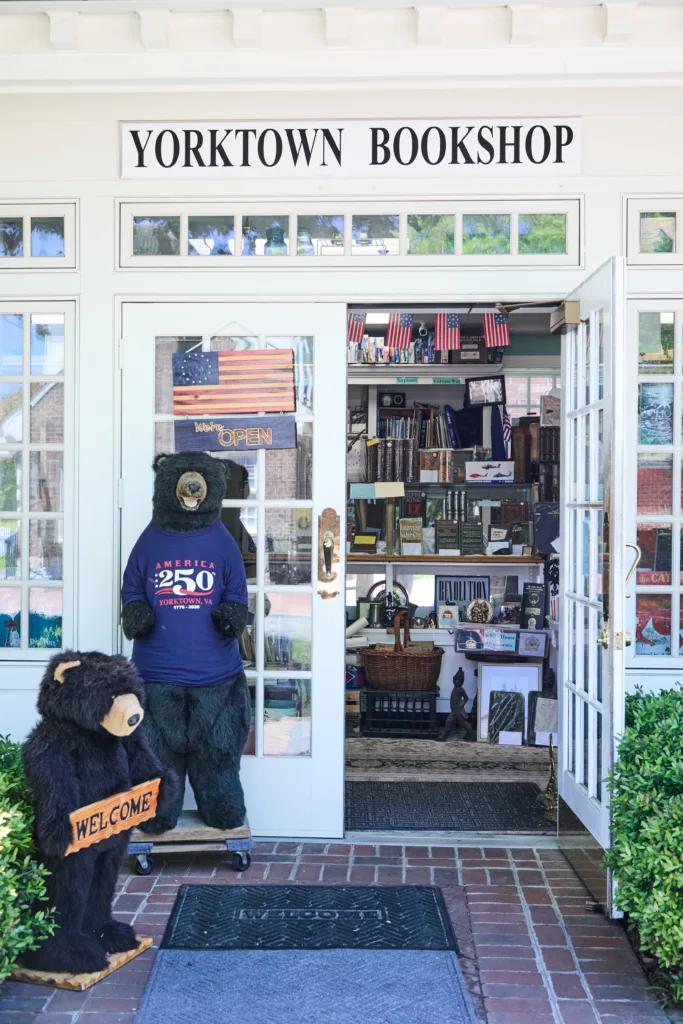
The Yorktown Bookshop is full of curiosities, collectibles, and pages to turn.
Of the various shops I glimpsed along Water Street, the Yorktown Bookshop is a definite standout. It’s a captivating jumble of vintage and rare books (the oldest is dated 1584) and a wonderfully random assortment of antiques, collectibles, and vinyl. Where else can you see a life-size carved wooden tiger inside and a real (stuffed) black bear outside?
Before I head home, I take a little walk on the beach, a sparkling clean stretch with a scalloped shoreline, mere steps from Water Street and the brick Riverwalk. A toe in the water tells me it’s not quite warm enough, but children happily play in the shallows while others relax in beach chairs, unpacking picnics and enjoying dreamy sights of sailboats sliding across the silvery York River towards the Chesapeake Bay—just as ships did 250 years ago.
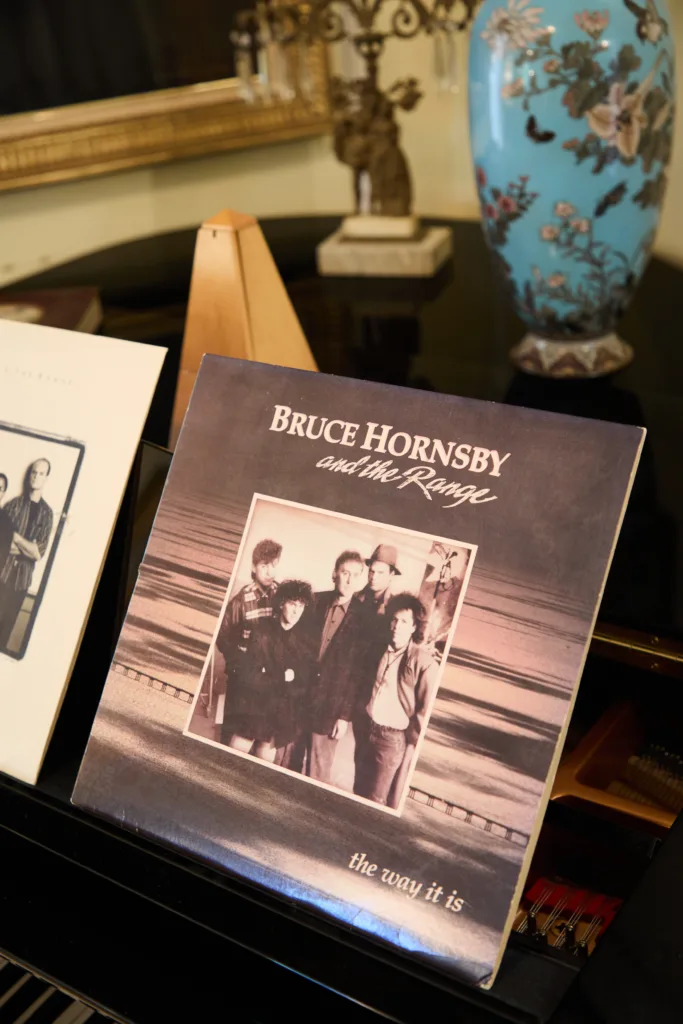
Yorktown’s Go-See-Do
I’m a big fan of getting information about a place before I head quickly in the wrong direction. The Yorktown Welcome Center on Water Street, staffed by Waterfront Ambassadors, is a one-stop shop for maps, brochures, and advice. There’s a kiosk where you can create your itinerary, send it to your phone, and get going. You can also make reservations for a Mobi-Mat, a roll-out mat that enables strollers, wagons, and wheelchairs to access the beach.
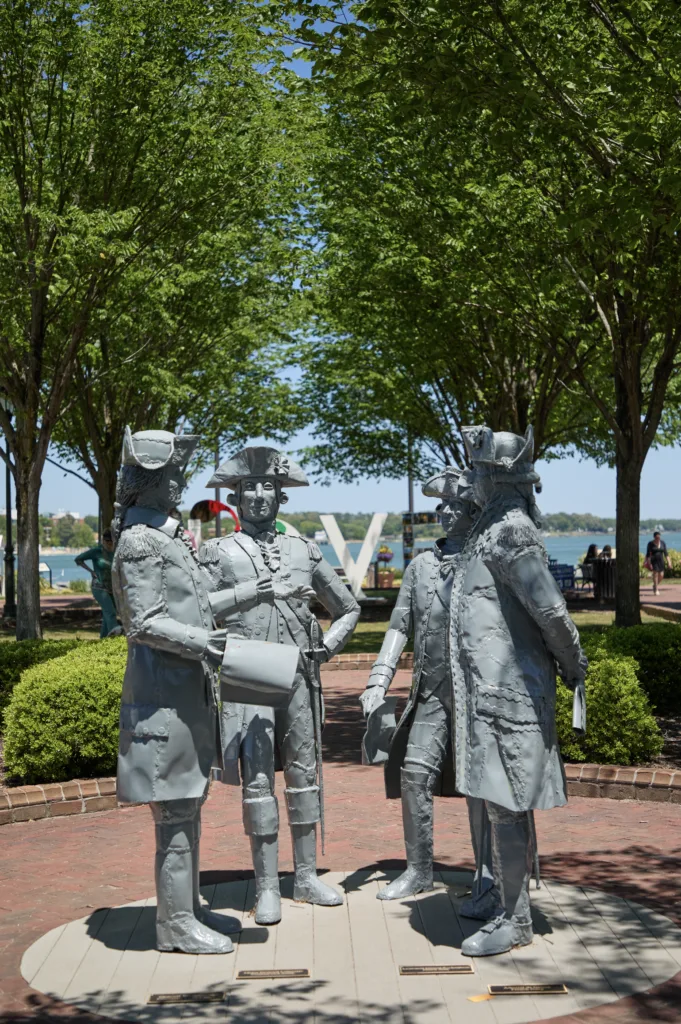
Walk around Riverwalk Landing: Yorktown’s quaint version of a shopping center, features waterfront cafés, performance areas and piers where you can sit and enjoy the light breeze that seems to blow all day. Pose for photos with statues of Revolutionary War heroes George Washington; Marquis de Lafayette; Lieutenant General Rochambeau; Admiral de Grasse, who led the crucial victory over the Royal Navy at the Battle of the Chesapeake in 1781, decisively winning the Revolutionary War; or with the six-foot-tall, iconic LOVE signs, one of more than 300 installations across Virginia.
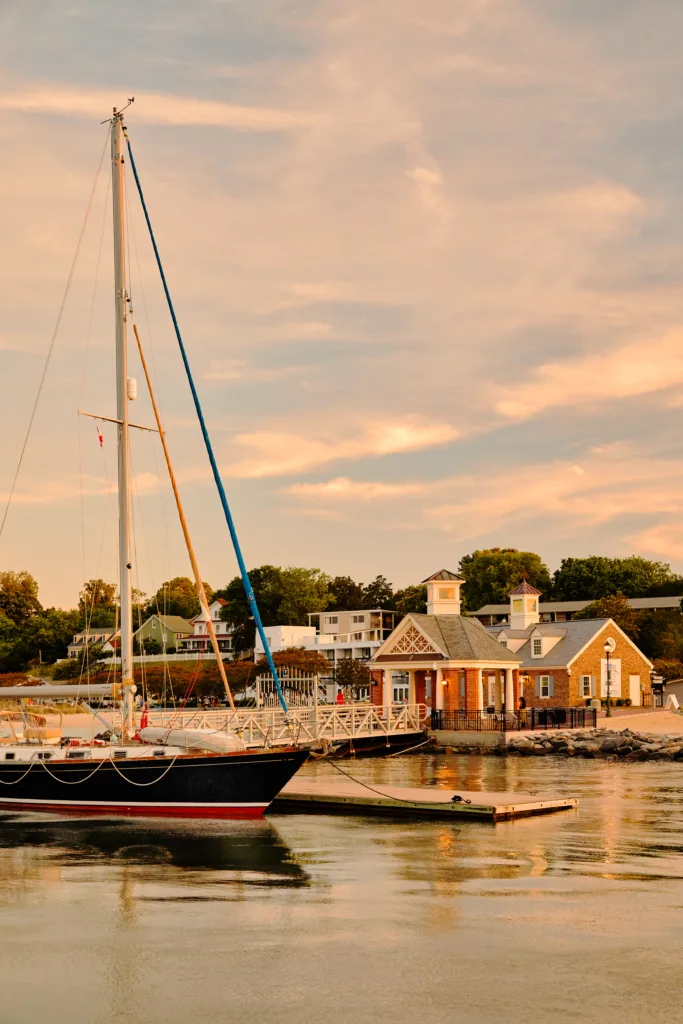
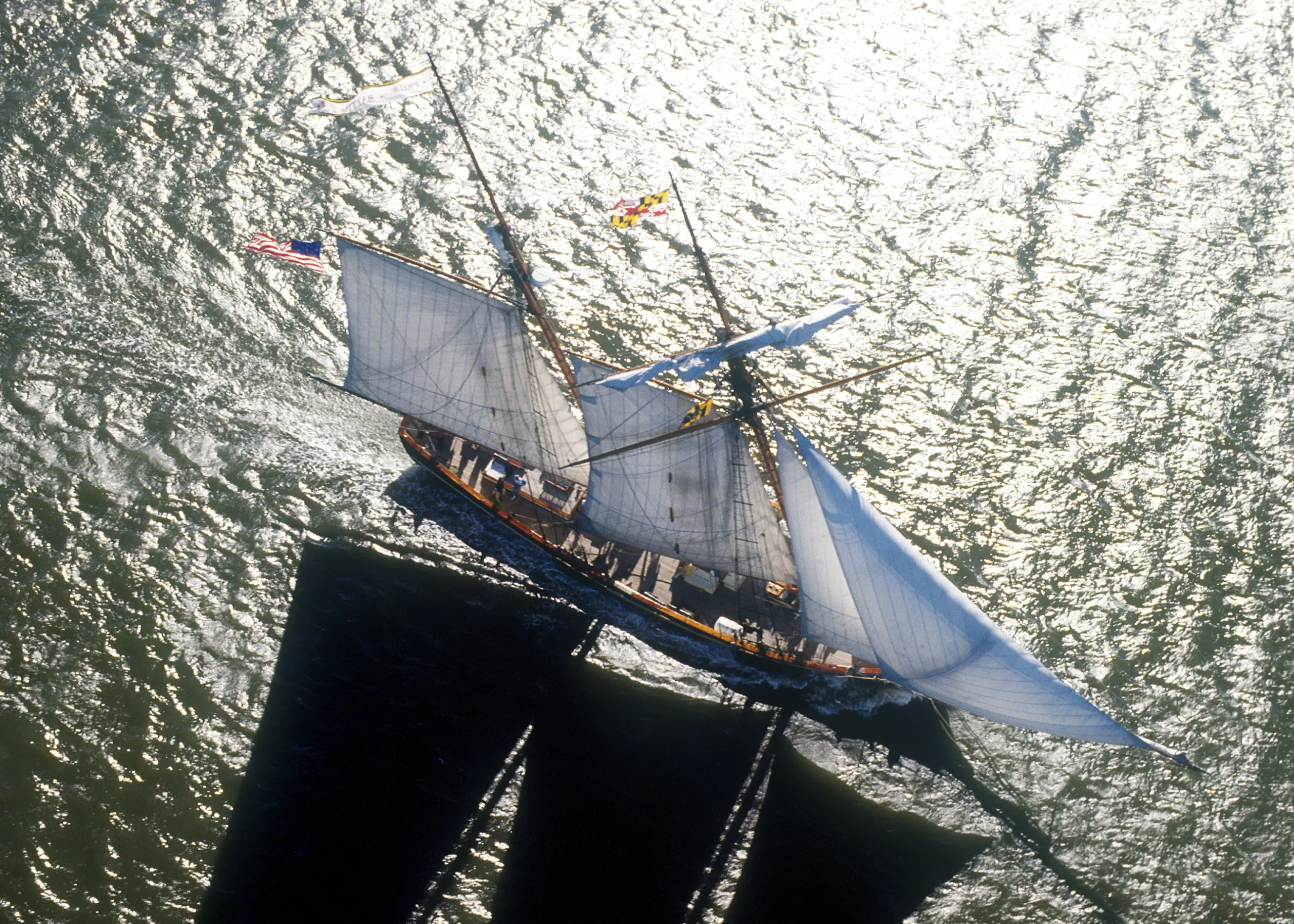
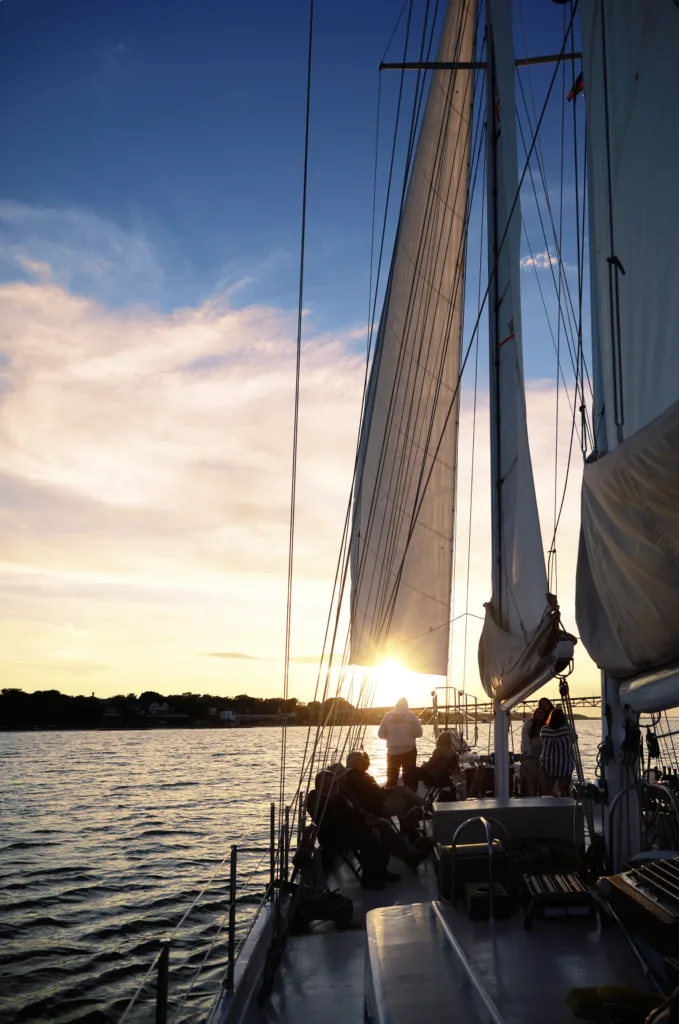
Sail into the sunset on the schooner Alliance II, a two-masted tall ship docked at the Riverwalk Landing Pier. The ship sails twice daily—a daytime sightseeing cruise and a sunset sail—April–November, and voyages last an hour and a half. SailYorktown.com
For pirate people, there’s a Pirate Ship Adventure Sail, an immersive experience where kids get to help raise the sails, tie knots, and steer the ship. You’re advised to get tickets online at least two weeks in advance to avoid sell-outs. Sailing from Memorial Day to Labor Day. SailYorktown.com
Catch a Sounds of Summer Concert on Thursday evenings, 6:30–9 p.m., outside at Riverwalk Landing.
Plan your visit to include a Saturday morning so you can enjoy Market Days, some 50 food, craft, and produce vendors on Water Street.
Tours
You can wander on your own, but a guided tour can greatly enhance your Yorktown experience.
Historic walking tours of Yorktown on Tuesday, Thursday, and Sunday. Ninety minutes. Reservations.
Yorktown Ghost Walks lead you through the haunted streets of Yorktown at night by candlelight. Tour guides are seasoned ghost hunters who know where to look for a range of spirits—from a jilted lover to a murdered aristocrat.
Steamer Wagon Tours are narrated rides to see battlefields where General George Washington led our troops to victory, the Moore House where the surrender terms were negotiated, and other historic buildings that pre-date the American Revolution.
Stay
These lodging options in the village are worth checking out:
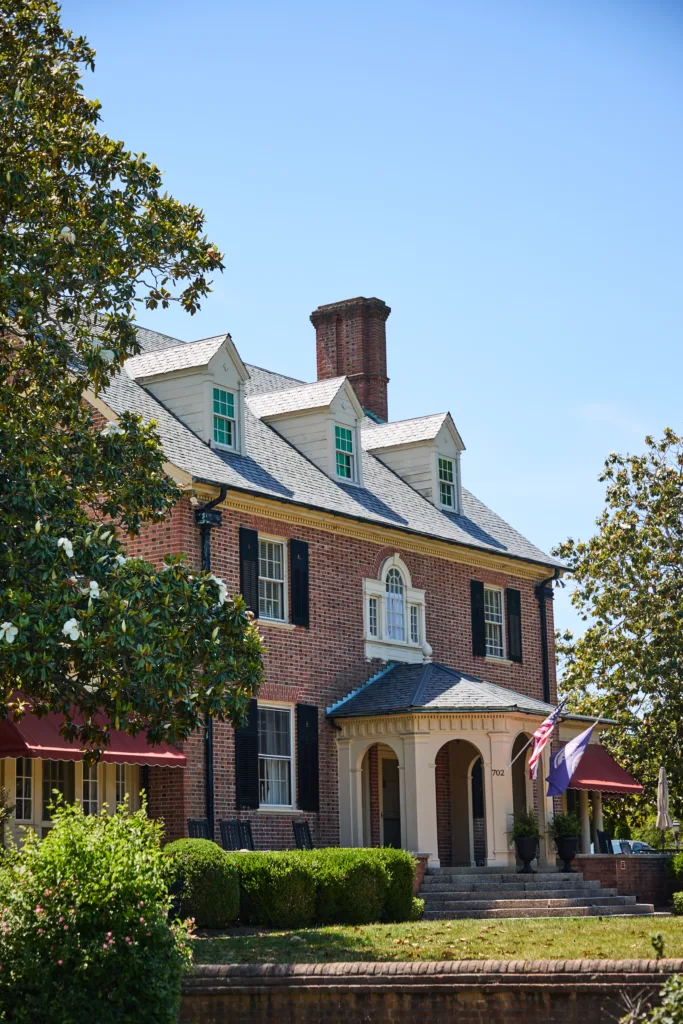
Hornsby House Inn Bed & Breakfast | 702 Main St
Run by brothers Philip and David Bowditch whose family has owned the stately brick house for 80 years, the inn features five bedrooms and a delightful screened porch. Known for great conversations and a delicious breakfast.
Yorktown Cottages | 301 Ballard St
In keeping with the town’s quaint theme, two colorful cottages with kitchens and amenities sleep four guests each.
Yorktown Beach Hotel | 508 Water St
The only waterfront accommodations in Yorktown, the name says it all—just yards from the water’s edge.
Eat
In my travels, I’ve found that asking locals about favorite places to eat yields the best info. Here, a few mentioned:
With a Water View
Water Street Grille | 323 Water St
Seafood, burgers, tacos, pizza and brews from their 20 rotating taps served inside and out.
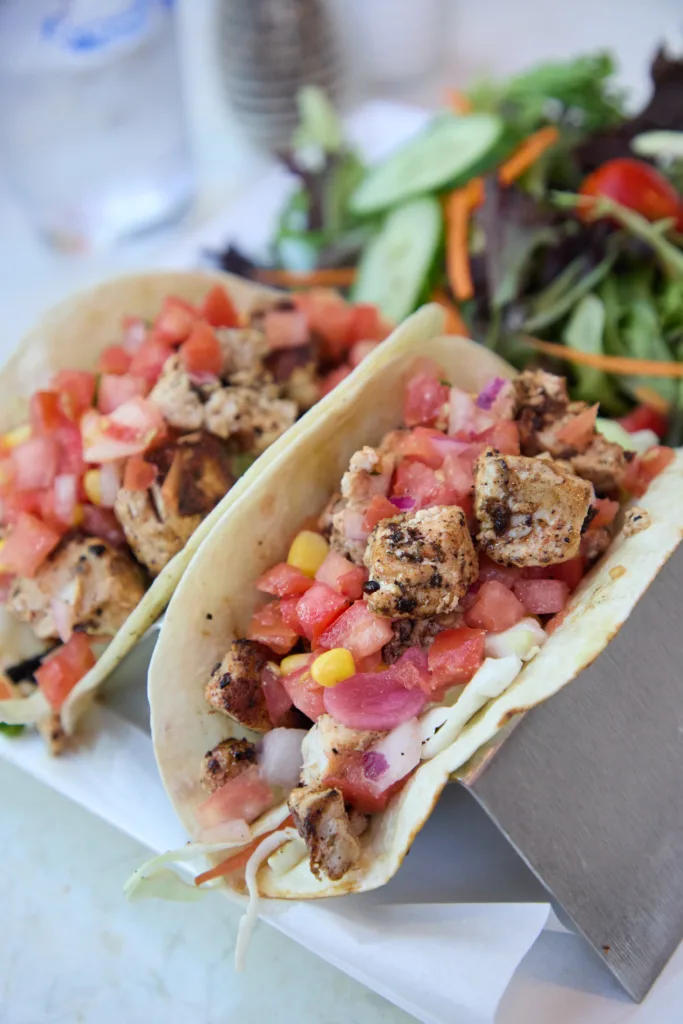
Tacos are a Water Street Grille menu favorite.
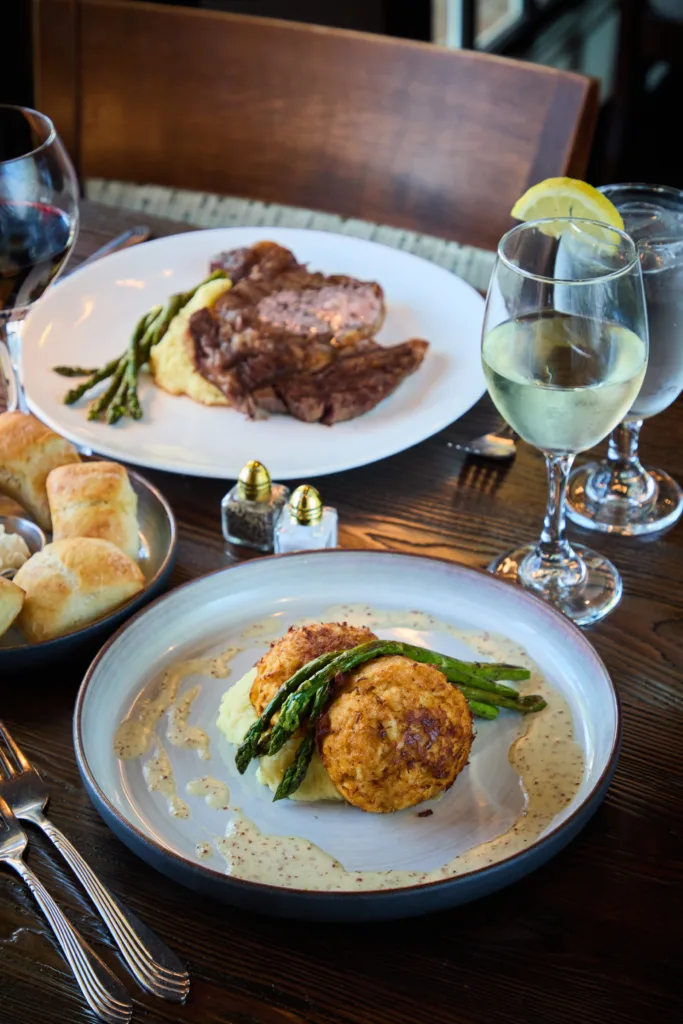
At Riverwalk Restaurant, fresh crab cakes are served with garlic mashed potatoes, whole grain mustard sauce and grilled asparagus.
Riverwalk Restaurant | 323 Water St
Seasonal ingredients, unbeatable views, fresh local seafood, and unexpected twists on classics.
Thirst Beach Deli | 524 Water St
Practically on the beach, casual. Breakfast and lunch, all whipped up fast and fresh.
Yorktown Pub | 540 Water St
Also close to the beach, fun atmosphere, live music, seafood, pub food.
No View, but Go Anyway…
Mobjack Coffee Roasters & Petit Café | 411 Main St
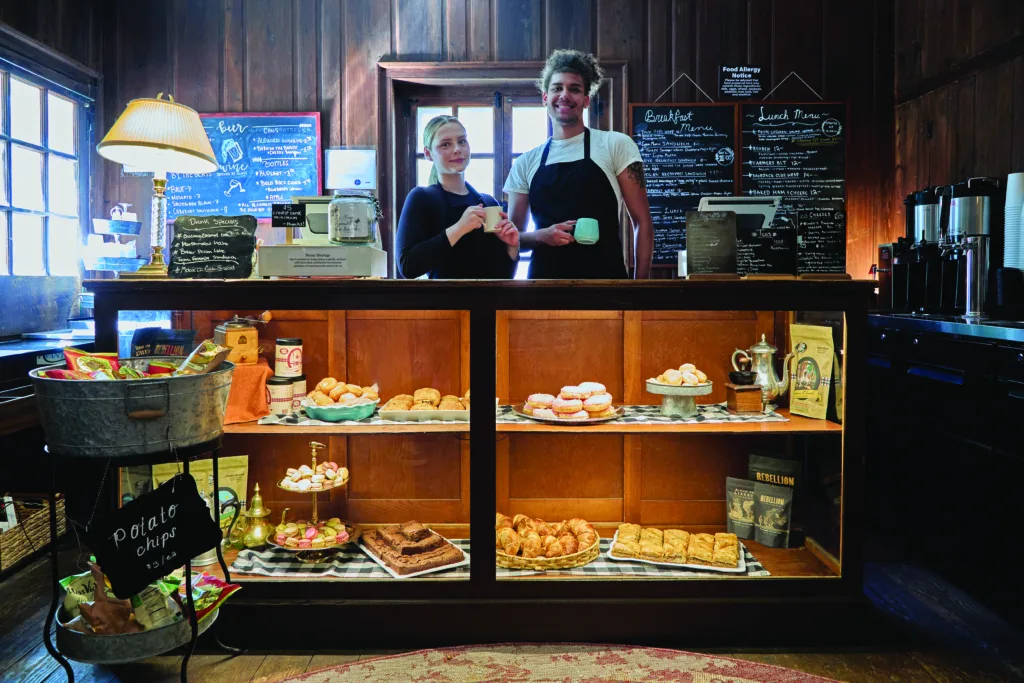
In an adorable 1726 stone house on Main Street, coffee, pastries, delicious sandwiches.
Q Daddy’s Pitmaster BBQ | 6555 George Washington Memorial Hwy
Everything barbecue lovers love and it’s all good—pulled pork, of course, but also smokey chicken salad, beef brisket, and much more.
Going Mobile
Trolley
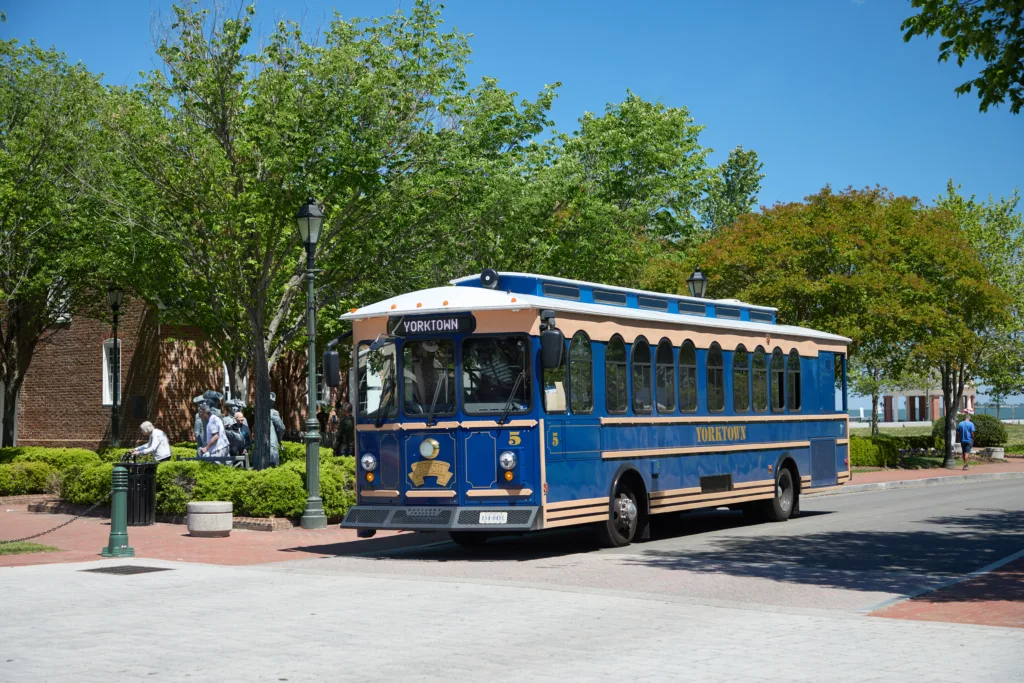
The easiest way to hit the historic high points, shops, and cafés is the free, daily Yorktown Trolley. Leave your car in one spot, and catch it at any of its 11 stops along a four-mile, 25–30 minute circuitous route. Hop on and off as you wish—it connects key sites from the Battlefield Visitor Center to the Riverfront Walk and beach, and the American Revolution Museum.
Walking
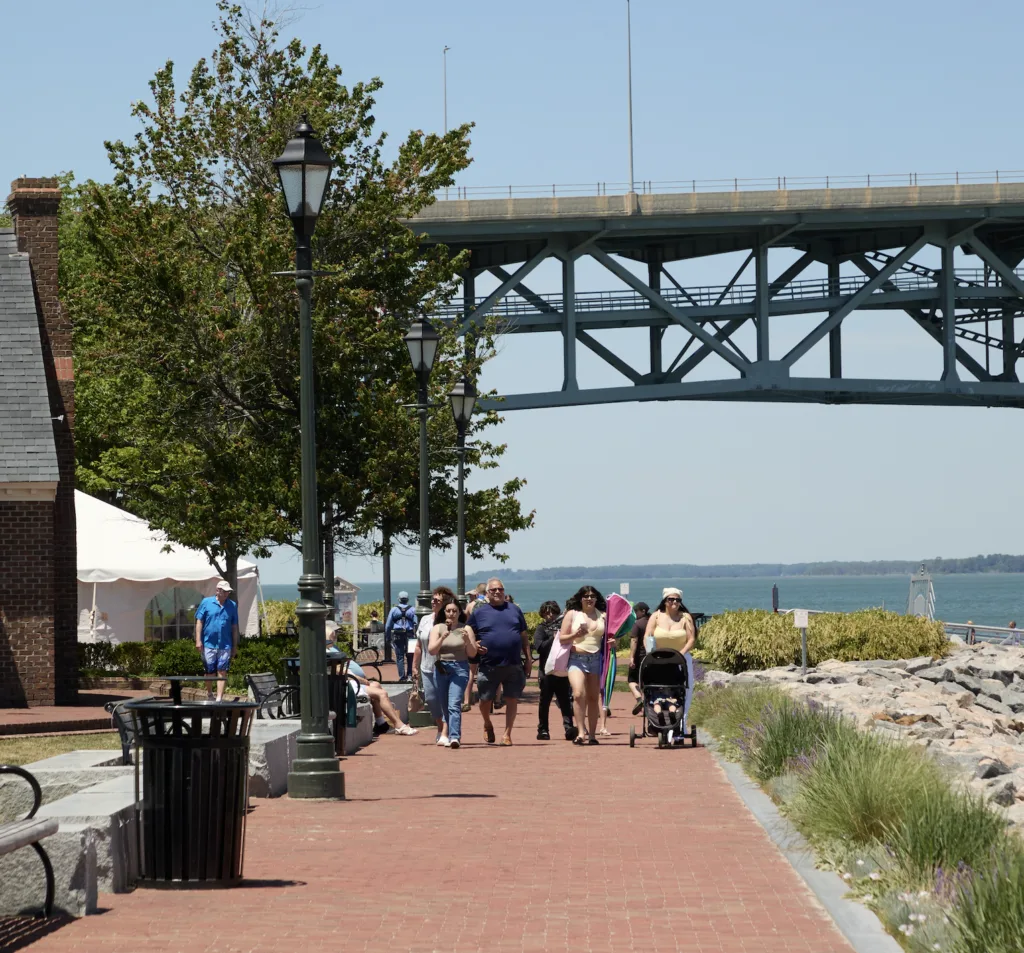
Stroll the mile-long Riverfront Trail, a pathway that stretches from the Battlefield Visitor Center to the American Revolution Museum—a 2.7-mile, one-hour roundtrip. Along the way, you’ll find shops, cafes, access to the beach, docks, and a refreshing view of the sparkling York River.
Boaters can arrive and dock at the Riverwalk Landing Piers, located at 425 Water St. With reservations, you can dock overnight.
Cycling
Bike around town or long distances. The Yorktown Victory Monument is the eastern terminus of two cycling routes: the TransAmerica Bicycle Trail (Bicycle Rt. 76) created by the Adventure Cycling Association and the Virginia Cross State Ride (Rt. 1).
Photography by Chris M. Rogers. This article originally appeared in the August 2026 issue.