
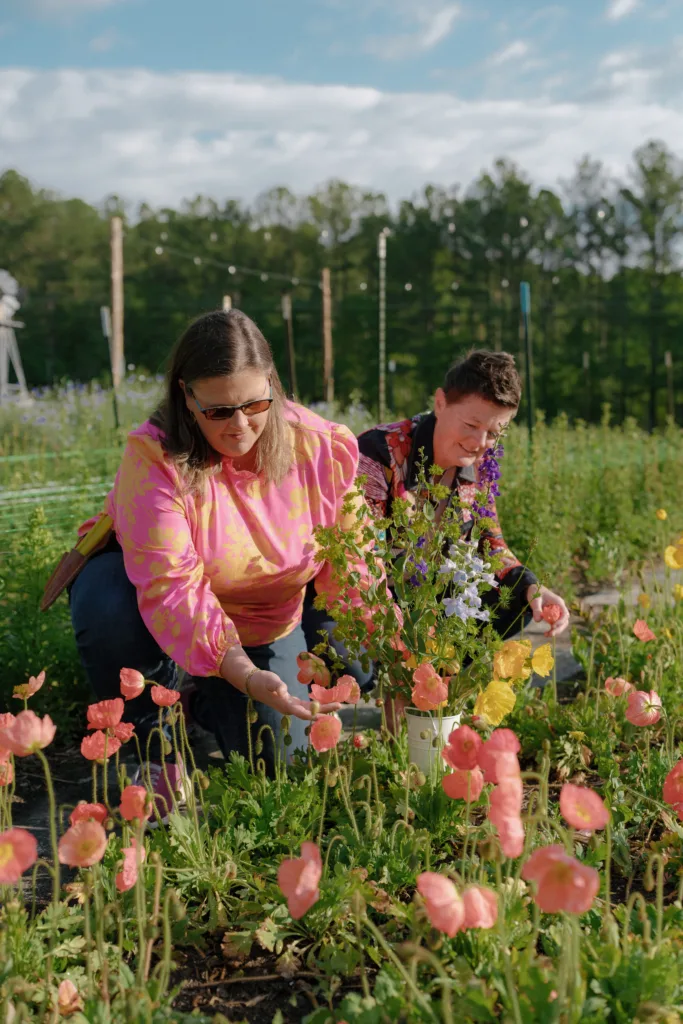
There’s a moment, walking through the rows at Freckled Flower Farm, when the sheer abundance of it overwhelms you. Icelandic poppies in a variety called “Champagne Bubbles”—a name that earns its whimsy, because yes, they really do look like something floating and effervescent. Larkspur. Delphinium. Snapdragons. Foxglove. The oldest red cedar in Hanover County is standing watch over it all, its gnarly arms wide open, roots sunk so deep it was already enormous when little kids climbed it half a century ago.
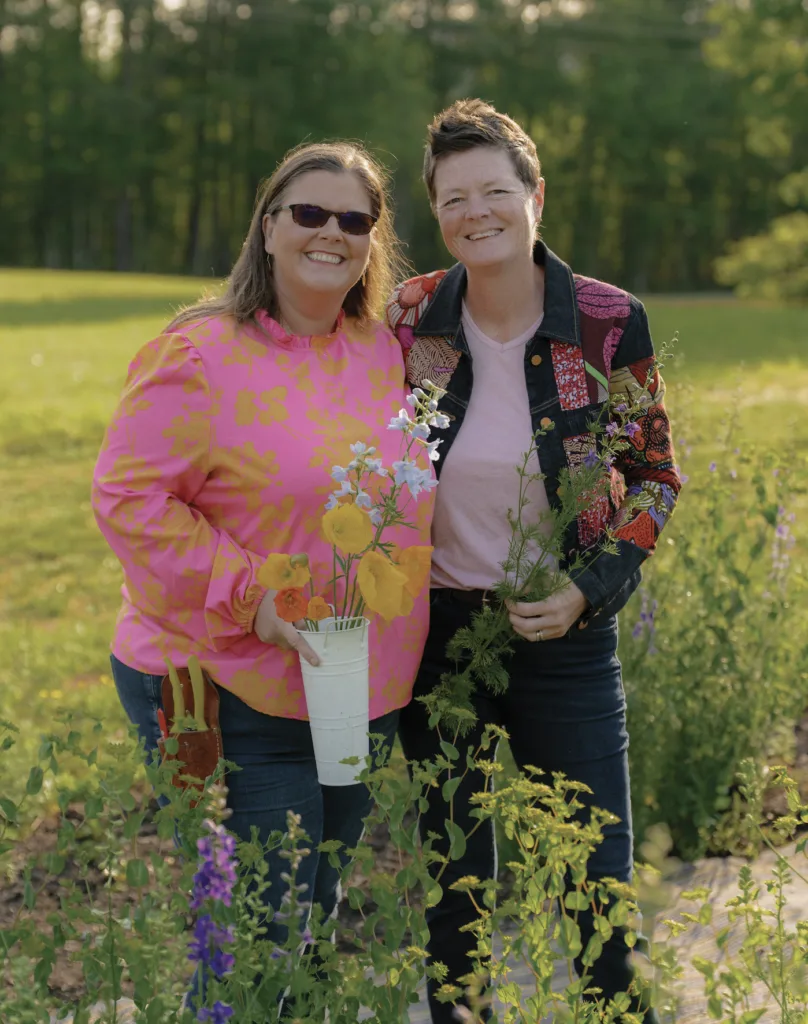
This July, Freckled Flower Farm celebrates its 10th anniversary. Considering that a decade ago this was all hay field—and that the two women behind it were former elementary school teachers who had spent six years living in Taiwan—the whole thing feels a little like a miracle. Or maybe just what happens when two people decide to really, truly live.
One-Way Tickets and a Jason Mraz Song
Kelly Waldrop and Sara Mallory met at school—Kelly taught at Mechanicsville Elementary, Sara at Beaverdam Elementary, where Kelly’s dad was principal—and quickly established a shared philosophy about what a life well-lived might look like. After their wedding in 2010, they bought one-way tickets to Taiwan. Their friends staged a mild intervention. “Are y’all okay? Do you need an intervention? Is everything alright?” Kelly laughs, recounting it. “And we’re like, no, we’re just living life!”
They lived abroad for six years. Kelly taught 4th and 5th grade, eventually pivoting to international business courses for post-MBA students. Sara taught elementary school, then high school. They traveled throughout Asia. They saw Jason Mraz perform almost every year—he’s a family friend—and a song from his album Yes quietly planted a seed.
“It’s called ‘Back to the Earth,’” Kelly explains. “It talks about getting your hands in the dirt and just getting back into nature. We loved that song. And when we were thinking about what we wanted to do next, we were singing it all the time. Let’s get back to the earth. So we said, why don’t we try that? Let’s have a farm.”
The decision to come home wasn’t just about a song. In late 2015, they noticed changes in Sara’s mother that suggested early-onset Alzheimer’s. They knew it was time. They let their teaching contracts expire, packed up their lives in Taipei, and flew home to Hanover County—to land that has held both family names for generations.
Deep Roots, Literally
Sara’s grandfather built the family home visible from the fields; her dad still lives there. Kelly’s family once owned all the land around the property; Waldrop Lane surrounds the farm in a horseshoe; “It’s truly family land,” Kelly says. “You can’t get any more family land than being able to grow and have a farm here.”
But the family roots go even deeper than that. Kelly’s great-great-grandmother, Libbie Thompson, was a flower farmer. Libbie Avenue and Thompson Street in Richmond—those roads exist because the Thompson family farmed that land and needed routes to deliver their goods. In her 20s, during the 1800s, Libbie Thompson created the first national agricultural newsletter, gathering reports from farmers across the country on what was growing, what wasn’t, pricing, and diseases. “She was a woman in her 20s doing this, in the 19th century,” Kelly marvels. “Yeah, girl.”
Libbie’s daughter, Mary Thompson Parks, wrote a charming book called Forget Me Not, full of stories about growing up in Richmond, following her mother through the garden, cutting flowers and dropping them, while young girls gathered the blooms into bunches to be stored in the cool of a cellar. Kelly grew up hearing these stories from her grandmother—now 93—who remembered the family’s dahlia fields. If you look up the old land records for the area around what is now the Country Club of Virginia, they still say “the Dahlia Farm.”
“When the dahlias are blooming,” Kelly says quietly, “we love to get her out here.”
The Day After the Flight Home
They moved back July 16, 2016. The next morning, they were on a tractor.
“We’d just traveled across the world,” Kelly laughs. “I think about that and I’m like, what were we doing? Couldn’t we have maybe taken a day? But Sara kept saying, ‘We’ve got to get out there. It’s already late, we’ve got to get the seed in the ground.’”
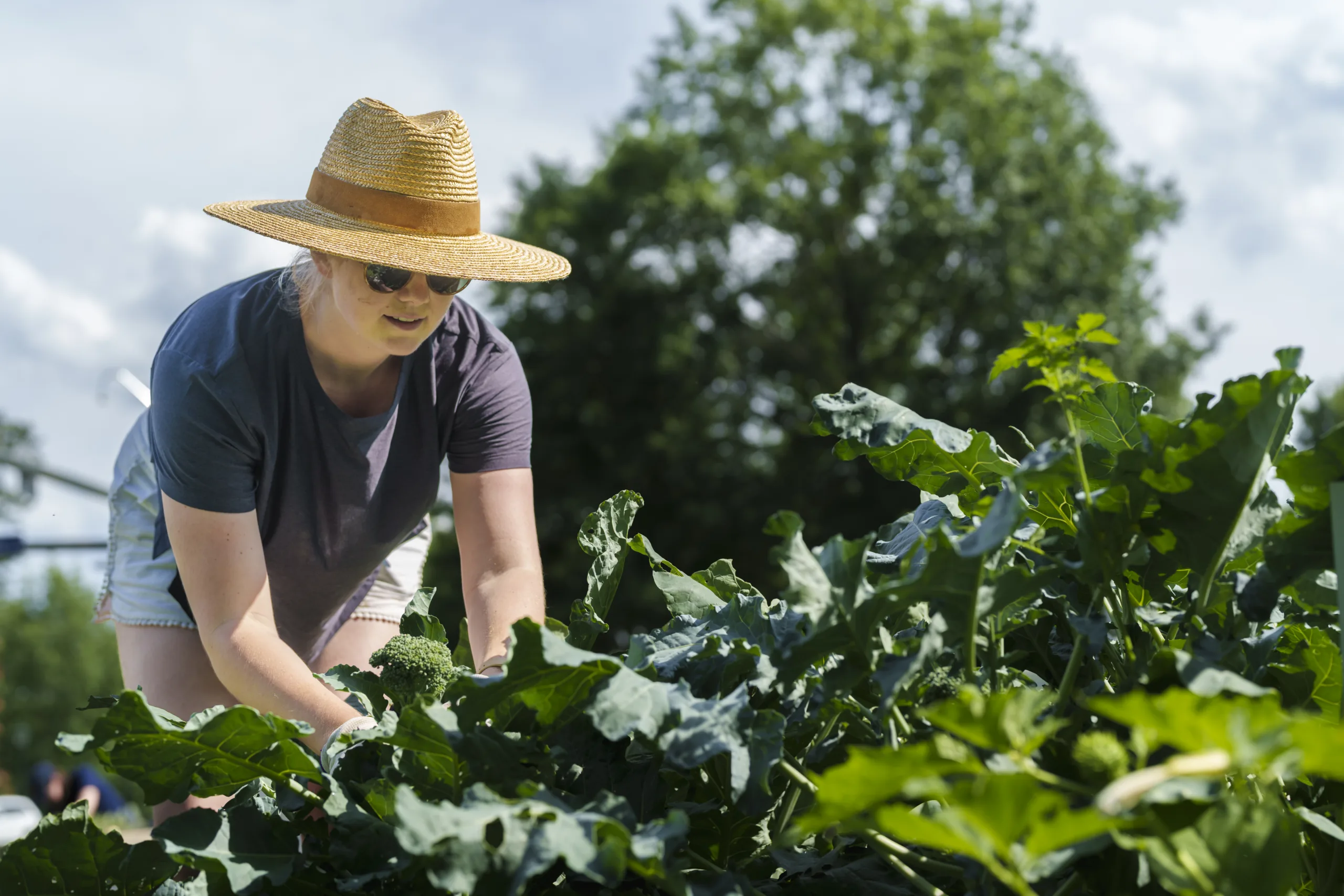
The farm itself is about 50 acres total, with roughly two acres under cultivation—a number that consistently surprises visitors when they see how much that actually means. They started with three rows of flowers and a clear business model: grow and sell wholesale to florists. That plan lasted about as long as it took for neighbors to drive by.
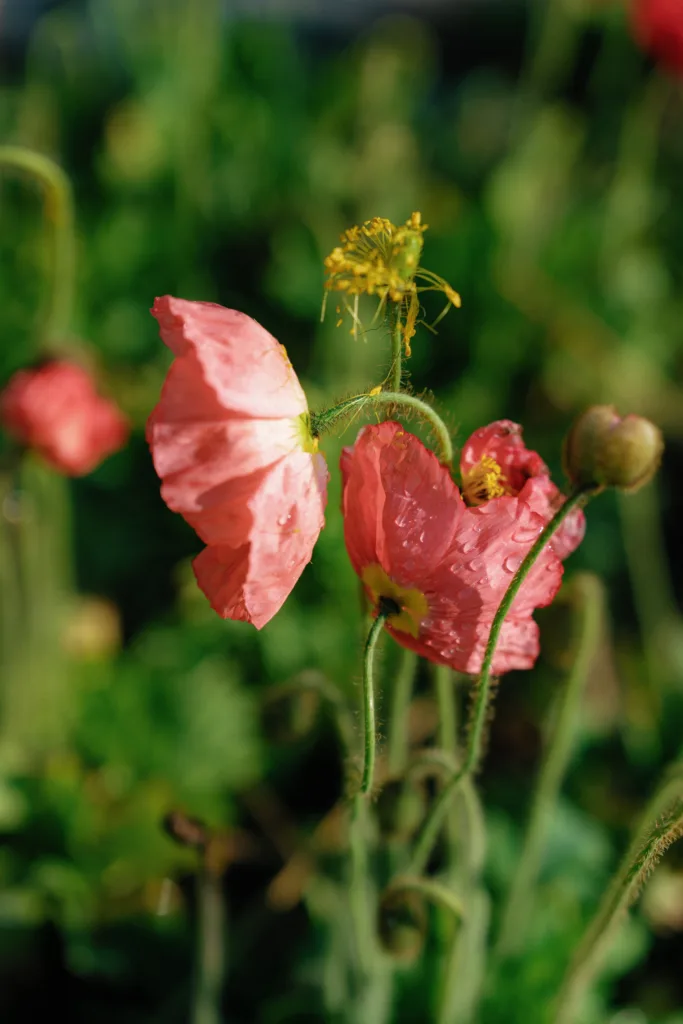
“People could see the blooms from the road,” Kelly explains. “Being from the community, they heard what we were doing. And someone would say, ‘My birthday is this weekend, can you make a flower arrangement?’ And we learned how to do that, because that was not part of the plan.”
They turned to YouTube, figured it out, and discovered they loved floral design—and that there was a real need for it. There’s no florist nearby. They pivoted to direct retail and never sold wholesale.
“We realized we really enjoyed it, had a knack for it, and there was a need,” Kelly says. “So we just decided: farming and floral design.”
Weddings and Workshops
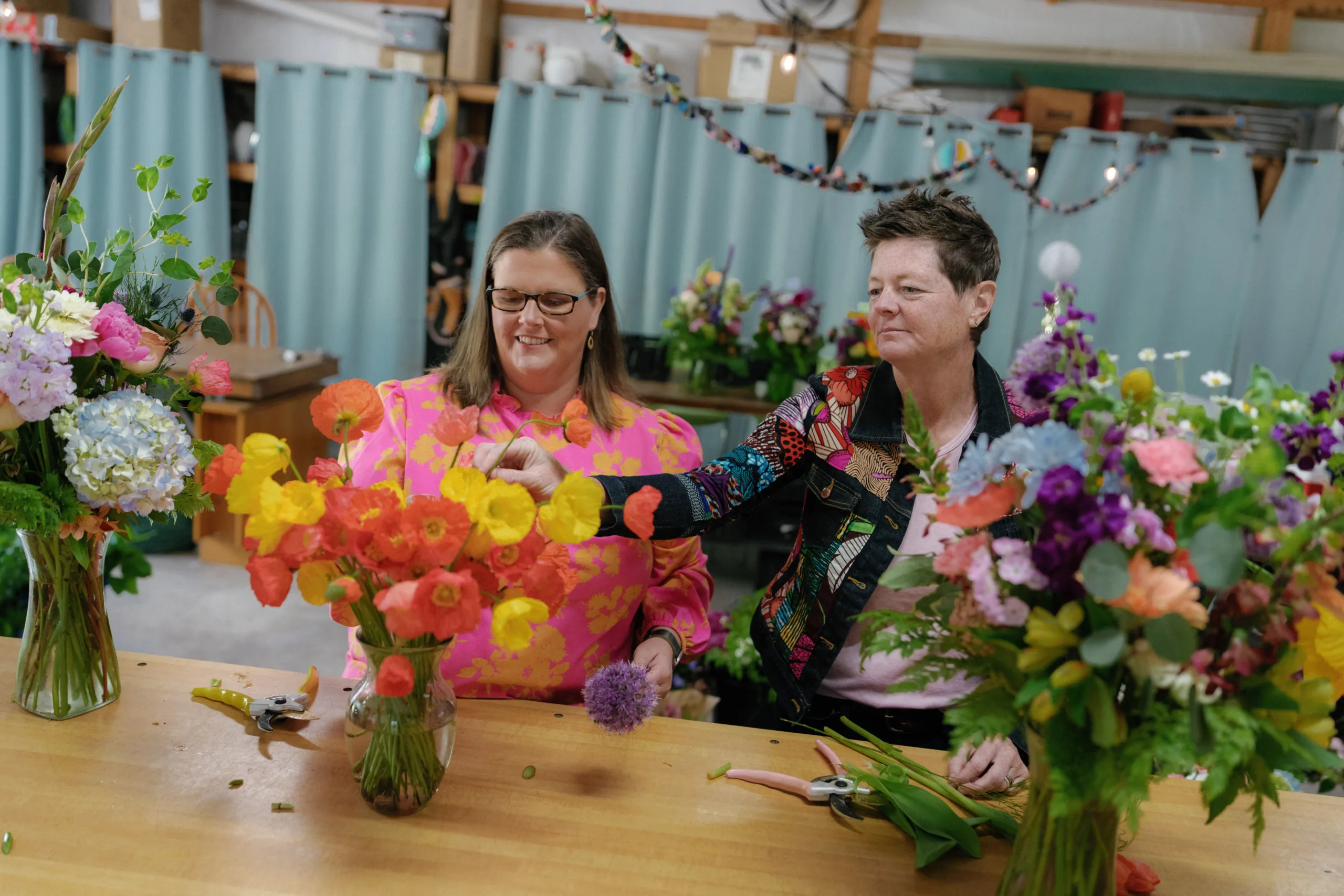
Today, Freckled Flower Farm is a full-scale floral design operation. In addition to pick-your-own flowers, they do 40 to 50 weddings annually—43 last year—ranging from intimate celebrations to big splashes. And they’ve integrated workshops into their business plan because the teacher in them couldn’t stay quiet. Dudes Brews & Blooms, a Bridgerton Flower Bar, a Teapot Floral Workshop, a Bouquet Purse Workshop, and more—fill their calendar. Their first year home, requests for holiday wreaths was an unexpected twist. Bone tired and blistered from making hundreds, Sara had a revelation: What if we just taught people how to make their own?
They’ve never looked back. Today, over 1,500 people take their wreath-making workshops each December alone, in a season so intense, they stop taking wedding bookings entirely and go full-on holiday mode. The workshops happen everywhere—two-car garages, office spaces, breweries, private dining rooms, country club event halls—and people return year after year.
Corporate work has grown into a major pillar of the business. Capital One brings them in so regularly that Kelly has lost track of how many departments they’ve worked with. “I’m like, how many people work here? We do events there probably once a week.” They travel to Northern Virginia for headquarters events, work with universities, and take bookings from companies looking for team-building experiences. At larger events, Kelly wears a microphone to teach the crowd.
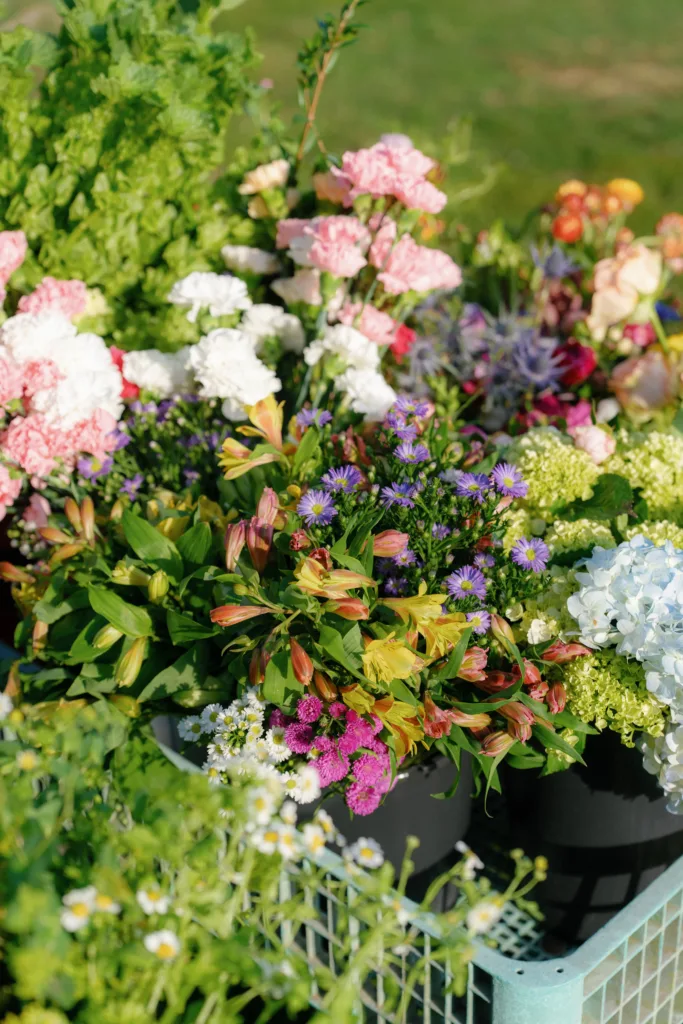
She walks workshops through three phases of arrangement-building: greenery first (baker fern, leather leaf, salal, pittosporum—the underrated scaffolding of every good vase), then filler (those multi-bloom stems that fill space), then focal flowers: roses, hydrangeas, peonies, carnations, sunflowers. “I call it the ‘middle school’ phase when you’ve got your filler in,” Kelly says, “because you can see the potential but it hasn’t grown into itself yet—it looks a little awkward. And I say, don’t panic, it’s okay.” They also host monthly public classes at Hardywood Park & Craft Brewery and James River Winery.
A Farm Made for Belonging
The name came from Sara’s freckles—specifically, from a moment in a Taiwanese government office when an ID was returned to her that she didn’t recognize. The photo had been retouched. Every freckle, gone. A porcelain face that wasn’t hers. “They don’t want the sun to hit their skin,” Kelly explains, “or any freckles.”
She and Sara tried gently, in their early teaching days in Taiwan, to help young students with freckles who felt embarrassed, telling them their freckles were beautiful and one-of-a-kind. When it came time to name the farm, the word felt right.
“We really wanted our farm to be a place where everyone felt welcome and celebrated and beautiful,” Kelly explains. “With flowers, sometimes they do funky things—they’ll have two blooms on one stem, or they’ll just do something weird. And we try to embrace that. We say, no, this is really cool. It’s not ugly, it’s just really unique. We thought that kind of fit our mission.” The farm sits on family land. The whole Mallory family is covered in freckles. The name fit the place, the people, and the purpose all at once.
What’s Growing—and What’s Coming
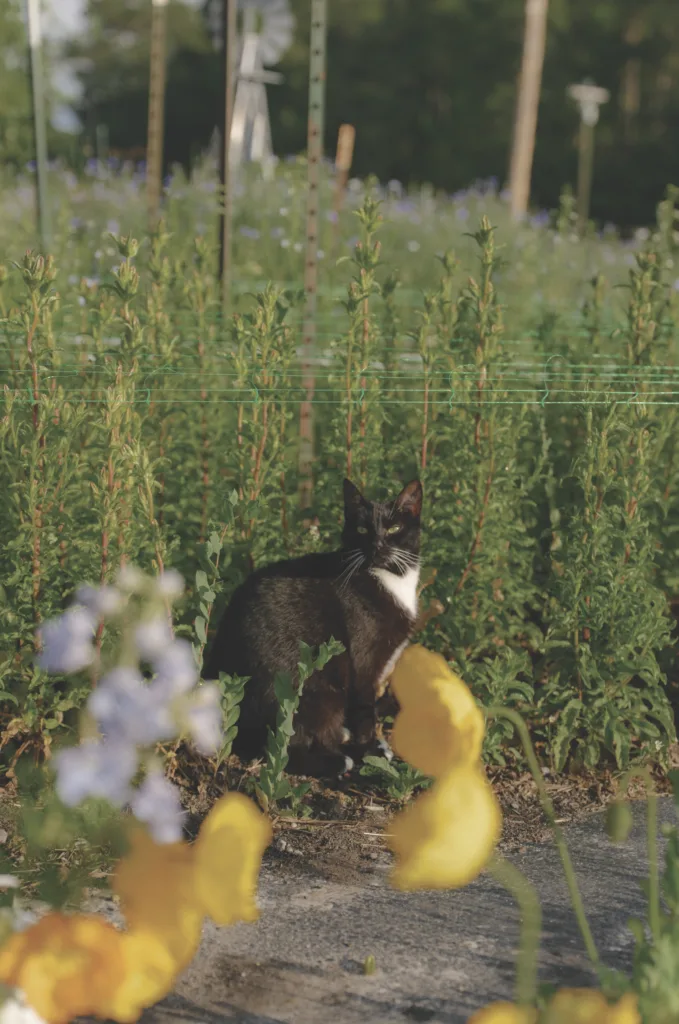
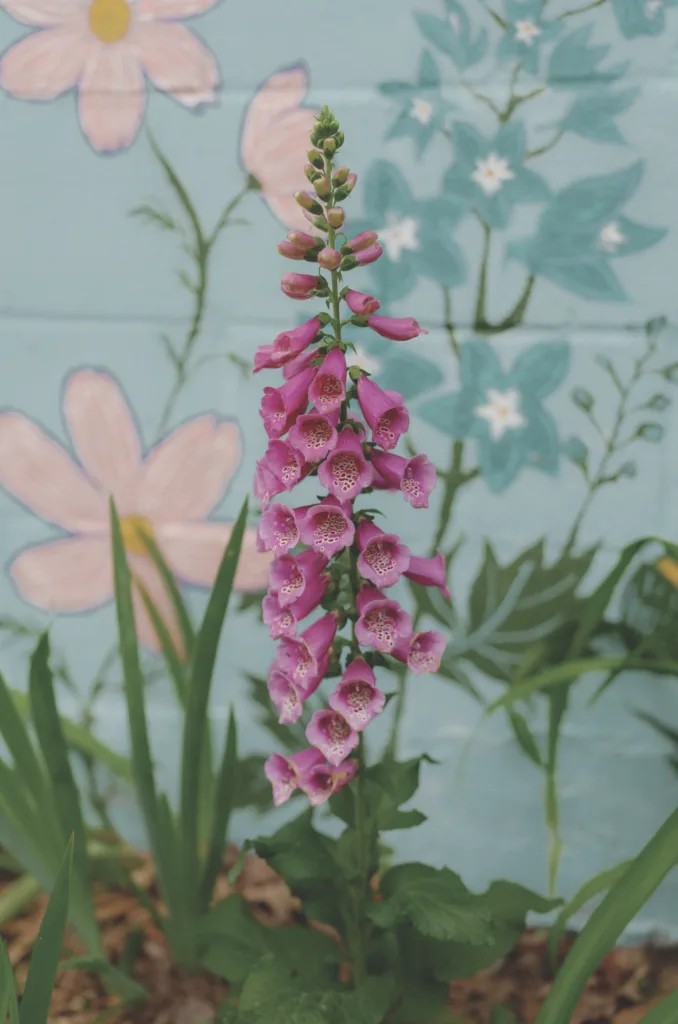
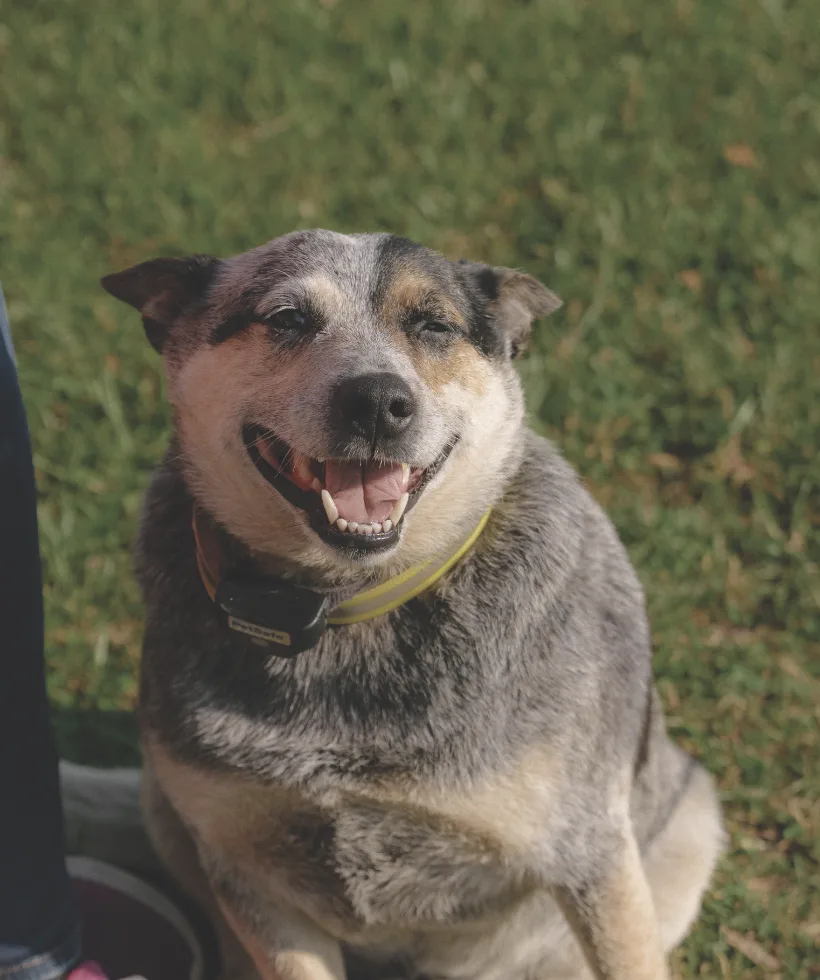
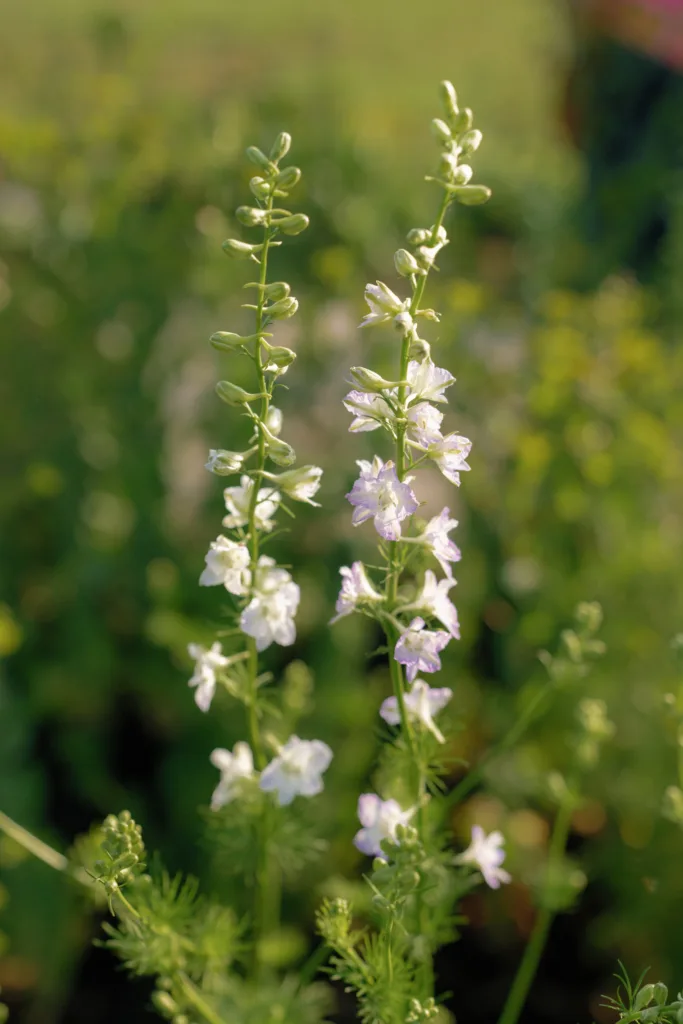
In late spring, fields are covered in Icelandic poppies, larkspur, iris, bachelor buttons, Sweet William, delphinium, snapdragons, campanula, Queen Anne’s lace, foxglove, and yarrow. Peony buds cut at the marshmallow stage—not hard like marbles, but squishy—are stored in a cooler by the hundreds, hibernating until needed. Come summer: cosmos, Mexican sunflowers, dahlias, lavender, eucalyptus, chamomile, feverfew. Fall sees 1,000 dahlia tubers. Farm cats Dahlia, Poppy, Cosmos, and Rosie are perpetually underfoot, and Bandit the Blue Heeler is the official greeter.
Friday evenings, the farm hosts a farmers market: vendors in a square on the grass, yard games, a bar, food trucks, live music, string lights. 5–8 p.m. It’s the kind of thing people drive 45 minutes for, and they do.
What’s next: a nearly-finished nature trail with a tic-tac-toe board on a tree stump; a mural garden in partnership with VCUarts, giving emerging artists large-format walls to practice on; a sound garden with chimes and music boxes for visitors with vision impairment; a native plant garden with labeled specimens and benches. There is always something new, even when Sara says she’s not expanding. “Every year Sara says she’s not expanding,” Kelly says, “and then she puts in five new rows.”
They’ve come a long way from three rows of flowers in what used to be a hay field. Ten years in, the farm hums with the kind of energy that happens when people are genuinely doing what they were made to do—hands in the dirt, surrounded by blooms that sometimes behave, building something that belongs to this specific piece of earth and this specific family history.
Jason Mraz would approve.
This article originally appeared in the August 2026 issue.