
Heidi James thought she had nature figured out. Growing up on a horse farm in the snowy countryside of central Michigan, she rode every day through fields and woods, learned to identify trees from her preservation-minded parents, and spent holidays in Virginia at the family’s 1750 farmhouse in Middleburg. If anyone was in tune with the natural world, she was.
“I thought I knew everything about nature,” James admits now, with the sheepish laugh of someone who’s been proven spectacularly wrong.
Then she read Doug Tallamy’s book, Nature’s Best Hope, and accepted what seemed like a simple challenge: Go outside, sit, observe. The book promised she’d be surprised by what she saw.
“I thought, ‘Oh, I’ll give it a try,’” James recalls, “but I’m pretty sure I already know what’s out there.”
What happened next shocked her.

A Hidden World in Plain Sight
She and her husband settled in Lynchburg to raise their family, and armed with just her phone camera, James began sitting in her garden, randomly snapping pictures in the direction of flowers. She couldn’t see much with the naked eye—just the usual garden blur. But when she zoomed in, a secret universe revealed itself.
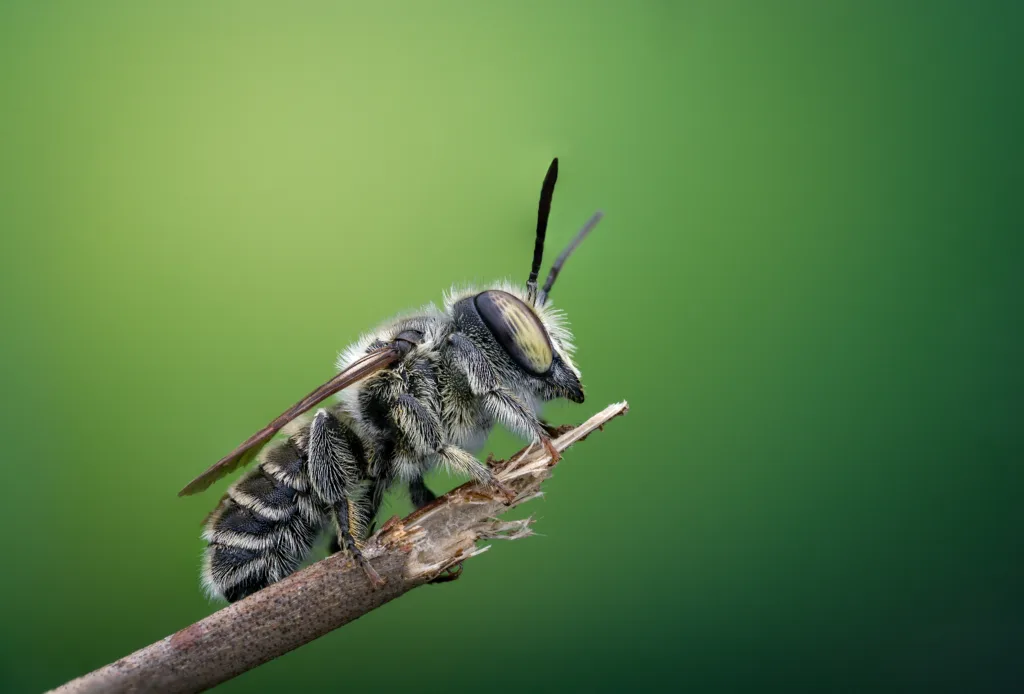
“I realized I was catching pictures of all these teeny tiny bees that I didn’t really even notice, some of them so little,” she says.
The self-proclaimed nature expert discovered she’d been walking through life with blinders on. She thought there were three types of bees: honeybees, bumblebees, and sweat bees. Leafcutter and orchard bees? Not so much.
The discoveries kept coming—brilliantly colored caterpillars, some camouflaging themselves by cutting out pieces of hot pink flower petals and sticking them to their backs like confetti. Moths she could now distinguish from butterflies. Spiders she learned to appreciate.
“There’s so much going on out there. I still can’t believe it,” James says. “It was invisible to me.”
From Hobby to Mission
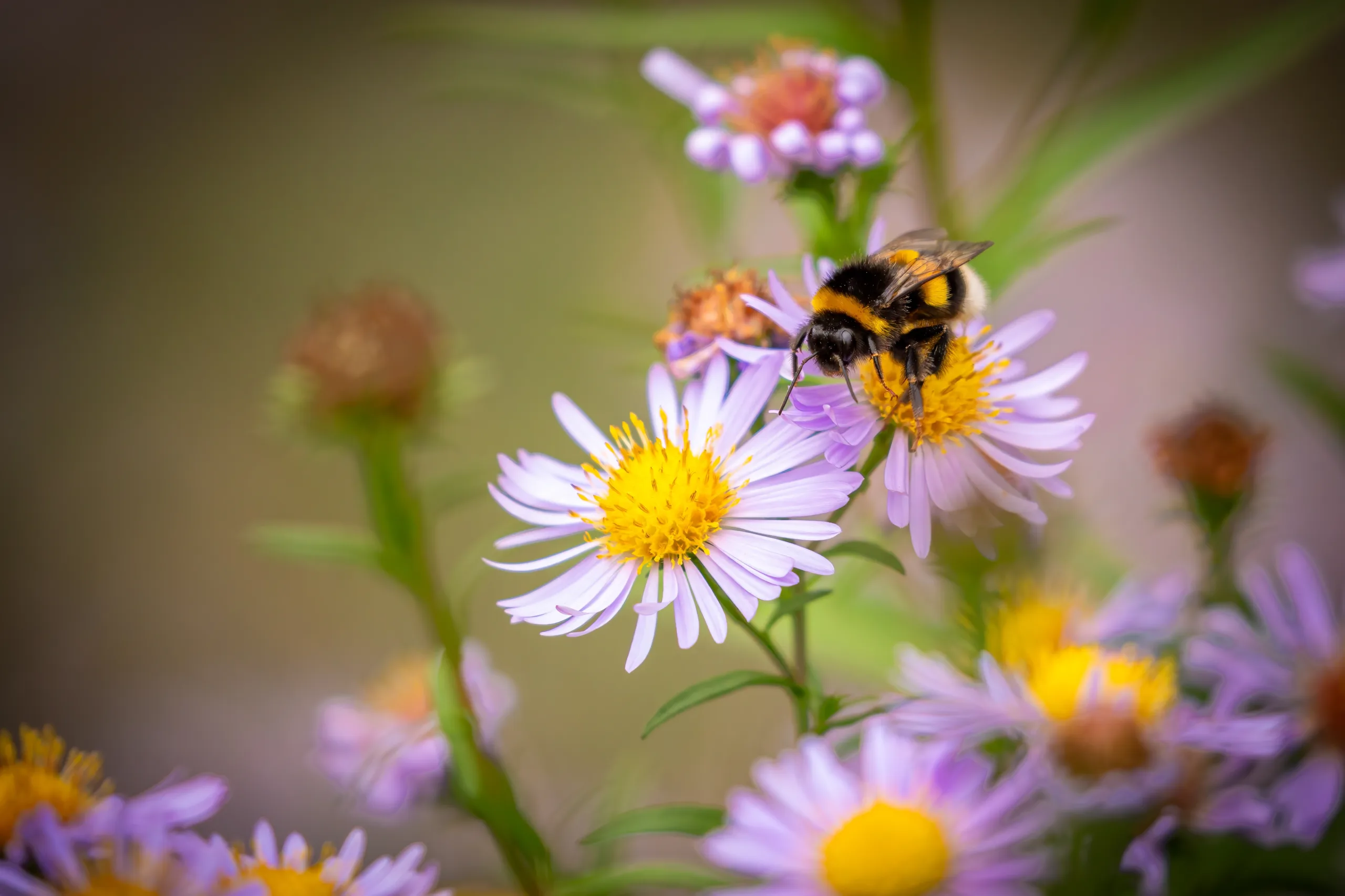
What began as curiosity evolved into documentation. James has cataloged upwards of 20 different native bee species in her yard, including five or six types of bumblebees. Among them: Bombus pensylvanicus, the American bumblebee, a species that has seen an 89 percent population decline.
“They’re in my yard, and that’s when I thought, ‘Oh my gosh, this bee is in trouble,’” James says. “I really do want to try to do what I can to help. It’s a maternal feeling.”
That maternal instinct launched James on an unexpected second act. A member of the Lynchburg Garden Club since 1992, James wondered if there was something like “Tree City USA” for bees. A quick Google search revealed Bee City USA, founded in 2012 by Phyllis Stiles in Asheville, North Carolina, and now part of the Xerces Society for Invertebrate Conservation. To become a Bee City, a locality establishes a working committee, commits to reducing the use of pesticides and herbicides in public places, and plants native species when possible. Affiliates also post at least one sign announcing the city’s participation and pay an annual fee based on population.
And that’s when James’ lesson in bees got serious.
The Honeybee Myth
European honeybees, brought to North America in the 1600s, are agricultural workhorses. But they’re also immigrants in a landscape evolved for different pollinators. “Xerces says it’s sort of like comparing chickens to songbirds,” James explains.
When people heard that bees were in trouble, many rushed to keep honeybees. “That’s what I thought we should be doing, but that’s not correct,” James says. More honeybees mean more competition for the roughly 400 native bee species in Virginia—mason bees, miner bees, carpenter bees, leafcutter bees, and orchard bees that evolved alongside native plants and pollinate everything from tomatoes to blueberries to squash.
The solution isn’t bee hotels (which attract parasitic wasps) or backyard beekeeping. It’s simpler, and it starts with native plants.
A Force of Nature
In 2019—thanks to James’ advocacy—Lynchburg’s city council adopted a resolution to become a Bee City USA affiliate. But she didn’t stop there. She became what Phyllis Stiles calls “a missionary” and “a force of nature,” delivering more than three dozen presentations to garden clubs, civic groups, and public officials from the Delmarva Peninsula to the Blue Ridge. The strategy worked. Virginia now has 20 Bee City affiliates—the second-highest number in the nation—and James has been the driving force behind most of them. “You don’t usually have a missionary like Heidi,” Stiles says.
And the Garden Club of Virginia seconds Stiles’ assessment of James. “For years, Heidi has embodied the very best of the Garden Club of Virginia’s mission to conserve the gifts of nature,” says Kris Carbone, GCV president. “Her advocacy, optimism, and her deep knowledge have been both inspiring and instrumental in advancing the Bee City movement across the Commonwealth.”
James brushes off the praise. “I don’t look at this as work. I look at this as wanting to share this fun information,” she says.
A Garden Transformed
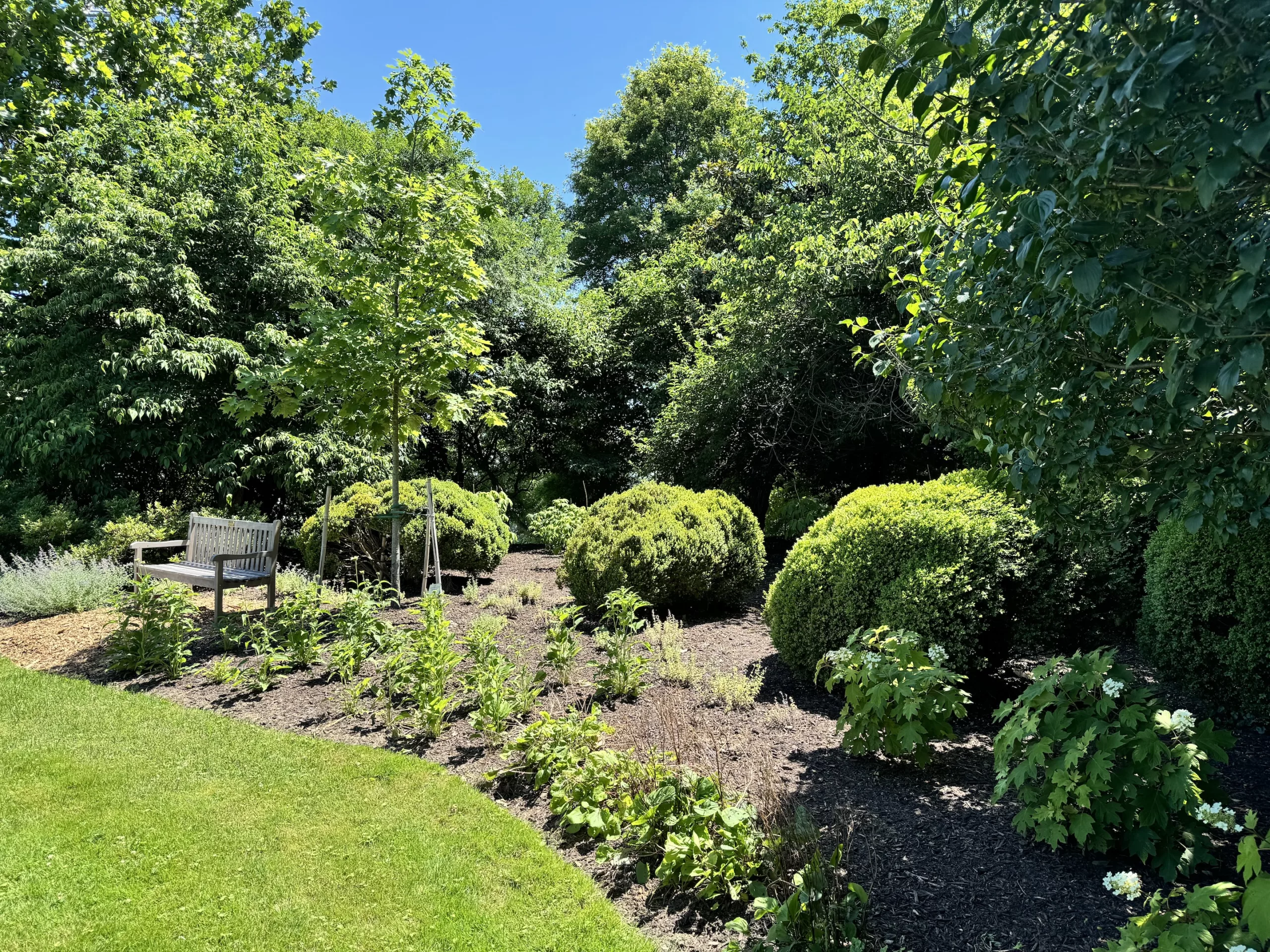
James’ own yard reflects her evolution. “I used to have tidy plantings; now I have a bed filled with goldenrods and big asters,” she says. “They’re big and messy, but easier to take care of.”
She watches her garden through different eyes now. “As the seasons change, along with the blooming, so do the bees,” she says. “The mason bees are early, then others emerge. It all works in sync.”
Her advice to gardeners is direct: “Even if you just have a little window box, you’ll start noticing all the bees that come. Just plant native plants, leave the leaves, and leave the garden intact through the winter. Don’t be so tidy.”
All it took was slowing down, sitting still, and accepting that even a nature girl had everything to learn.
The Bee Cities and Campuses of Virginia
There are 463 Bee Cities across the U.S. Scottsville bee-came the first Bee City USA in Virginia in 2016. Since then, many cities across the Commonwealth have joined the hive, including:
✿ Ashland
✿ Charlottesville
✿ Clarke County
✿ Danville
✿ Fauquier County
✿ Fredericksburg
✿ Gloucester County
✿ Hampton
✿ Lynchburg
✿ Manassas
✿ Martinsville
✿ Newport News
✿ Richmond
✿ Ridgeway
✿ Roanoke
✿ Scottsville
✿ Vienna
✿ Virginia Beach
✿ Winchester
✿ Woodstock
Virginia also has seven Bee Campus USA affiliates: James Madison University, Randolph College, Roanoke College, University of Richmond, University of Virginia, Virginia Tech, and Virginia Western Community College.
This article originally appeared in the April 2026 issue.