
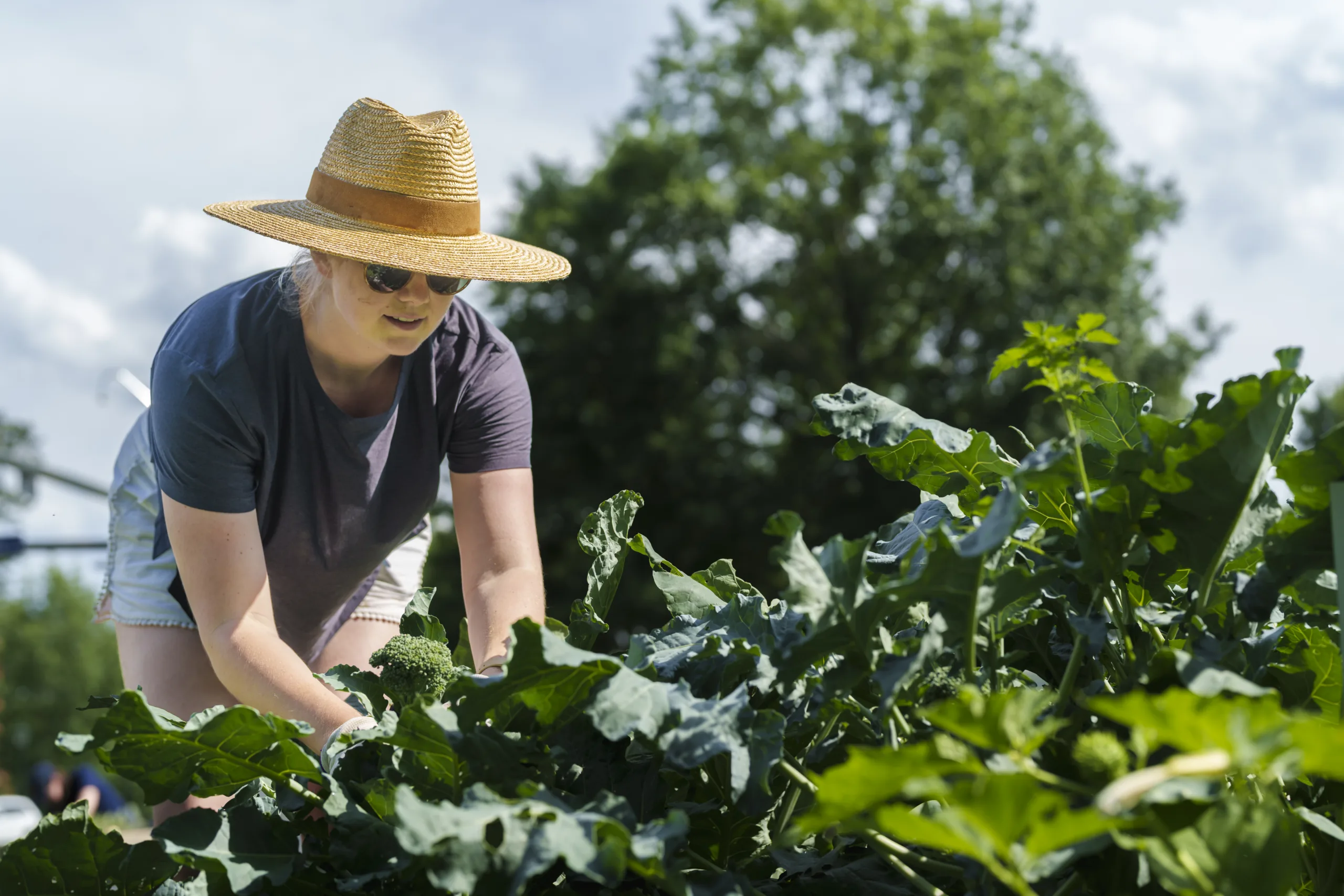
At UVA’s community garden on McCormick and Alderman roads, students are growing more than just food—they’re cultivating better health. The verdant plot bursts nearly year-round with cucumbers, peppers, carrots, beets, fresh herbs, and flowers for bouquets, but experts say the benefits extend far beyond the harvest.
Growing your own food boosts physical activity and improves access to affordable, healthy meals—benefits UVA experts say can lower your risk for long-term illness, including cancer.
“Eat the rainbow,” advises Megan Poole, a registered dietitian at UVA’s Emily Couric Clinical Cancer Center. Different colored produce offers unique vitamins—leafy greens pack vitamins A and E for vision and immunity. “Fresh fruits and vegetables contain a wide variety of vitamins and minerals that our bodies need to function,” explains UVA Health nutritionist Monica Hershey. “It’s important to eat a variety because they contain different amounts and kinds of nutrients.”
Homegrown food tastes better, too. Fredericksburg Regional Food Bank confirms that peak-ripened produce packs more nutrients and flavor than store-bought alternatives that often lose vitamins during transport. When you grow your own, you harvest at perfection, control what touches your food, and can choose organic methods for chemical-free meals.
Beyond nutrition, there are added benefits, too. “There’s something therapeutic about pulling weeds and harvesting beets,” says Lela Garner, sustainability manager for student outreach and engagement at UVA’s Office for Sustainability. Growing your own food means exploring unique varieties unavailable in stores and savoring unbeatable freshness straight from garden to table.
This article originally appeared in the February 2026 issue.