
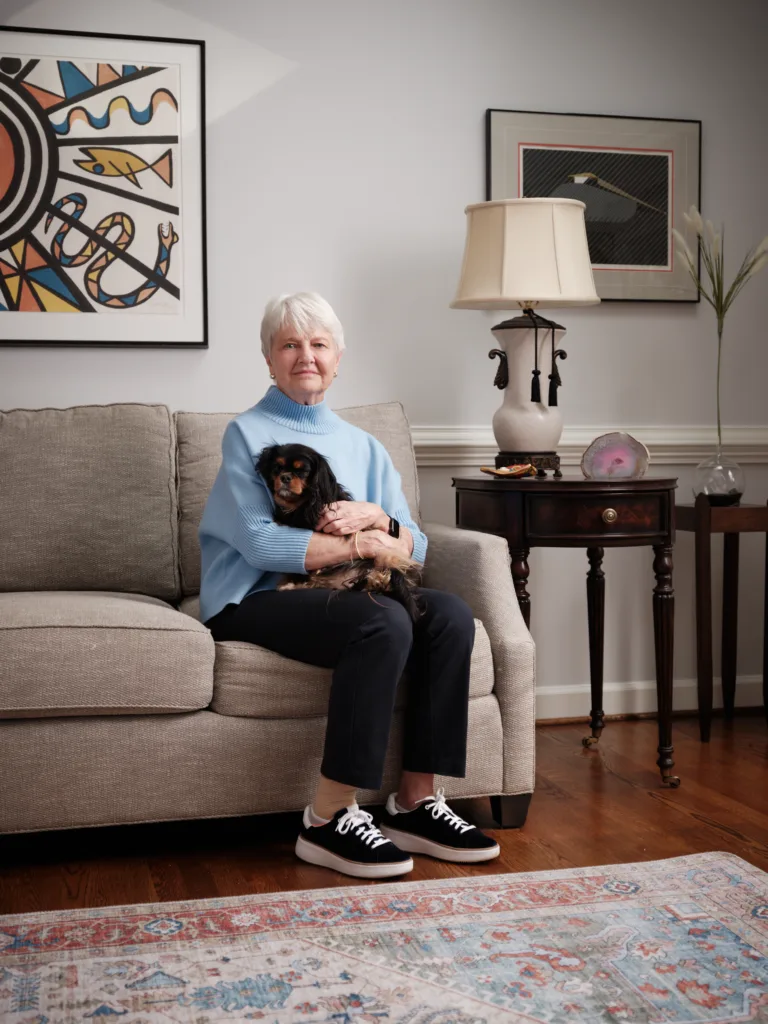
Robertson spent her career saving lives. As CEO of Mary Immaculate Hospital in Bon Secours Hampton Roads and later chief administrative officer for Bon Secours Virginia, she oversaw hospitals, home care, hospice, and nursing homes across two major markets. She was part of the historic merger when Richmond Memorial Hospital joined Bon Secours, worked at Memorial Regional, Stuart Circle, and St. Mary’s, building what she calls “a fabulous career” with opportunities to make a real difference in healthcare.
But on Dec. 3, 2022, Robertson found herself on the other side of the equation.
That Cold December Night
It was around 8:30 that evening when Robertson took her rescue dog at the time, Wheezy, a puggle (a pug-beagle mix) she describes as “almost square,” out for one last evening walk near her Richmond home. The night was dark and cold, and she wore only a black jacket and black pants as the pair approached a fence where neighborhood dogs were barking.
What happened next occurred in an instant. Whether it was a tree root hidden beneath the leaves or simply an unlucky misstep, Robertson went down face-first. Hard. She lost consciousness immediately.
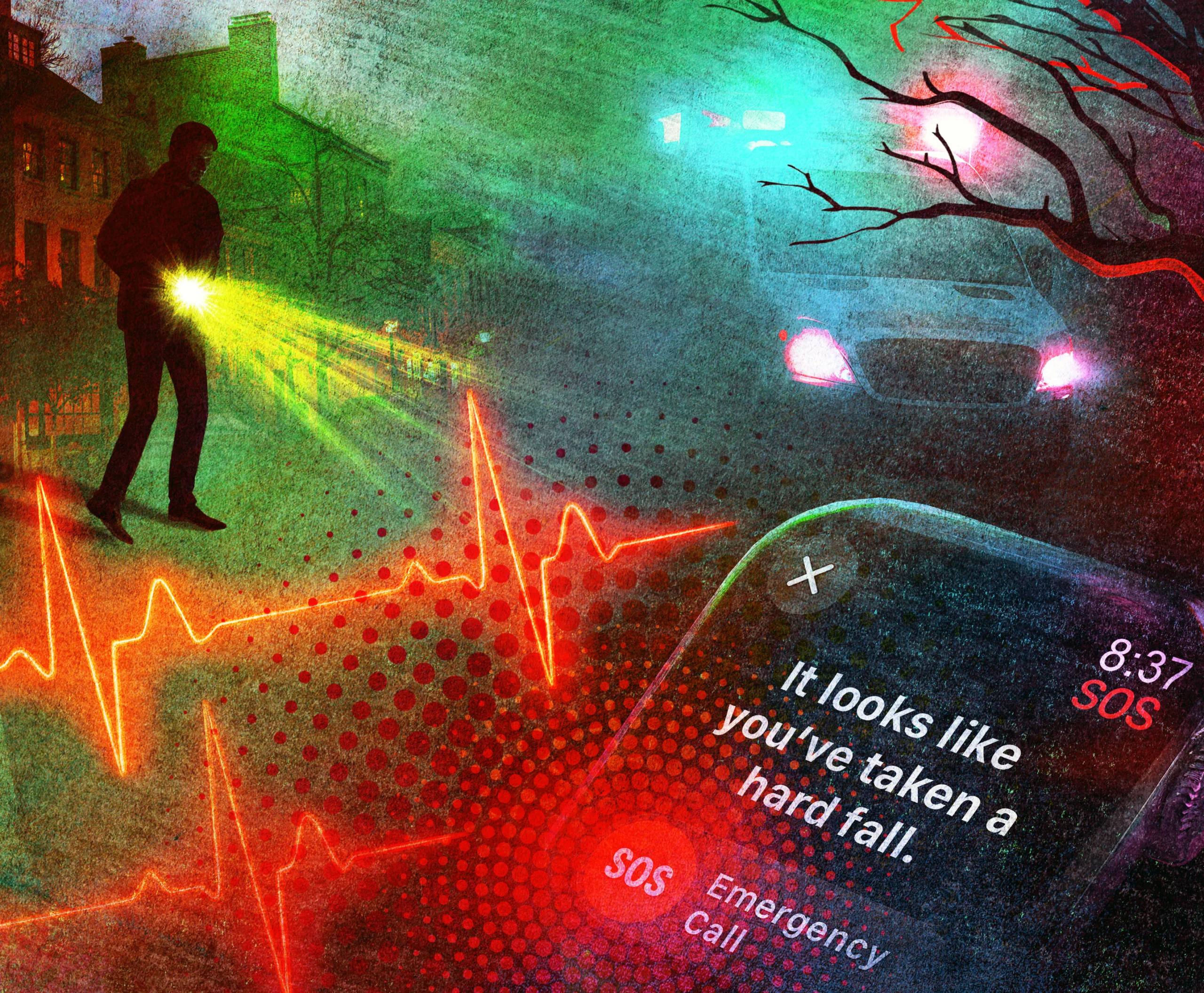
What she didn’t know was that the Apple Watch she purchased just weeks earlier—a seemingly casual decision—was about to save her life.
A detour to the Verizon store at Libbie and Broad in November prompted her to upgrade her phone before a planned trip abroad. A young sales associate suggested she might want to add an Apple Watch to her purchase, taking advantage of a promotion. In a casual “what the heck” moment, she bought the watch, and, during the setup process, the sales associate followed his usual routine and programmed emergency contacts into the device. Her son and daughter were added to the list. Roberston thought nothing of it and went on her merry way.
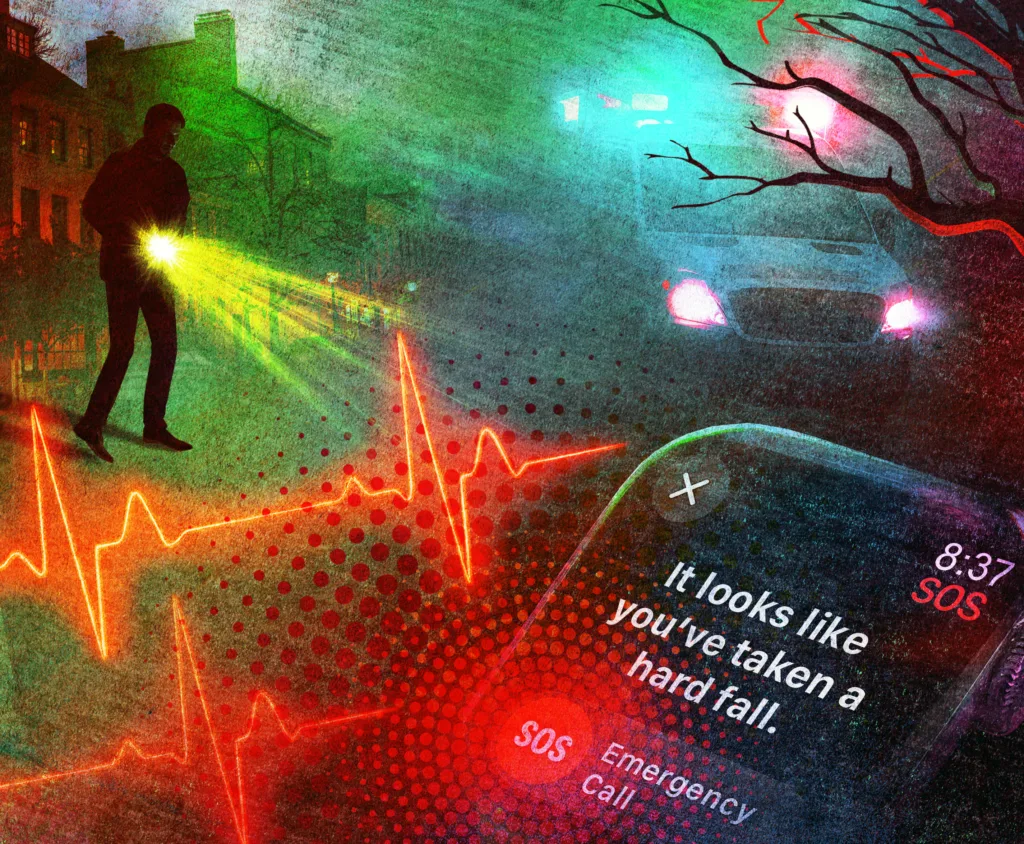
But when she hit the ground that December night, her watch detected the impact immediately. The device’s fall detection technology sprang into action, first attempting to call 911. When no one answered—a troubling reality she attributes to staffing challenges during that post-pandemic period—the watch moved to its backup plan, calling her emergency contacts.
The watch’s automated message was stark: “Hard fall. Cannot respond.”
The Search in the Dark
Her daughter, Ann Robertson Vaughters, a pediatrician, was at a meeting in Hot Springs with her husband when her phone rang. Her brother, Nick, in Washington, D.C., received the same message. Both initially assumed it was a hoax.
But when neither could reach their mother, panic set in. Her daughter called an old neighbor, and “God bless him,” as Robertson says, he came looking.
Finding her proved nearly impossible. In the pitch darkness, she lay crumpled against a fence in her black clothing, essentially invisible. Her neighbor searched and searched while Robertson, semi-conscious, believed she was screaming for help. But in reality, wasn’t making a sound. Wheezy sat faithfully beside her, bewildered but waiting.
When her neighbor finally spotted her and called 911 again, Robertson was rushed to St. Mary’s Hospital—ironically, one of the facilities where she’d worked during her distinguished career. She then spent 10 days there undergoing cervical fusion surgery after doctors discovered she’d chipped her first two vertebrae and severely damaged the next four.
Road to Recovery
The injuries were near-catastrophic. Robertson lost use of her right hand, couldn’t walk, and still has no feeling in parts of her body.
After her hospital stay, she spent a month at Sheltering Arms Institute’s state-of-the-art facility in Short Pump, arriving through the loading dock near midnight when a bed finally became available. “I knew where I needed to be,” she recalls, “and waited till they had the room.”
The rehabilitation was intensive and included endless hours of physical and occupational therapy. Slowly, painstakingly, Robertson regained function. She later transitioned to outpatient rehabilitation, moving to Sheltering Arms’ Reynolds Crossing location for convenience.
Today, nearly three years after her fall, Robertson continues regular exercise therapy at Reynolds Crossing, working with therapists who help her maintain mobility and strength. She still sees Dr. Rajbir Chaggar, a physical medicine and rehabilitation specialist at VCU Health who also works at the Institute.
Prepared and Lucky
With profound gratitude, Robertson’s daughter sought out the Verizon sales associate who’d set up the watch. Robertson is grateful every day, although she reflects on the strange turn of events with characteristic pragmatism. She doesn’t dwell on the dramatic nature of her rescue, though she acknowledges the reality: Without that watch, she likely would have spent the entire night outside in the cold December darkness, invisible to anyone passing by.
“I would have probably been out there all night,” she says simply. “It was so dark you couldn’t see me.” The more stark probability is that Robertson may not have even lived to tell the story.
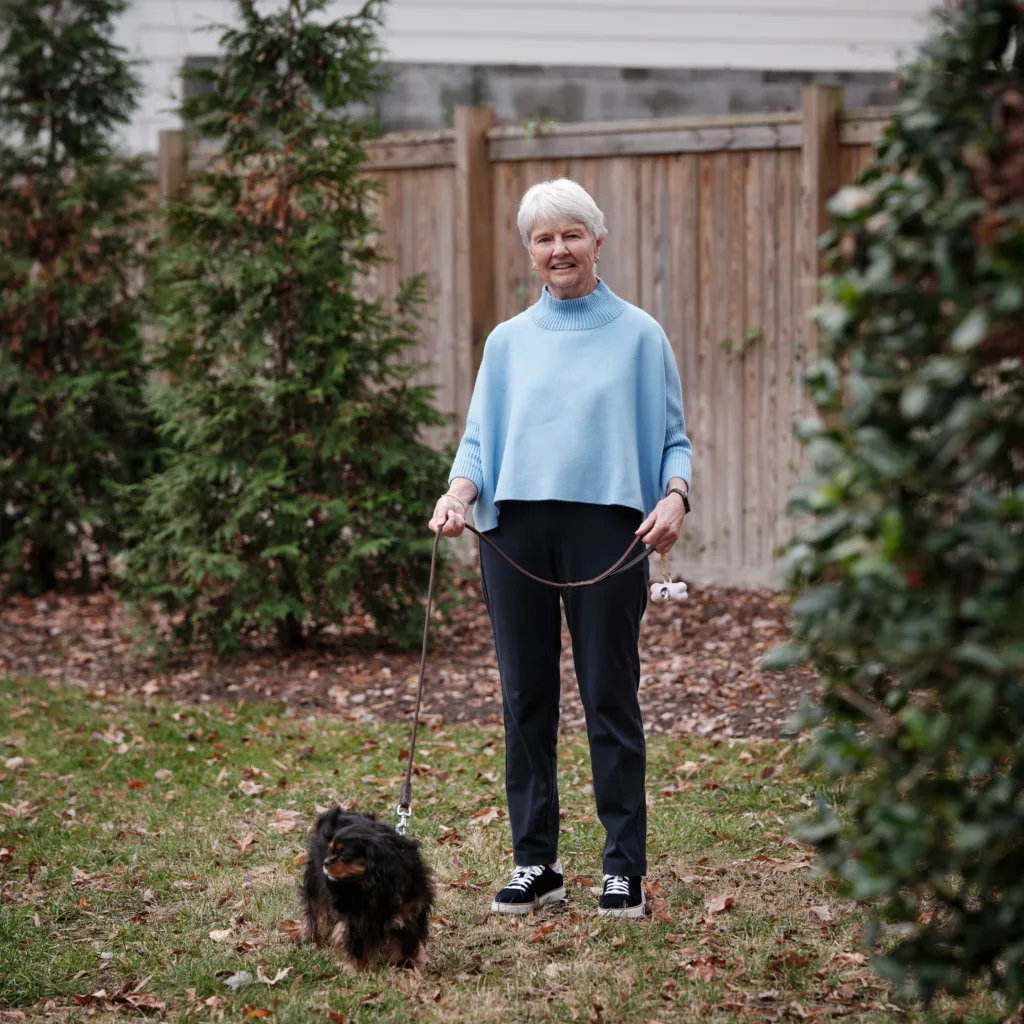
She doesn’t consider herself lucky—just prepared, even accidentally. While she continues her therapy at Reynolds Crossing, walks her new rescue dog Mindy, and enjoys her grandchildren, she has added one item to her daily routine: She never leaves home without her Apple Watch.
This article originally appeared in the February 2026 issue.