
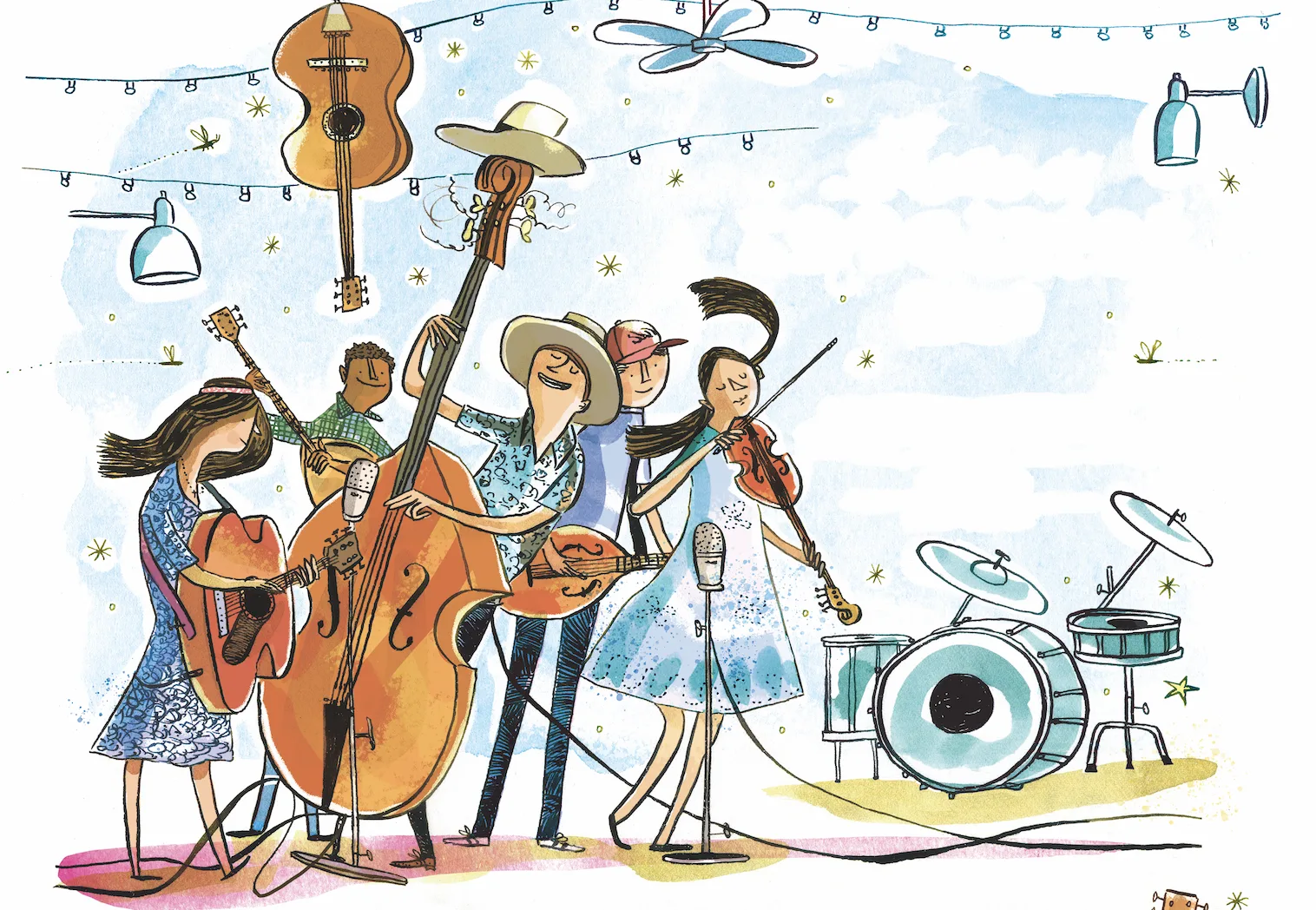
Music flows through the halls. Feet tap on the hardwood floors, while instructors marvel at the talent as fingers effortlessly tickle the strings of basses and fiddles. Set to this soundtrack, the mountains look greener, and the trees are dancing.
Between splashing in the creeks around Graves Mountain Lodge and communal dinners, students at The Blue Ridge Center for Music & Creative Arts (BRCMCA) enliven Madison County with a new generation of bluegrass music, right from a classroom shared with the best in the business.
The Brain Child
The center is a nonprofit organization nestled in the Shenandoah foothills where talented children from ages 14–23 get a free world-class education in music and visual arts.
Earle Martin was a retired business executive when he had a eureka moment in 2023. The Banff Centre Mountain Film and Book Festival in Canada had been around for decades as one of the most prestigious and largest mountain cultural festivals in the world. Why shouldn’t Virginia’s own Blue Ridge Mountains come out to play?
Martin partnered with local patrons of the arts Eric Starck and Scott Eliff to create BRCMCA. There, intensive summer camps teach emerging artists everything they need to know to thrive in the music or art industry in nine days. Plus, “the kids get to hang out with other kids who share the same mindset and dreams,” Eliff says.
It’s the background students need to take the next step in their pursuits—whether that’s forming a band or getting a college scholarship. “Its primary function is taking the youth of Virginia who are very skilled and are not necessarily in a position to enable more lessons and learning,” says Starck.
“It’s a huge gift,” says Jeanne Gibbons about the free tuition. Jeanne and her son Bodhi came from Mouth Savage, Maryland, to revel in Madison County and its musical magic. “They’ve worked really hard to remove barriers.”
Gibbons heard about the program through social media, and after meeting Martin and learning more about it, it was a done deal.
Art By The Numbers
From lullabies and tinkling music boxes to recorders in music class and learning do-re-mi from The Sound of Music, music is ubiquitous from a young age. But beyond the nostalgic happiness in listening to a favorite song or the joy of a spontaneous dance, music’s effects go further. It is the workout a growing brain needs.
It’s long been proven that the power of music in education is paramount to kids’ early development; researchers at the Department of Fundamental Neurosciences and the University of Geneva, Switzerland, report that children who undergo musical training have better verbal memory, second language pronunciation accuracy, reading ability, and executive functions.
And just last year, a report by the National Endowment for the Arts affirmed that arts education is closely linked with positive academic outcomes and social and emotional development.
More programs around the Commonwealth are getting the picture: Art in education matters. In Staunton, the renowned Heifetz International Music Institute at Mary Baldwin University continues to evolve its renowned summer program with Performance and Communication Training—a landmark development in music education. The approach combines traditional string instrument education with innovative instruction in voice, public speaking, drama, and movement.
This kind of holistic approach to arts education reigns supreme in Virginia.
Music to One’s Ear
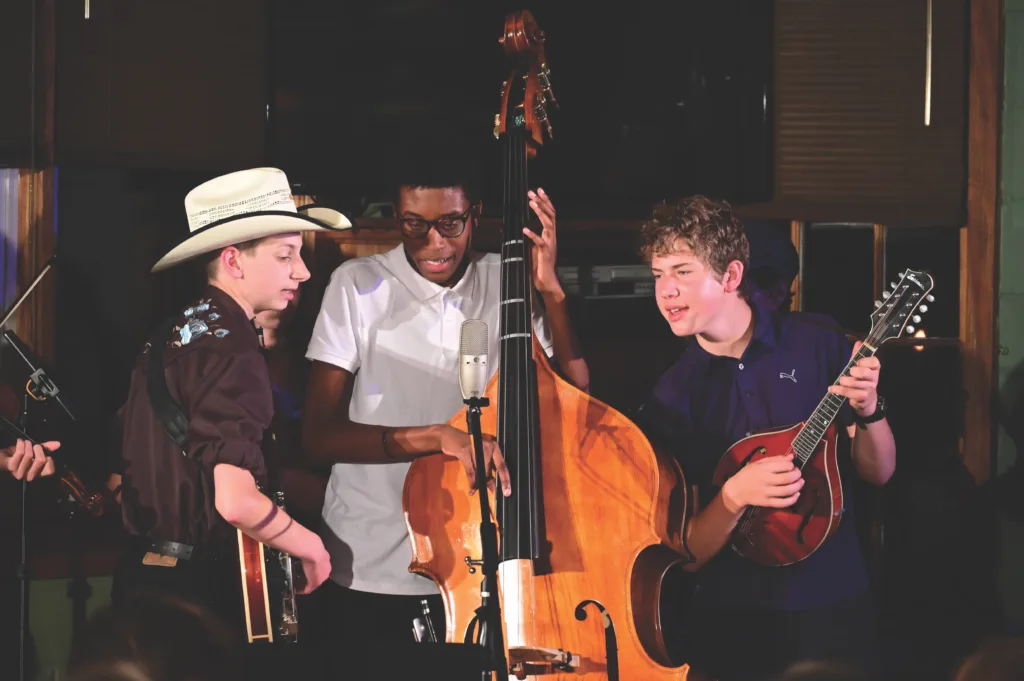
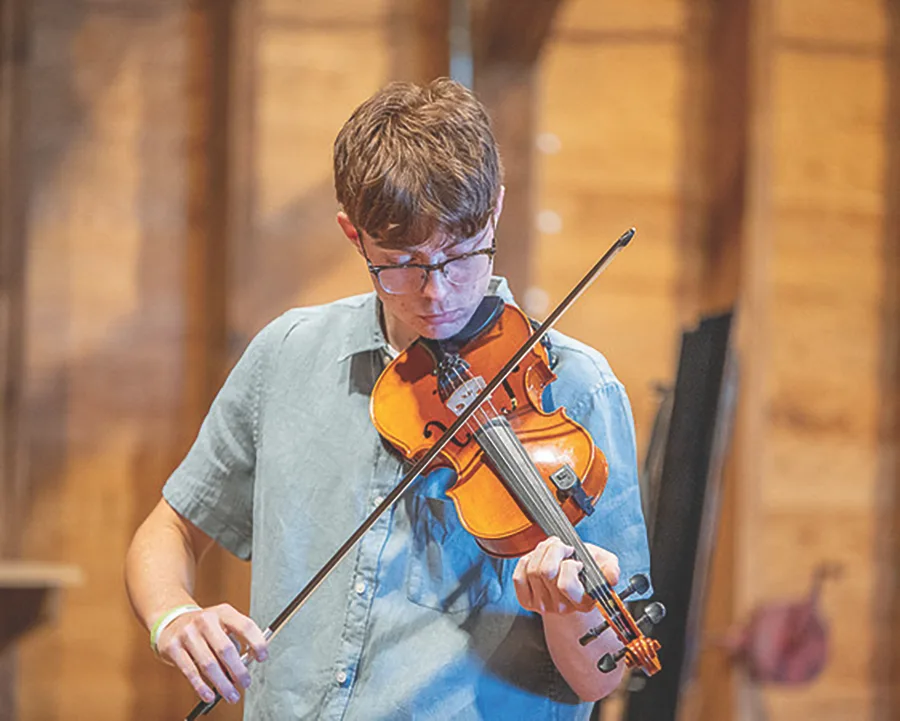
In June 2025, the BRCMCA Bluegrass program teemed with highly talented musicians. The program’s second installment, directed by Vince May, included jam sessions, professional headshots, instrument workshops, and a live performance to the surrounding community.
“This is for kids who are really good and have made the commitment to become good and have real potential to be professional musicians,” says May. “If they have that potential, we’re going to prepare them by teaching things they can’t learn in their high school band classes.”
The teaching talent comes from as far as flute instructor Antonina Styczen’s hometown of Bielsko-Biala in southern Poland, and as near as Greene County, where bluegrass songwriter Valerie Smith and her band Liberty Pike are based.
The students’ origins are just as diverse and inspiring.
Orson Cornett, a student from North Carolina, started his musical journey with the mandolin, and now, because of the instruments’ similar strings, also plays the dobro and fiddle. His mom Deb sees a future beyond the week at the BRCMCA—the mentors and programs are cultivating a place where the kids can be musicians together, even beyond the classes.
All the way from Pennsylvania, Joe Perloff and his daughters Rita and Josie have dazzled with their talent. The program has an age minimum, but when tutors heard 11-year-old Josie play the mandolin, her talent could not be overlooked. Now, the girls continue their education and connections with fellow students by keeping up with live performances.
“It was so fascinating seeing people come together and connect through music—bringing music to the next generation,” says Katrin Rippel Galati, another mother with a child in the program.
Down the Road
Down the road from Graves Mountain Lodge is the local art gallery, Possum’s Store, where more BRCMCA kids learn to sculpt with renowned sculptor Gary Colson, who’s also owner of Carvers Studio for the Creative Arts in Culpeper. They paint with store owner, artist, and visual arts program director Renee Belfour. Their idyllic summer schedule starts with morning yoga and art classes, leading to evening swimming and communal dinners where they discuss their creative processes.
“The idea is to introduce them to as much as we possibly can—and not only talk about the art, but creativity, portfolio development, exhibiting, and how you push yourself further into becoming more serious and finding direction,” says Balfour.
The visual art students explore mediums that they wouldn’t typically have access to—such as stone sculpture. For both BRCMCA groups, the week ended with a group performance and an exhibition.
Starck reflects on how this land was serendipitously positioned to provide the inspiration a program like this needed.
“This Valley has the opportunity to become a resource for exceptional creators, doers, artists, writers, musicians, and the support people who make it happen.”

Illustrations by Adam Larkum. This article originally appeared in the April 2026 issue.