
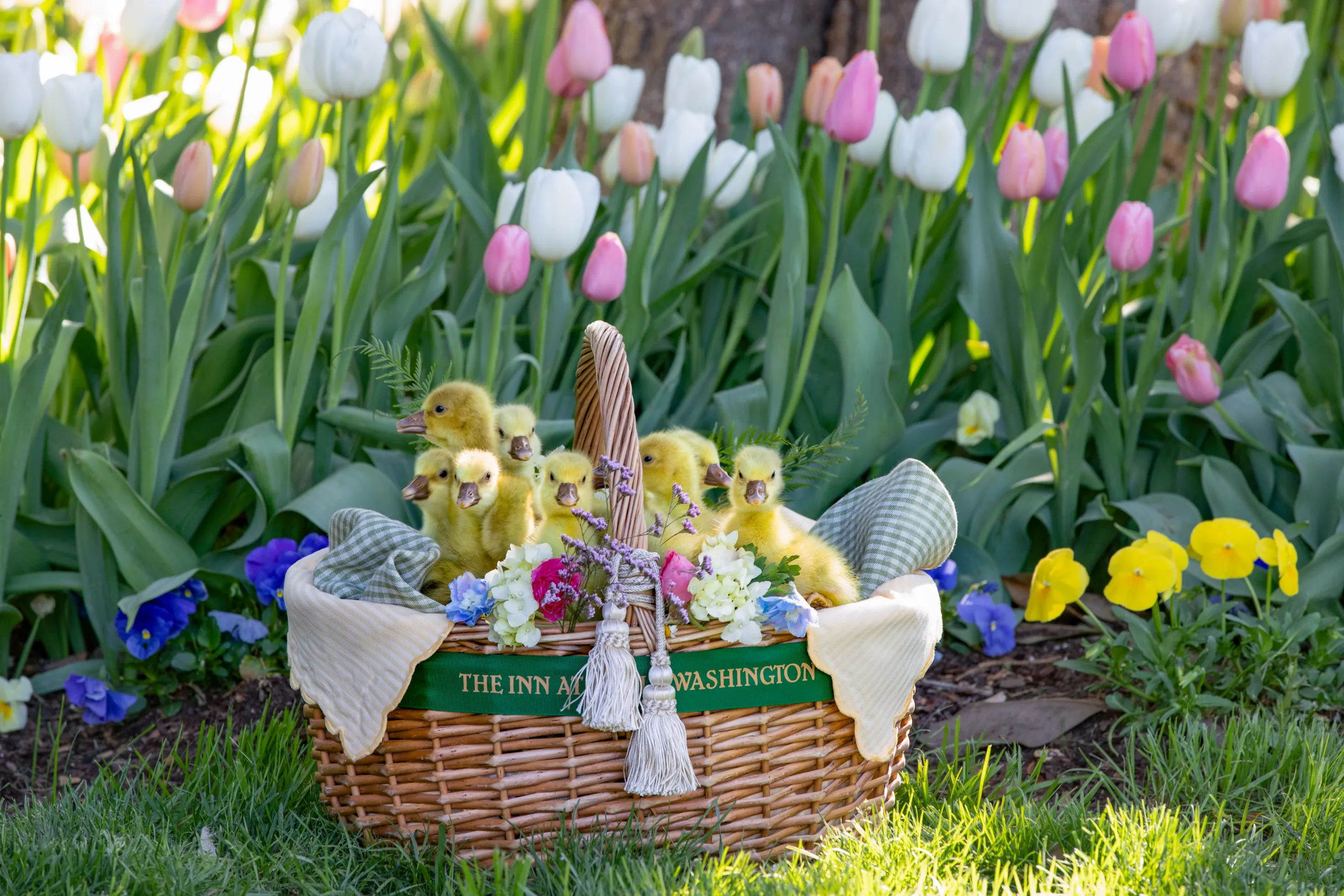
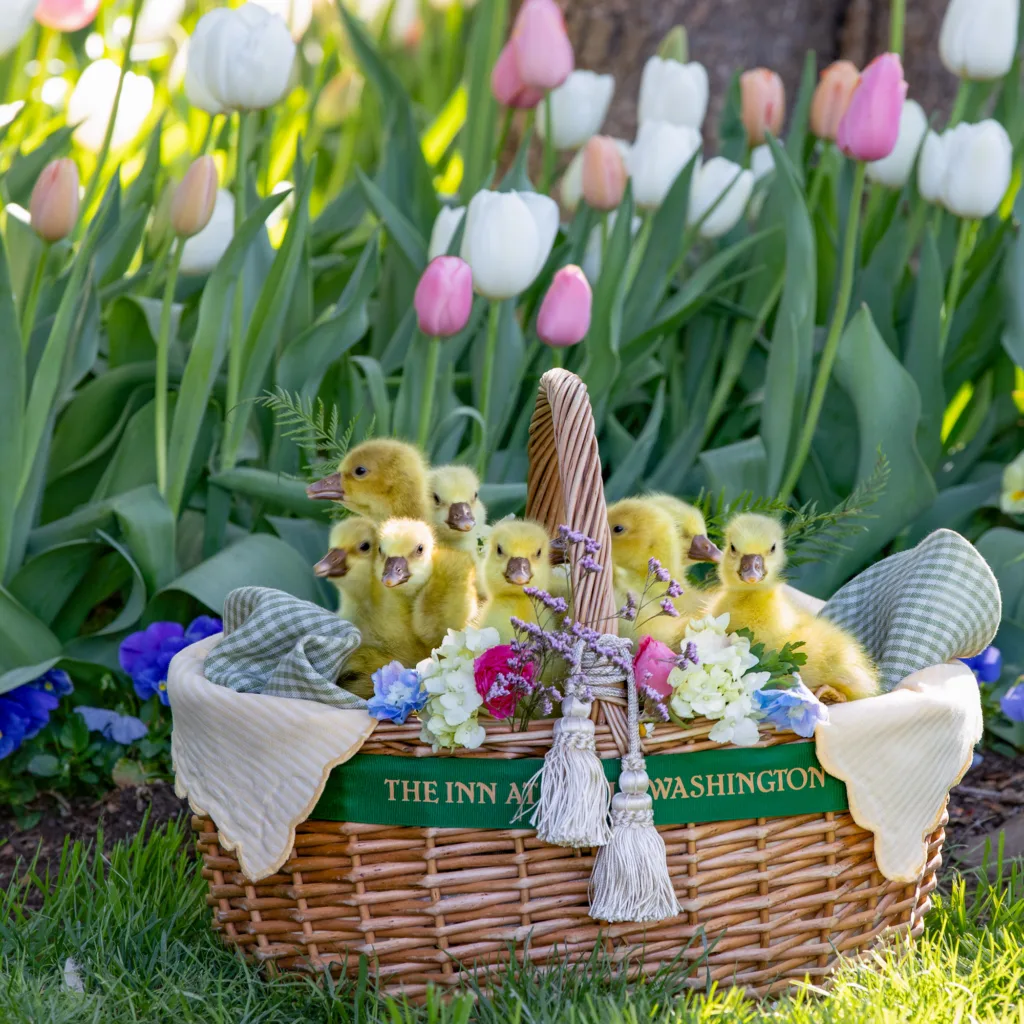
Chef Patrick O’Connell has spent nearly five decades turning a former garage in rural Rappahannock County into one of America’s most celebrated restaurants—Virginia’s multi-Michelin-star Inn at Little Washington and Green Star honoree. This spring, his latest collaborators arrived on tiny webbed feet: a brood of American Buff geese and Golden 300 ducks that waddle across the property’s 24 acres like tiny landscapers on patrol. They’re not only the most charming photo ops—they’re also essential workers in O’Connell’s regenerative agriculture program and the newest expression of his vision to steward this small corner of Virginia as carefully as he plates his food.
“They’re transforming the land,” says Andy Thewlis, the Inn’s chief farmer, who oversees the feathered crew alongside two additional full-time farmers and five gardeners. The birds rotate through pastures—gardeners in miniature—grazing to trim grass, suppress weeds, and naturally enrich the soil with their nutrient-dense droppings. Their gentle foraging rebuilds soil structure and cultivates a thriving micro-ecosystem—no chemicals, no machinery, just nature doing what it does best.
Thewlis chose the American Buff geese for their regal, majestic spirit and friendly temperament, while the Golden 300 ducks are both avid foragers and productive layers. The agricultural operations, he explains, are entirely ecological—blending old-world farming techniques with appropriate technology. Greenhouses feature lush, living soils, while solar-powered fencing allows the flocks to rotationally graze as land stewards.
“What’s remarkable is how they work in harmony with the other elements of the farm,” Thewlis explains. “The ducks and geese prepare the soil, which benefits everything else we’re growing.” That cycle includes on-site greenhouses for winter herbs and lettuces, a cherry orchard that supplies abundant fruit each spring, beehives that produce the Inn’s own honey, and Red Star chickens for egg production.
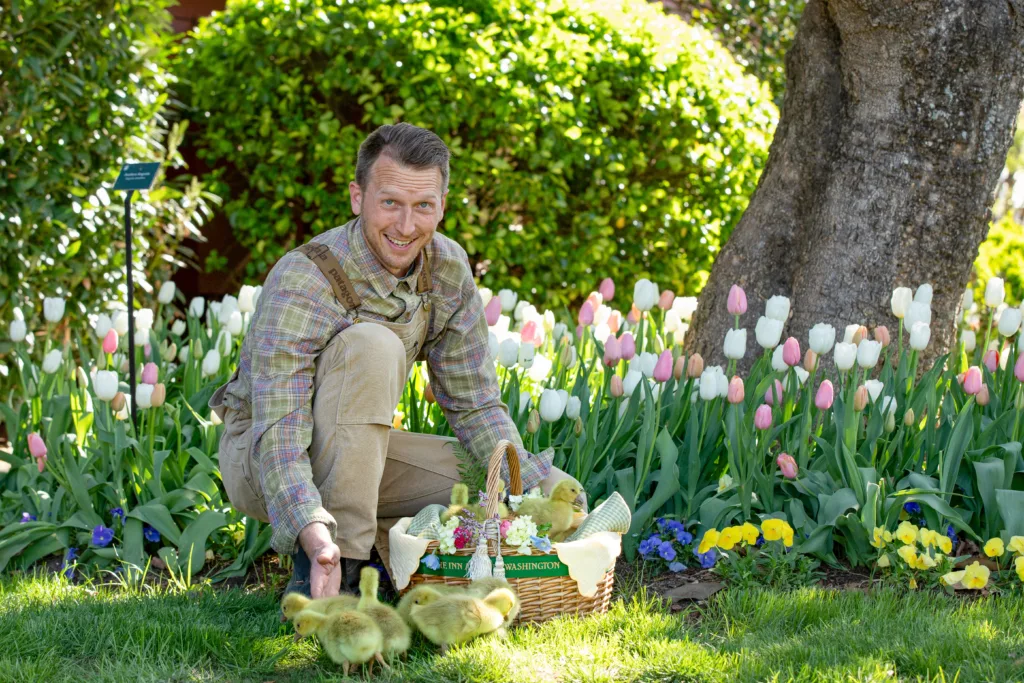
The ducklings’ and goslings’ fresh eggs find their way into O’Connell’s kitchen, inspiring refined new dishes. “When Chef gets eggs that were laid that morning, you can see the creativity spark,” says Thewlis. “He knows exactly where they came from, what the birds ate, how they live. That connection shows up on the plate.”
The daily Goose Walk has quickly become a charming highlight for guests. “I love the delight and disbelief,” Thewlis says. “The looks of astonishment are unforgettable. It’s not every day you see geese of such grandeur.” With a touch of musical fanfare, the procession waddling down the street feels like an enchanted chance encounter.
This commitment to regenerative agriculture earned The Inn a Michelin Green Star, joining an elite group of fewer than 30 American restaurants recognized for exceptional eco-friendly practices. Notable recipients include Blue Hill at Stone Barns in New York, Atelier Crenn in San Francisco, and SingleThread in Healdsburg, California. While California dominates with 17 Green Stars, The Inn stands out in the mid-Atlantic as a pioneer of on-site regenerative agriculture.
The Inn’s practices extend beyond the ducklings and goslings. All organic food trim is saved for garden compost. Vegetable scraps nourish the chickens and goats. Bamboo flatware has replaced plastic for takeaway items. A recently completed ecological pond teems with native wildlife, creating habitat while managing water naturally.
For Thewlis, a native of Ohio who spent 18 years organically farming throughout the Blue Ridge Mountains, The Inn represents something special. Now in his third year, he describes his arrival as fate. “I answered the call to adventure and followed a golden thread to The Inn,” he says. “There I was, swept off my feet. I fell in love. I’ve been living in a fairy tale ever since.”
Working with O’Connell—who received the James Beard Lifetime Achievement Award in 2019—fulfills a dream. “The relationship between Farmer and Chef is a tale as old as time,” Thewlis reflects. “Nourishing our guests with exquisite ingredients brings me great joy. To do so in partnership with nature is equally as rewarding.”
The ducklings and goslings are the latest chapter in that story, transforming the land and menu with every quack, honk, and freshly laid egg.
This article originally appeared in the April 2026 issue.