
Leney and Owen Peterson didn’t exactly set out to be shop owners. But for Leney, who spent years on the road working as a photojournalist and collecting vintage and antique finds along her route, and Owen, who has a background in retail management, a physical storefront was the natural next step for their business, which had previously been only online. When the pandemic arrived, wiping out Leney’s in-person work and driving what was their side hustle to a thriving full-time gig, it was time.
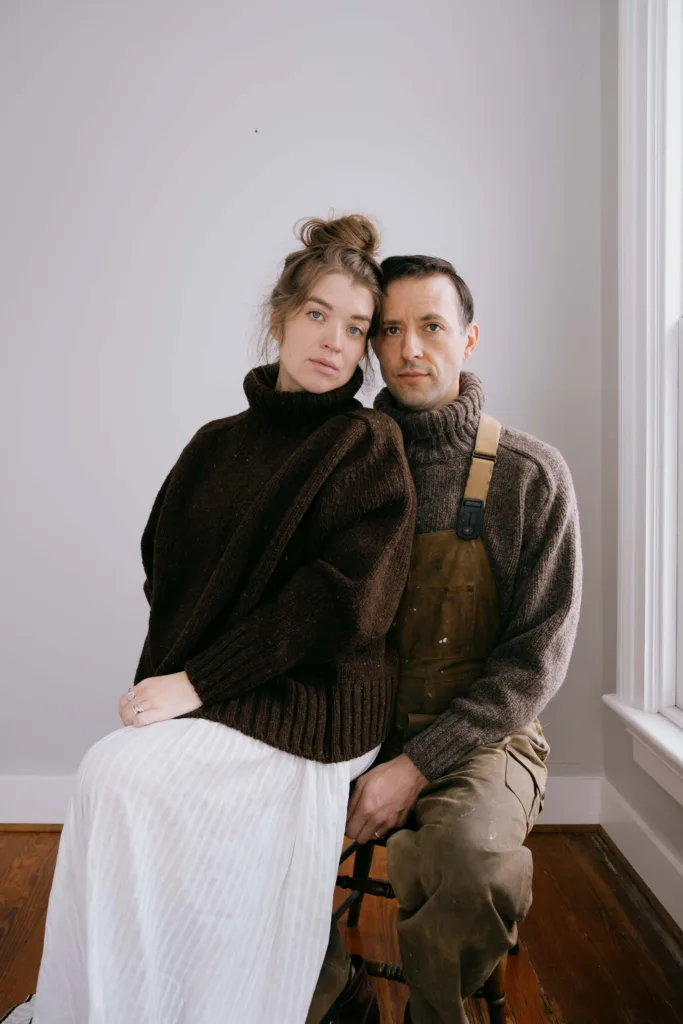
The couple met in Richmond, but Gordonsville, with its postage-stamp-sized downtown and proximity to Charlottesville and its wine country, proved an alluring place to land. In late 2020, they opened Folkling, a small storefront on Gordonsville’s Main Street pedaling vintage clothes, antique quilts, and unique, curated bric-à-brac largely from Virginia and the American South. With store traffic driven by their increasingly popular online presence, it wasn’t long before they outgrew their original space. In summer 2024, Folkling relocated—just down the street—to an unconventional storefront that spans the entirety of a 3,000-square-foot 1870s home.
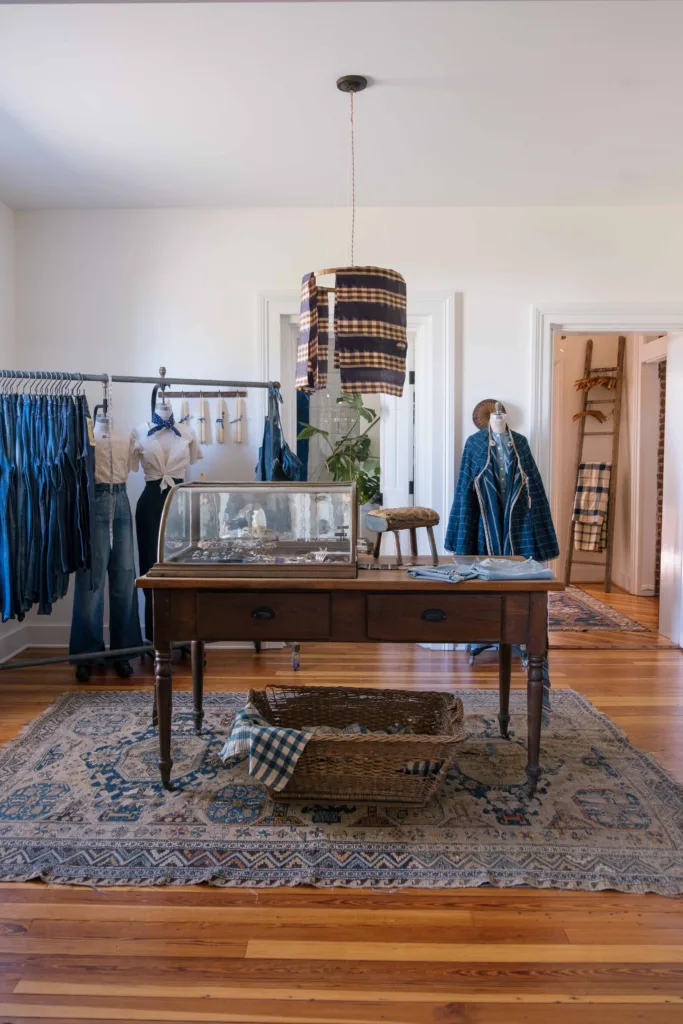
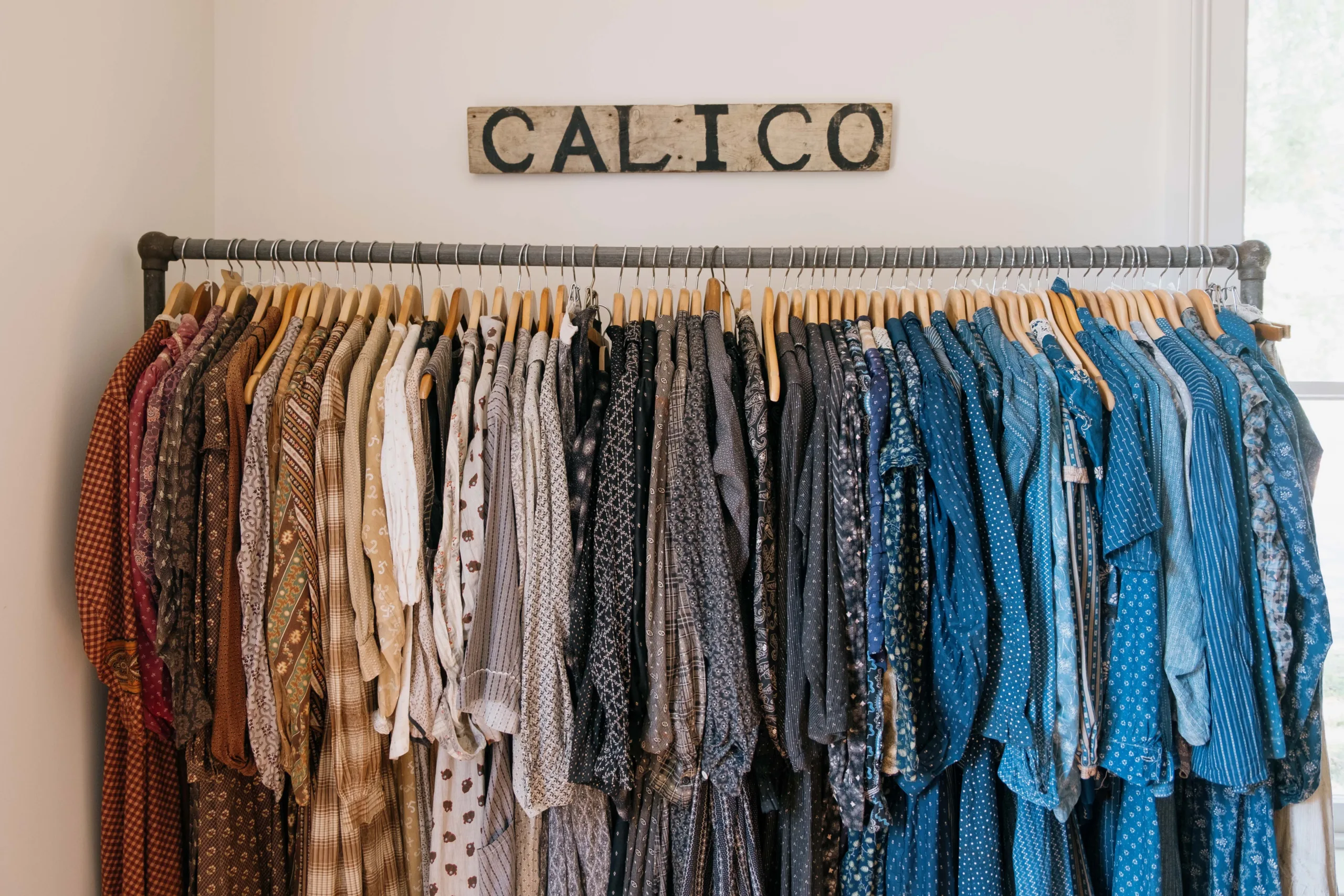
In one of the many shoppable rooms in Folkling House is a small portion of their vintage denim collection from the 1930s–1990s.
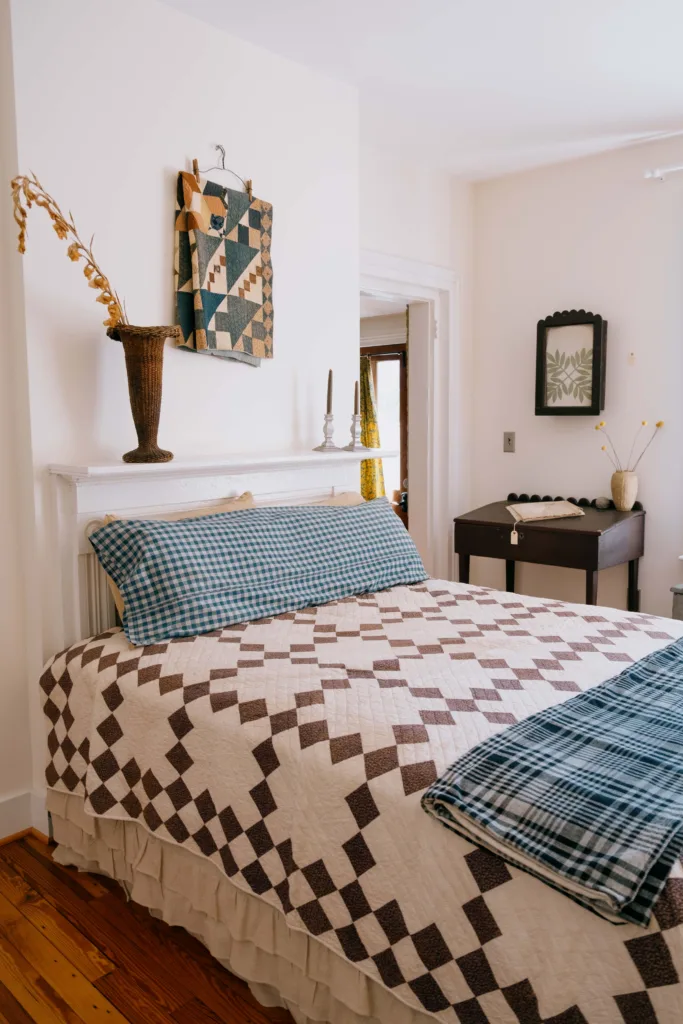
An Irish Chain Quilt from the 1890s is featured in the Quilt Room. Above it hangs an 1830s crib quilt; homespun
pieces complement the décor.
The new space, dubbed Folking House, opened that November with once-monthly open houses announced via their website, newsletter, and to over 40,000 Instagram followers. Otherwise, they are open by appointment. The new model means the couple has more time to invest in the pieces they source, mending and restoring them where necessary. It’s also changed the way they interact with customers.
“We met a lot of lovely people when we were open in the more traditional storefront,” Owen says. “But there were also a lot of people who didn’t understand what we were doing, asking questions like ‘Did you make this?’ or ‘Can I get this in a different size?’”
With the new space and limited opening hours, they’ve eliminated some of the confusion. “Now, when people come here, they’re already familiar with what we do,” Leney says. “Now we have more energy and time to really engage with the people who come in and want to have these deep, fun conversations.”
From the beginning, the heart of Folkling has been its collection of antique quilts, and the new space allows for a full room dedicated to textile arts, with quilts folded up on shelves and spread out across a bed. The larger location also allows the couple to display bigger pieces like antique furniture that they couldn’t physically fit into the old space.
“I think secretly we both want to have a museum,” Leney says. “So it’s fun to be able to have spaces that can showcase things that are really special and be able to tell their story a little bit more than just having a tiny rack.”
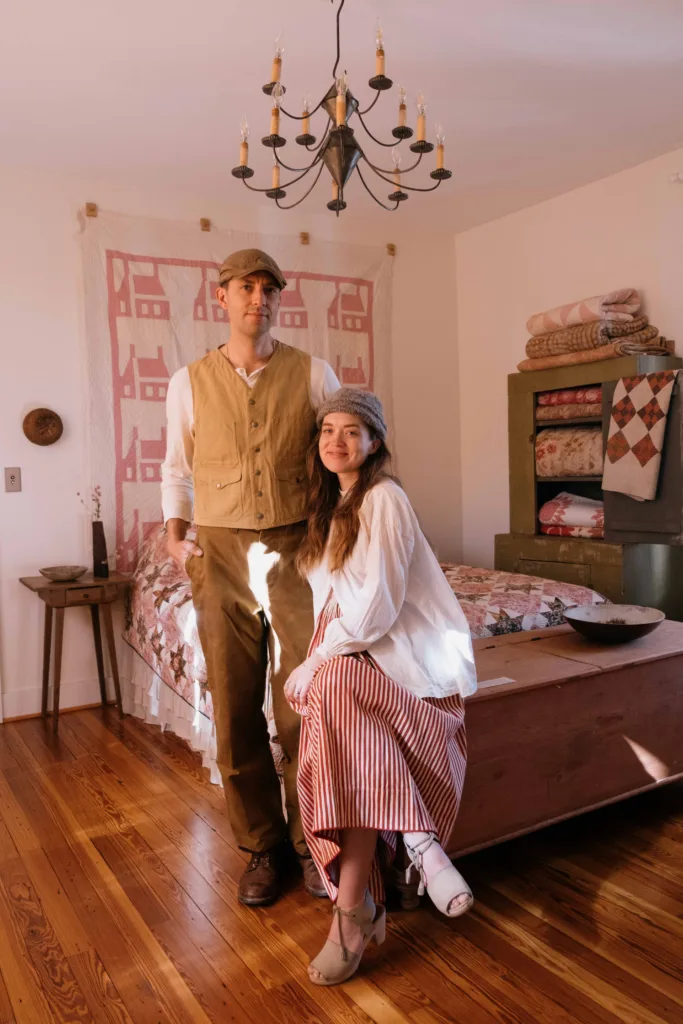
Owners Owen and Leney Peterson in the quilt room of Folkling House.
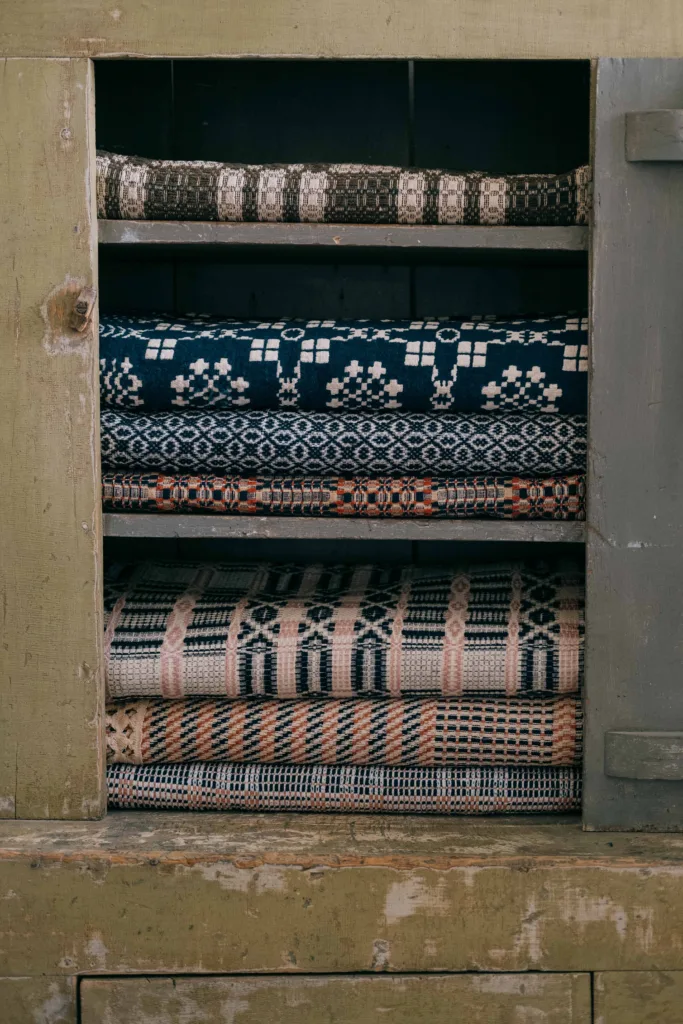
A collection of Folkling’s 19th-century overshot coverlets.
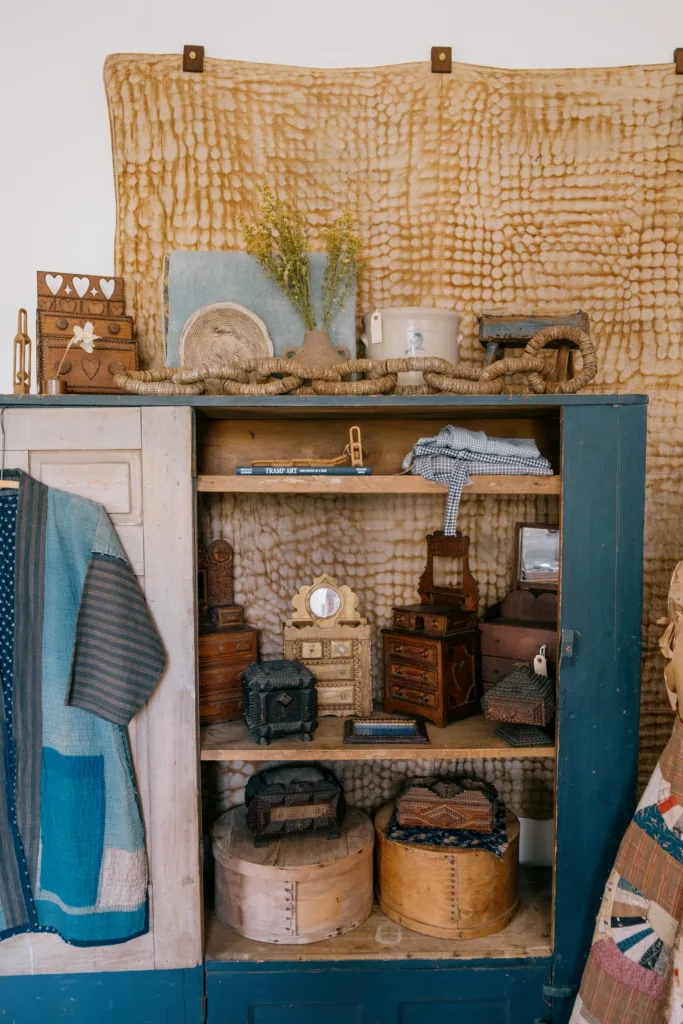
A collection of tramp art and other folk art pieces displayed in a 19th-century cupboard.
The couple, who both grew up in Virginia, were raised with a love of thrifting. Driving around the South on sourcing trips was a cornerstone of how they began their business. These days they do more curated purchasing, attaining singular pieces or collections from individuals and estates. Occasionally, they acquire pieces from museums that deaccession items—everything from Edwardian-era nightgowns to 19th-century quilts. Quilts and homespun are what they gravitate toward most, and it’s with these that the couple really gets to showcase pieces as works of art.
“Quilts are one of the things that maybe set us apart from other antique stores or vintage clothing dealers,” Leney says. “They’re something that people don’t necessarily have the opportunity to just walk into any store and learn about.”
The couple’s own love of quilts ignited in 2020 when they came across one in particular that sparked a deep curiosity in them both. They set out to learn more about its unique patterns and designs, its antique fabrics, and the traditions of this treasured textile craft.
“Most quilts are completely handmade,” Owen says. “There’s so much precision and accuracy and artistry. Real artistry. But because quilting is primarily a female art form, historically they’re almost never accredited to a specific person.”
Where others might see an old blanket, Leney and Owen see stories. Their collection of quilts, mostly from the mid-19th century—the golden age of American quilting—sets out to bring those stories to life.
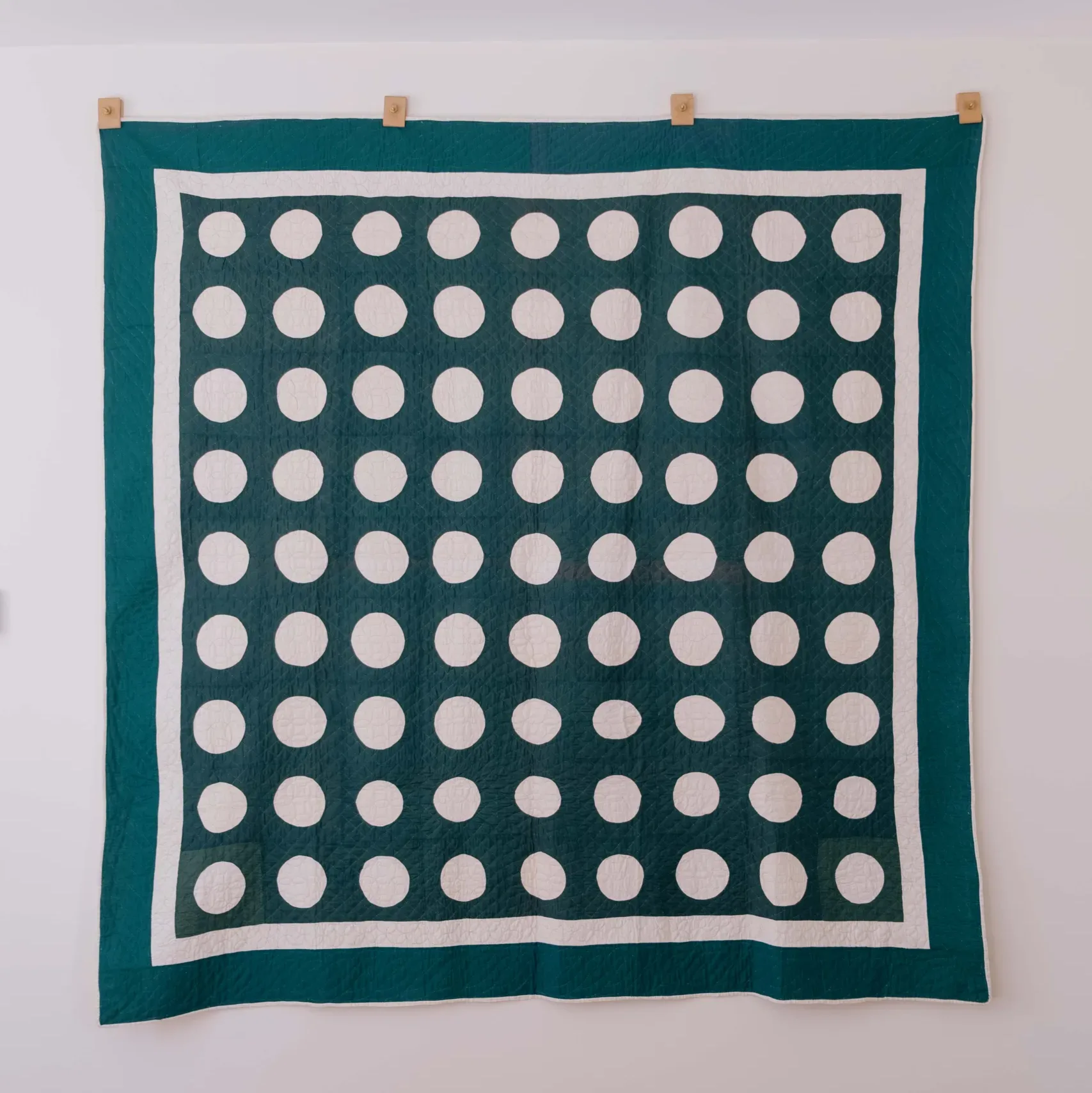
“People made quilts, primarily out of necessity,” Leney notes. “But quilting was also one of the few ways in which women could express themselves in this really artful way that I think you could argue was overlooked in different ways over the years.”
The quilts in Folkling’s collection are unique works of art. They’ve come across scraps of fabric that date back to the late 1700s, weaving in pieces of history and mystery. “We’ve seen a million Drunkard’s Path and Grandmother’s Flower Garden patterns,” Leney says, “but every one is still different. Every one is still one-of-a-kind. We still come across fabrics and patterns we’ve never seen.”
For Leney and Owen, every quilt, and every piece in their collection, has a story worth saving and sharing. And in their reimagined shop, those stories have found a home, newly alive for the next generation to find their own point of fascination.
This article originally appeared in the April 2026 issue.