
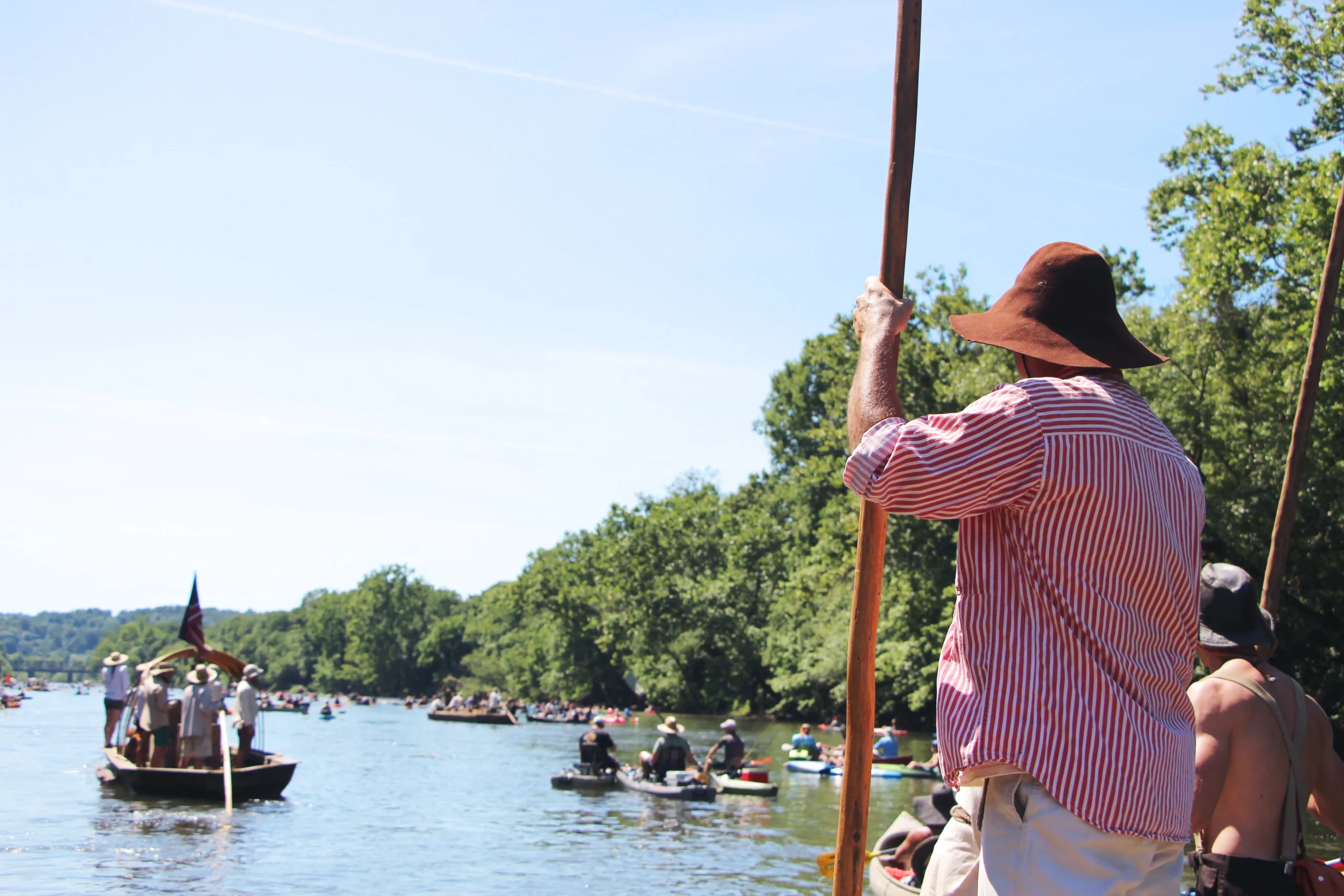
This June, hundreds of canoes, kayaks, paddleboards, and authentic batteau replicas will launch from Lynchburg’s Percival’s Island and float 120 miles down the James River to Richmond — an eight-day journey along a 200-year-old trade route. The James River Batteau Festival, beginning June 20, is part river adventure, part living history lesson, and, by all accounts, unlike any other festival in the country.
This year brings something extra: in honor of America’s semiquincentennial, the festival will stage a historical reenactment of the Battle of Point of Fork on June 26 at high noon.
What Is a Batteau?
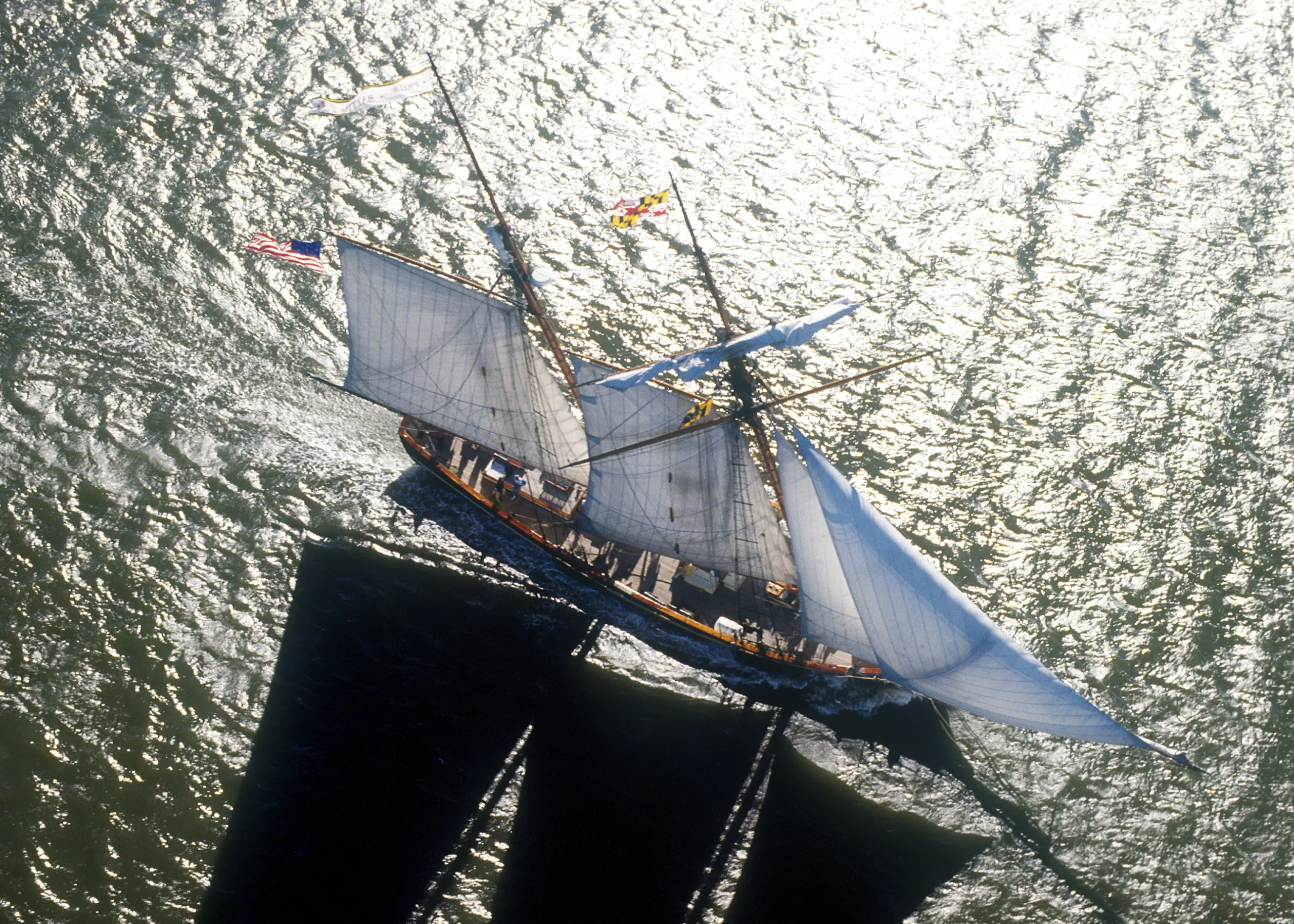
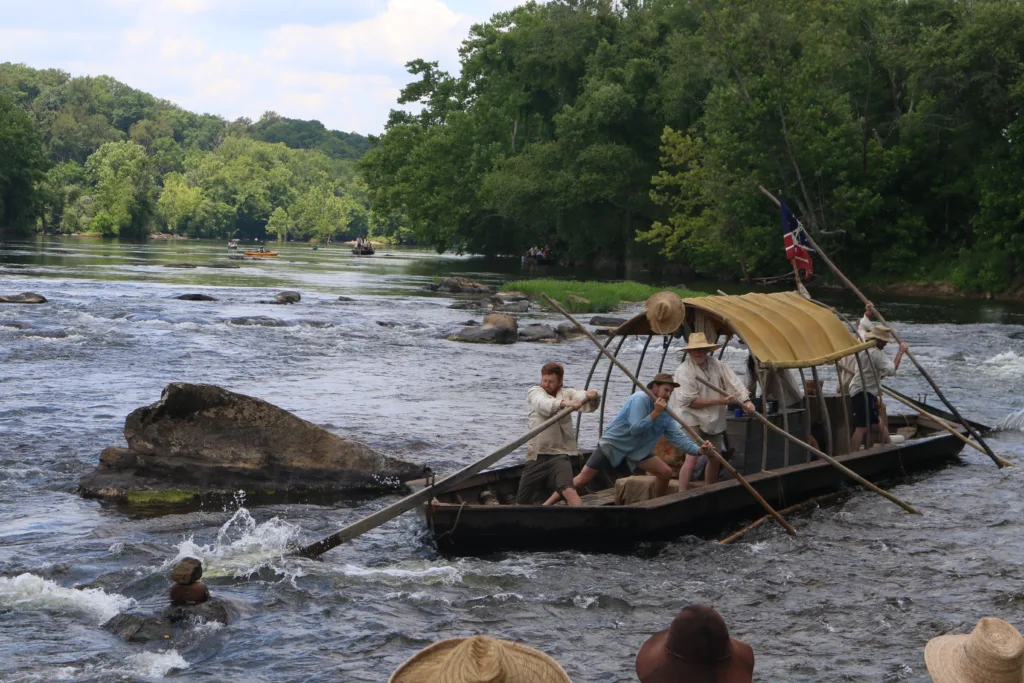
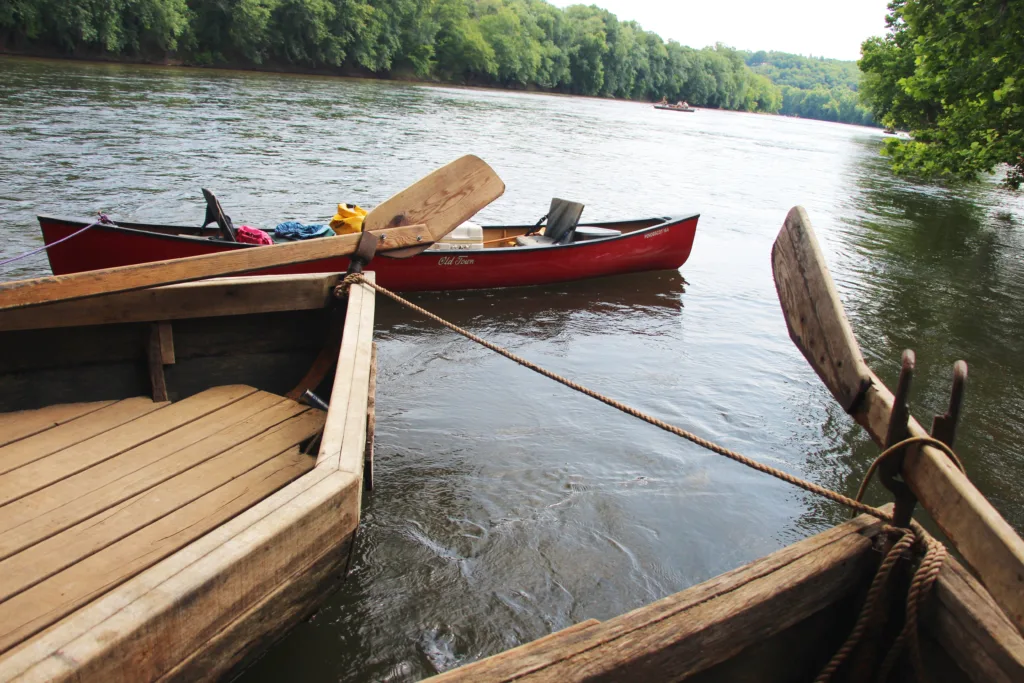
Batteaux are shallow-draft, flat-bottomed rivercraft that dominated Virginia’s waterways in the 18th and early 19th centuries. The James River Batteau Co. was established in 1775 to move tobacco from the fields of Central Virginia to Richmond’s bustling tobacco markets.
“During the Batteau Era, which I’d say was roughly from 1775 to the mid 1800s, the James River was the superhighway of the time, and the many river communities that were crucial to that time are the same communities we visit as we move down the river during our festival,” says Ralph Smith, former James River Batteau Festival president. “During this era, there were over 500 batteaux actively carrying cargo from Lynchburg to Richmond, and some returning upriver. These batteaux were crewed largely by enslaved Black boatmen, free Black boatmen, and white boatmen.”
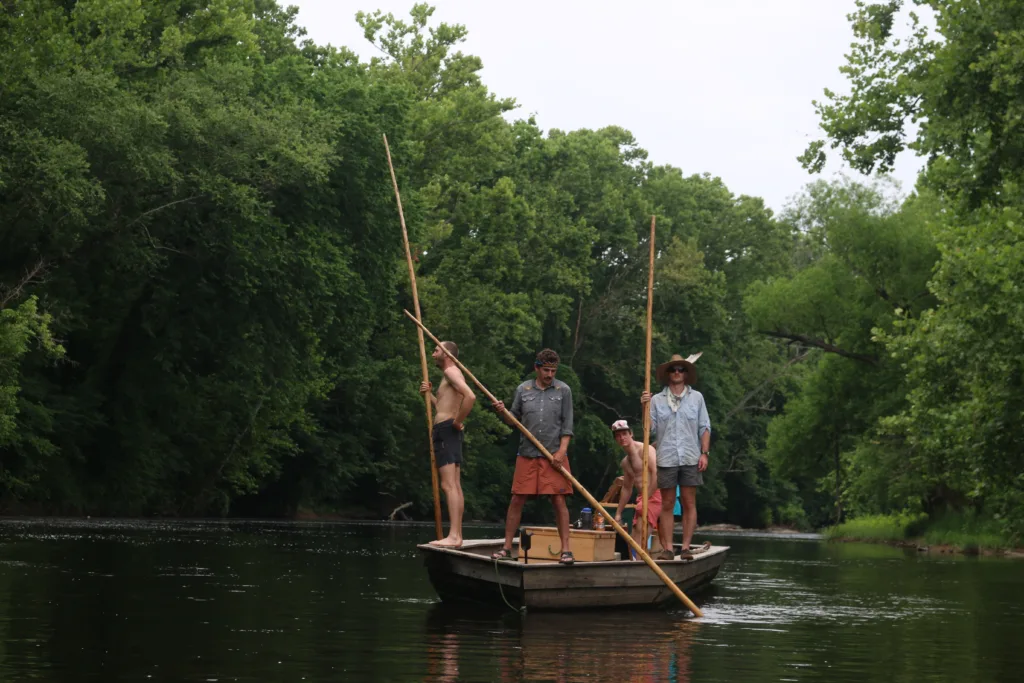
That history runs deep. American history began in Virginia along the James River — the first elected legislative body in the colonies, the Virginia General Assembly, met at Jamestown on its banks. “Through its arterial waterways flowed the lifeblood of the budding American economy,” says festival chairman Daniel Tucker. From that lifeblood came early rail lines, the Kanawha Canal, and the foundations of Virginia commerce.
What to Expect on the River
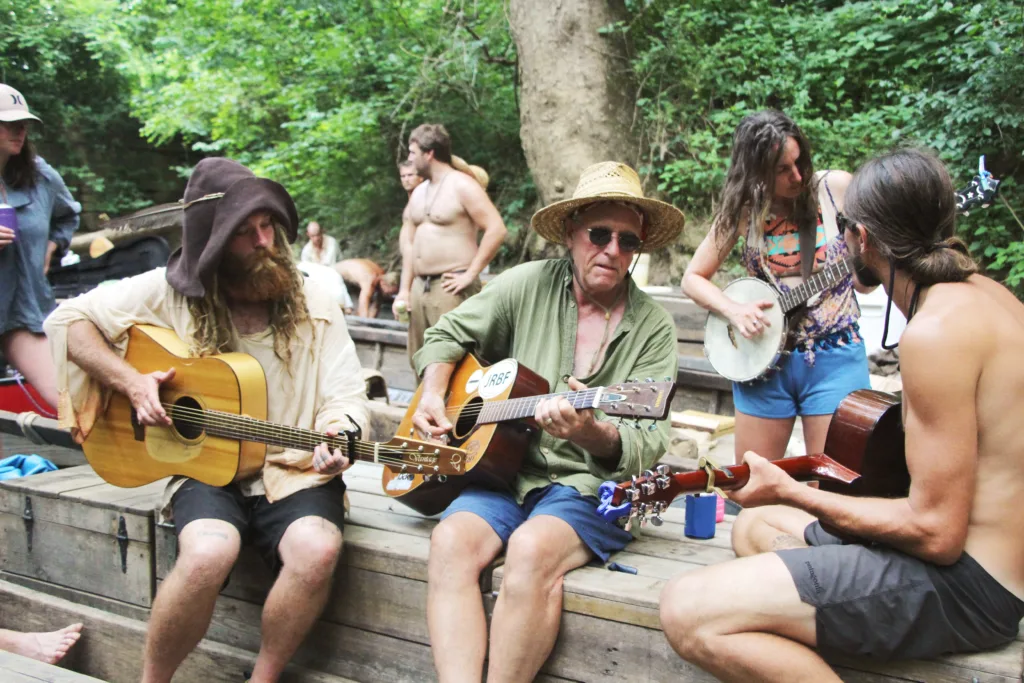
Festival participants float through rapids, sluices, and aqueducts alongside veteran batteau crews, then camp at festival stops each night for long, warm hours of music, song, dance, and storytelling.
“For me, the festival means an opportunity to disconnect from the real world and enjoy the unique community and camaraderie the ragtag batteau community creates,” says Tucker. “The moment we launch from Percival’s Island, my phone is turned off, whatever problems I have in the real world stay on shore, and I am able to check out from an otherwise busy world as I enter ‘batteau mode.’ The only priority on my mind is how we are going to get the tobacco to Richmond.”
No two festivals are alike. “Each year brings a new river and a new festival, based primarily on water levels, each bringing different challenges,” Tucker says. “If you love problem-solving, teamwork, and experiencing the outdoors, you will find a home in the JRBF.”
A Revolutionary War Reenactment for America’s 250th
The Battle of Point of Fork reenactment commemorates events of June 1781, when British forces on the north side of the James attempted to seize the Point of Fork Arsenal.
“The American forces guarding the arsenal retreated to the James and crossed to the south side of the river using any and all boats available, the most common of which was a batteau,” says Tucker. “We have high hopes that this can grow into an annual event.”
Wildlife Along the James River
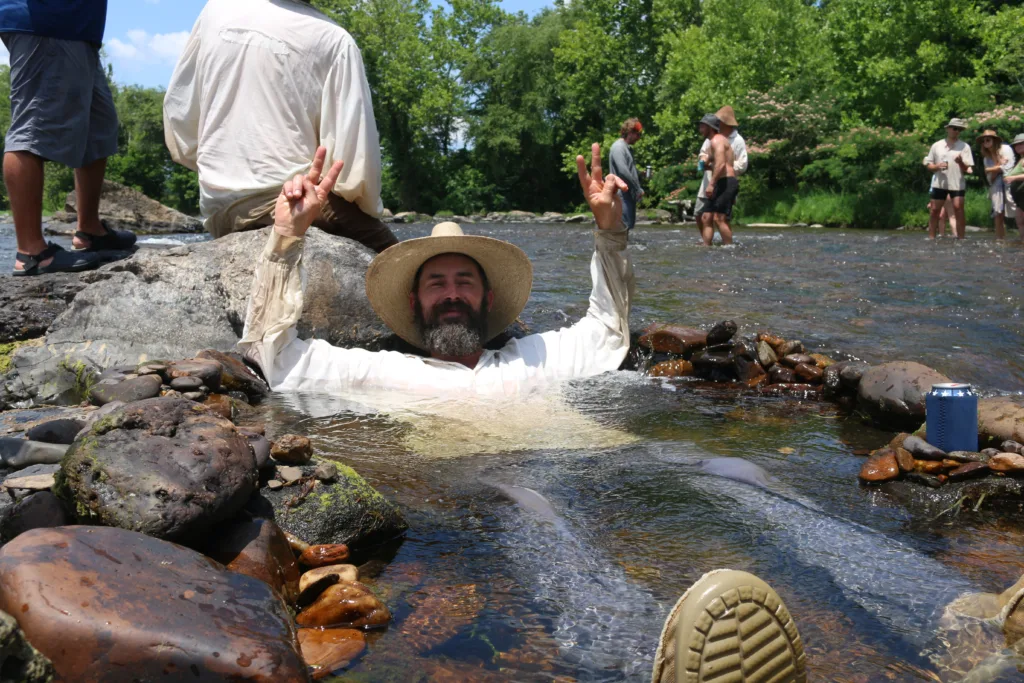
Beyond the history, the festival fosters a community of nature lovers — and the James delivers.
“A robust population of bald eagles is a frequent flyer along the James, shadowing osprey to steal an easy meal,” says Tucker. “We often encounter North American river otters and mink in the shadows of the gnarled sycamores that hold the banks together. Lady slipper orchids appear in shaded refuges if the conditions are right. On sunny days, you will find many gorgeous black and yellow turtles, [also known as] River Cooters (my boat’s namesake), basking on the rocks the batteaux are hoping to avoid.”
Tips for First-Time Paddlers
Tucker’s advice for newcomers taking their first float:
- Wear proper water shoes and take care of your feet — flip-flops are a sure way to turn your float into a painful “flop”.
- Pack rain gear for unpredictable summer weather.
- Wear a Personal Flotation Device at all times on the water.
- Always paddle with a friend — never go at it alone.
“The history of the James is, in large part, the history of America,” says Tucker. “It is a history I hope all can learn from as we navigate our boats and ourselves beyond the 250th for many years to come.”
Featured image courtesy of Faye Smith. This article is a Virginia Living digital exclusive.