

“A happy, wholesome vacation … which will strengthen the soul as well as the mind.”
That was the promise Camp Mont Shenandoah made to its campers in the summer of 1927. A century later, it’s still delivering—proof that some rites of passage don’t fade. Stitched from mountain air, mirrored rivers, and the belief that character can be shaped as surely as a canoe paddle, Camp Mont Shenandoah was hardly alone.
Across the Commonwealth, camps like it were carving out a Virginian tradition, where kids traded home routines for cabin life, creek crossings, and friendships that outlasted August. Nostalgic? Yes. Still beating strong? Absolutely.
Rooted in the Mountains
The first organized summer camp in America opened in 1861, when Frederick W. Gunn and his wife Abigail led a group of boys from their school—now known as The Frederick Gunn School in Washington, Connecticut—on a wilderness retreat aimed at building character. Gunn’s idea took root, and by the 1890s a full-blown youth camp movement had blossomed out of the Progressive Era. Driven by reformers, educators, and organizations like settlement houses, it emerged as a response to rapid industrialization and urbanization, seeking to improve child welfare, foster character, and reconnect young people with nature.
Virginia proved to be fertile ground—and few cities embraced that spirit more than Richmond. There, reformers rooted in Christian charity were determined to leave a lasting mark. In 1923, the women of Richmond Hill opened Happiness House, offering boys and girls a chance to build skills and experience the outdoors. Among them was Nannie West, a community organizer who had seen firsthand what nature could do for young people. In 1927, she founded Camp Mont Shenandoah in Bath County, driven by a belief that every girl deserved the chance to explore the natural world. “She wanted to get girls into the outdoors,” says current director Ann Warner. It was a mission perfectly in step with America’s broader camp movement—a conviction that time in nature was essential to the health, character, and well-being of the next generation.
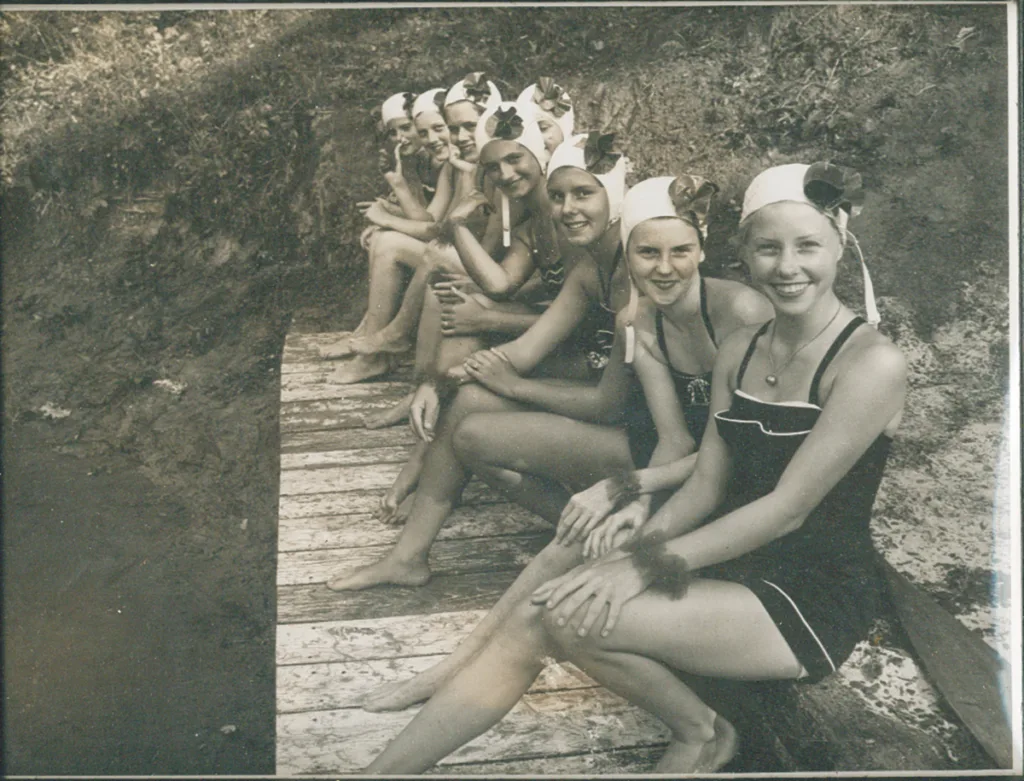
Thirty-five miles south, Camp Strawderman for girls has its own deep roots. The property was originally settled by the Strawderman family, Hessian farmers who arrived in the late 18th century, just after the American Revolution. More than 100 years later, it was willed to Dr. Samuel Hoffman, whose daughter Margaret “Barca” Vance Hoffman opened the camp in 1929 and went on to serve as its director for 50 years. Today, Jeannie Mockard carries on that legacy—she first came to Strawderman as a 10-year-old camper and now serves as the camp’s director.
Mockard credits the site’s endurance to its ideals that are as relevant today as they were in the ’20s. Strawderman follows five pillars: to make girls so happy they share their happiness, to create lifelong friendships, to develop strong, healthy bodies in pure mountain air, to create a love for the outdoors, and to bring out the hidden possibilities that lie within all of us. Under the safety umbrella of those tenets, Mockard says the most amazing things can happen.
“The magic of this place?” Mockard says. “It’s the chance to make lifelong friendships. Camp friends are just .… different.”

Feelings of Belonging
Ali Warters knows that truth well. The Mont Shenandoah alum spent eight summers there and credits her camper and counselor days with helping her find acceptance through the friendships she forged. In a poignant essay she penned for a camp reunion, the Richmond-based acupuncturist wrote, “Somewhere between swims in the Cowpasture River, long walks under the pines, mosquito bites, and whispered flashlight talks, I learned what it felt like to belong. Those summers left a deep impression—a foundation for how I understand friendship, community, and myself.”
Warters made her first camp visit at age 11. “I had a babysitter who went to camp, and I thought she was the coolest. I was like, She’ll take care of me. I was kind of thrown into it,” Warters says. While Mont Shenandoah had a Roots & Shoots short program for newbies, Warters’ parents skipped that option and sent her to three weeks right out the gate. “I was pretty nervous at first,” she recalls. But by the third week of camp, all of her apprehension had faded away. By the end of her second summer—a six-week stint—Warters was in tears again, “because I didn’t want it to end.”
That’s the common refrain from Virginia campers when you ask about their best memories.
Ashley-Victoria Smith credits her four summers at YMCA Camp Thunderbird and its day camps in Chesterfield with making her an “outdoors girl.” “I learned how to fish, how to ‘hunt,’ start fires, read the night sky, understand coordinates, how to read a paper map, and first aid basics,” Smith says. What began as a convenient care option for her mom became a daily adventure. Her mom would drop Smith off at Midlothian High School on her way to work and pick her up on the way back home.
“The school and YMCA made it very convenient for parents,” Smith says. In return, Smith got far more than just a safe environment to hang out over the hot months. She says those days made her appreciate Mother Earth, especially since she got to breathe in the great outdoors without any cellphone distractions.
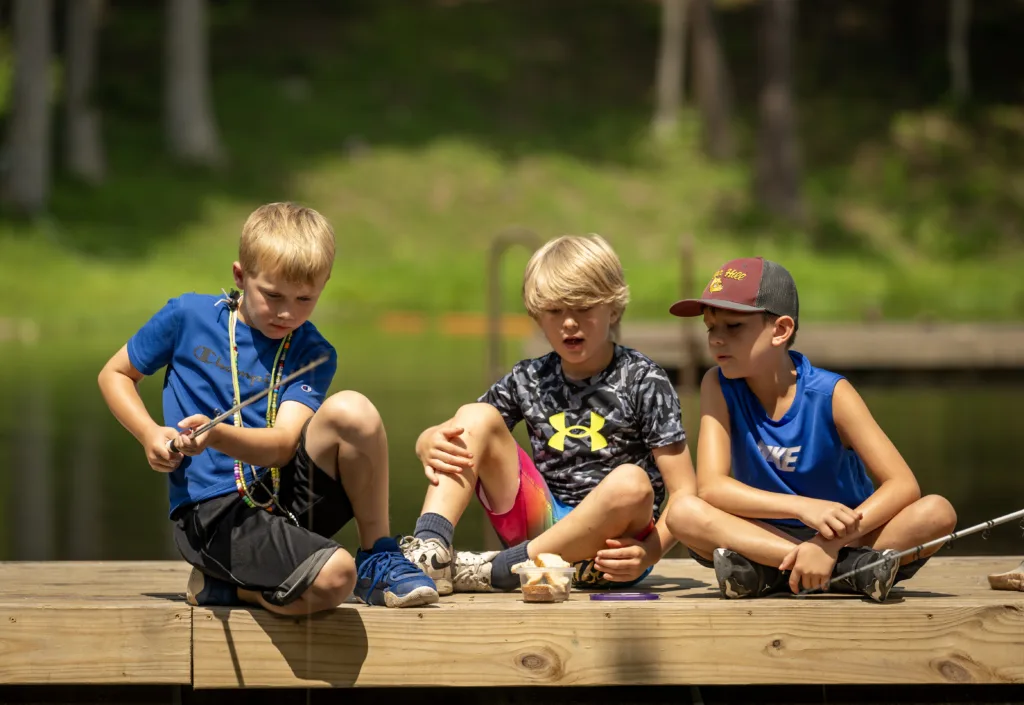
“Each day was something fun and different,” she says. “We learned about nature, how to canoe, how to make fishing rods, how to build campfires, how to spot poison oak and poison ivy .… truly survival skills. Those summers were some of the best days of my life, which actually carried over into adulthood as I became a Girl Scout Camp Counselor in 2004.” Smith carried the confidence and assertiveness she learned at camp to her professional life: She’s now a publicist at Passport PR.
Before Screen Time, There Was Camp Time
But camp isn’t all solemn life lessons—there’s plenty of silliness, too. At 4-H Camp on
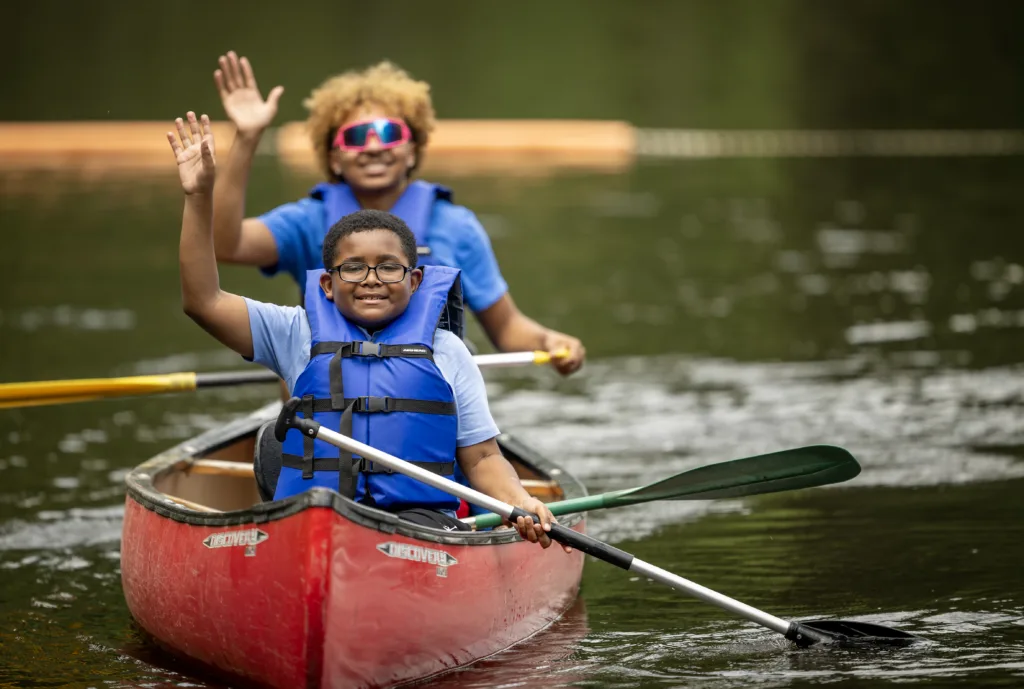
Holiday Lake in Appomattox, busloads of 9- to 14-year-olds spent a week in a joyful summertime whirl of sing-alongs, skits, dance parties, archery, canoeing, and outdoor skills. Untethered from technology, kids like Bright Dupont found the space to try new things—and master them. “I really liked archery,” he says. For parents, that screen-free immersion is the real win. “[Parents] are so appreciative that they have to learn to interact with one another, and they’re not on the sofa in the living room or den watching some show on their devices or texting somebody,” Warner says.
Without digital distractions, even in the pre-cellphone era, Anson Burtch says his imagination was unleashed to appreciate his Old Dominion surroundings.
“Growing up in Richmond, I lived a very urban existence,” Burtch says. “Going to summer camp in Orkney Springs introduced me to overnight camping trips, long hikes up North Mountain and Big Schloss, canoe trips down the New and Shenandoah rivers, and many more outdoor adventures.” Burtch attended St. George’s Camp at Shrine Mont, and the unspoiled beauty of Virginia was at his fingertips. “Hiking to the top of Big Schloss, you get almost a 360-degree view of the valley, and it’s absolutely gorgeous!”
Hallowed Ground
The mountains marked more than physical achievement; they also became a terrain for spiritual ascent. The Shrine Mont conference center and the camp are run by the
Episcopal Diocese of Virginia, about 45 minutes north of Harrisonburg.
“I started attending camp at the age of 8. So I was your typical 8-year-old who didn’t think that much about religion,” Burtch says. “One of the great things about St. George’s approach was teaching campers about nature being God’s creation and how everything you do in nature is worship. So camping, canoeing, hiking, by appreciating nature and our environment, we are appreciating creation.”
A faith learned not in sermons but in shared summers became Burtch’s nine years at St. George’s. “When I grew older, it stuck with me and helped me see how even those different from myself were still people in our community, and everyone deserves to be treated with the same love and respect that I would expect for myself.”
He carried that same reverence and respect into his professional life—first as a counselor and then program director at St. George’s for four summers from 1992–1995, later as an advertising agency producer in New York, and now as a brand strategist in Durham.
“As program director, I had the budget, the schedule, and planned out what the entire camp would do each session and how the days would run,” Burtch recalls. “I directed a staff of 15 people who would then carry out those plans.” Being a producer utilized all those skills, too. “One of my early bosses commented on how I was ‘a natural’ at producing, and I fully credit being a program director at summer camp.”
His story is a reminder that a summer camp’s impact doesn’t end at the gate. In an era of push notifications and packed schedules, Virginia’s summer camps endure as a rare kind of pause—places where time stretches, friendships root deep, and lessons arrive quietly, carried on river water or whispered after lights-out. Long after cabins empty and trunks are unpacked, former campers carry those weeks with them: the confidence earned on a first solo paddle, the belonging forged around a fire, the sense that community can be built simply by showing up, together, in the woods. A century on from that 1927 promise to “strengthen the soul as well as the mind,” Virginia camp life still does exactly that—sending kids home changed in ways that last far longer than summer ever could.
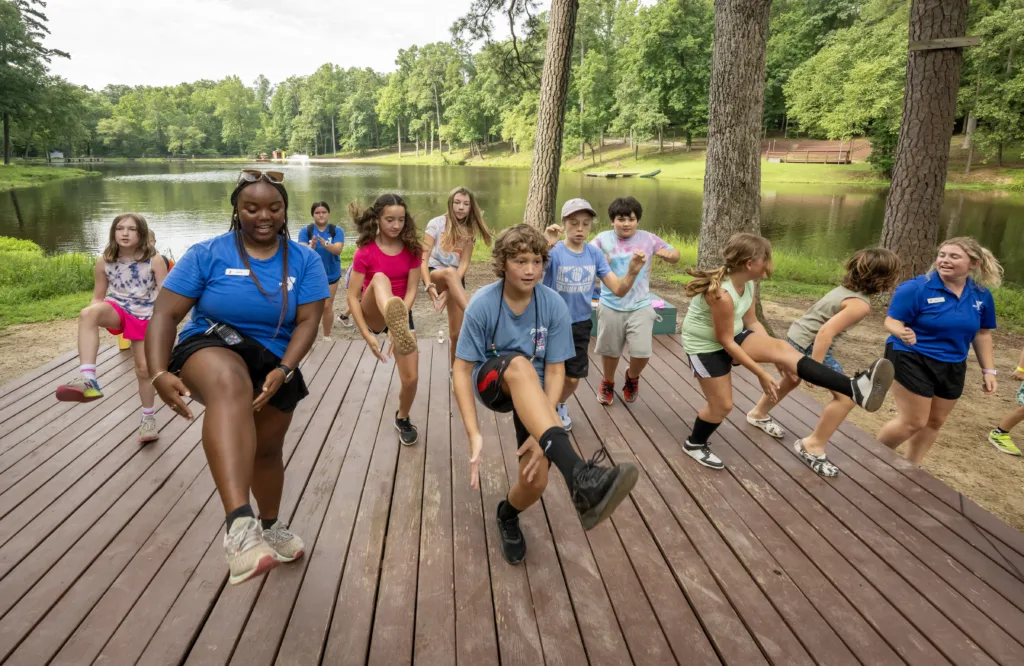
Summer Camp Changes Kids
And Science Agrees.
Choosing a summer camp is more than keeping kids busy when school is out,” says Jennifer Bryerton, a mom, educator, and former camp professional, who created VirginiaSummerCamp.com to help kids and parents navigate the plethora of camp options in Virginia. “Camps are a place where children grow, try new things, and create friendships and memories that can last a lifetime.” Bryerton calls her website a “hub for raising curious, confident, active kids,” where information on day camps, sleepaway camps, STEM camps, and more is just a click away.
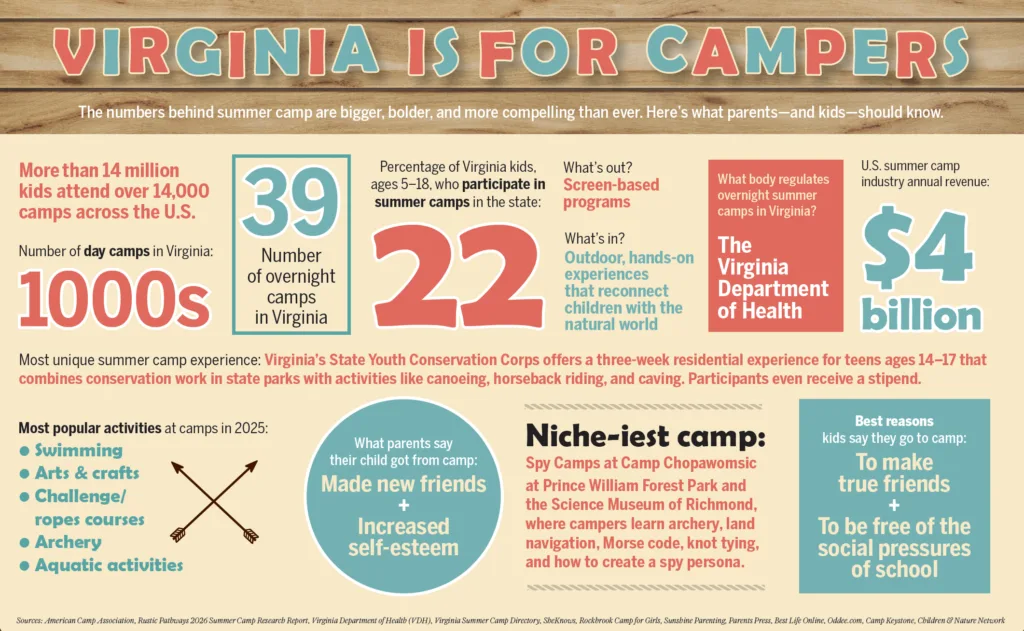
According to the American Camp Association, whose accreditation standards are followed by many camps throughout Virginia, the evidence for camp’s impact on child development is compelling and well-documented. Social Growth Studies by the ACA found that more than 90 percent of campers reported that camp helped them make new friends, and 93 percent said it helped them get to know kids who are different from themselves. These are foundational social skills that carry into adulthood.
• Self-Confidence and Independence: “The ACA’s National Camp Impact Study”—the first longitudinal study of its kind—found that high-quality camp experiences promote youth outcomes, with the most compelling evidence emerging in the areas of independence, social awareness, and affinity for nature.
• Emotional Intelligence: Few environments develop emotional intelligence as effectively as summer camp. Children build crucial emotional regulation skills as they navigate new friendships, collaborate on projects, and resolve conflicts away from their parents.
• Leadership Skills: Summer camp creates a natural laboratory for leadership development. Unlike the school year, where leadership roles might be limited to a select few, summer programs democratize leadership
by rotating responsibilities and creating situations where every child can shine.
• Long-Term Life Skills: The ACA concluded that when youth are given the opportunity to attend camp, they build key skills such as independence, social awareness, and perseverance—and that positive camp experiences drive outcomes that support learning throughout the school year.
• Mental Health: ACA president Tom Rosenberg noted that camp plays a vital role in the educational development of the whole child, and that includes mental health—particularly in the wake of the disruption and adversity children experienced during the pandemic.
Virginia’s own camp community embodies these benefits, with families regularly reporting that their children returned home noticeably more confident, mature, and socially engaged.
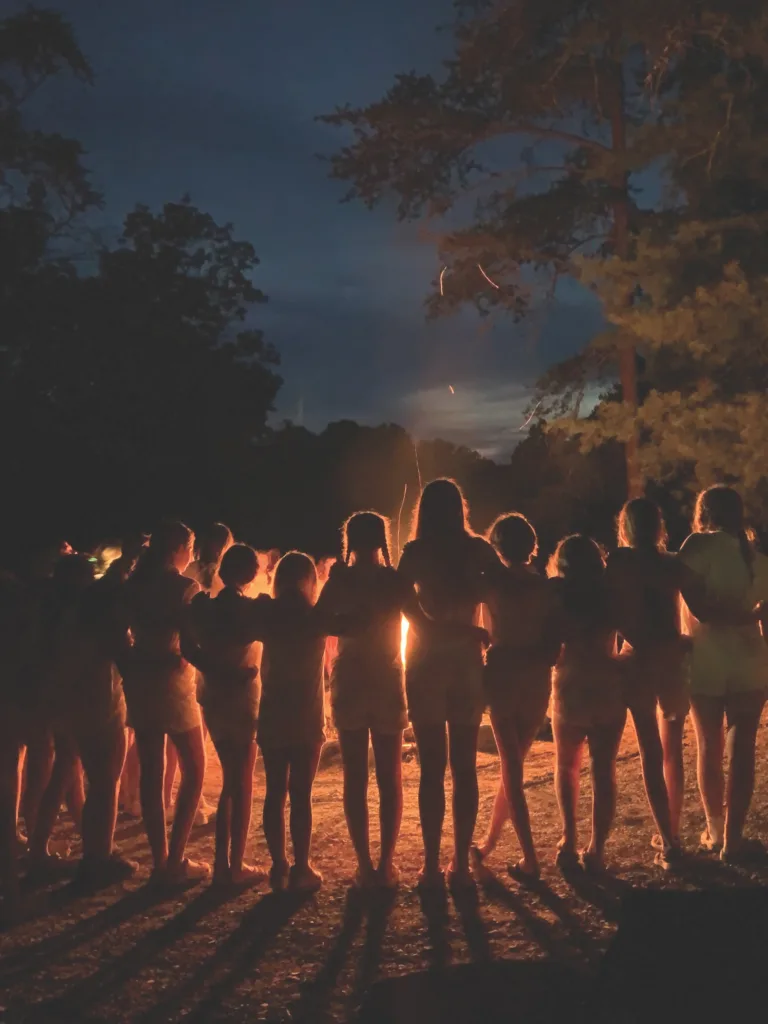
Camp Spirit in the Camp Spirit Ceremony
Camp Family
A Gift Passed Down, Summer by Summer
by Elizabeth Cogar
Summer camp—living away from home in an old cabin with no running water or electricity and people you’ve never met—is not for everyone. For our family, however, it was a natural occurrence that we anticipated from the first time our mother told us of her love for Camp Okahahwis, a girls’ camp in Rockbridge Baths. For certain, it was one of the most meaningful experiences of her life, and she passed her enthusiasm to two more generations. She was still singing her camp songs right up until she passed away last year at 92.
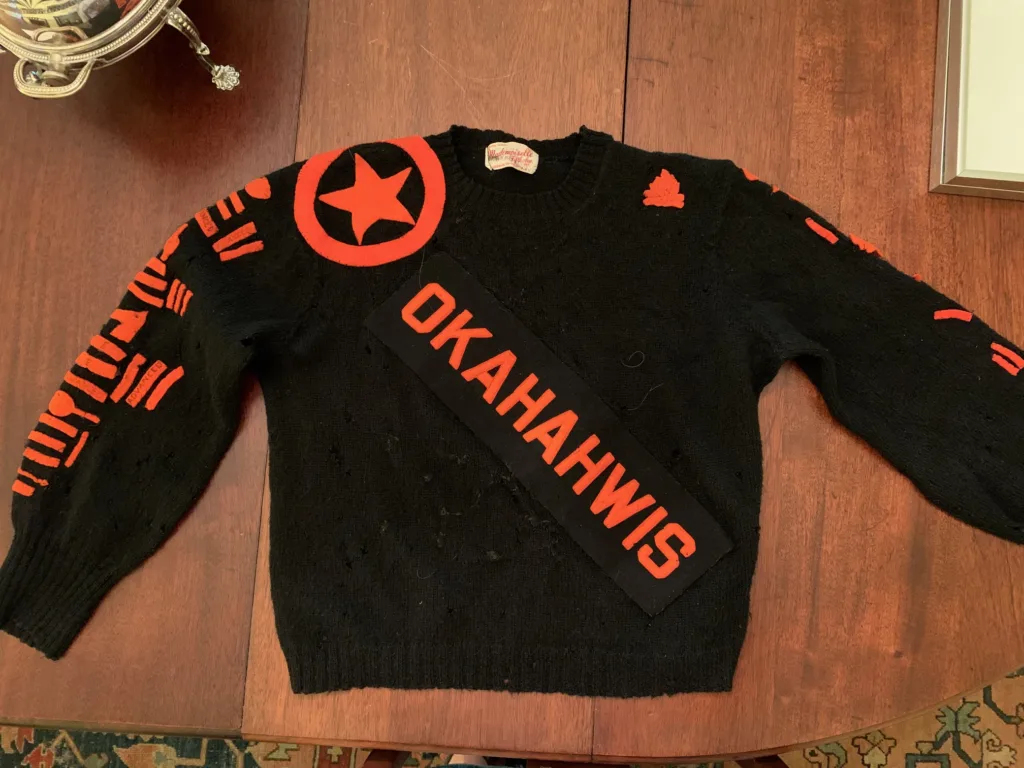
Over the years, she reminisced about catching the train at Main Street Station in downtown Richmond circa 1940 and riding it to Lexington—as close as you could get to her camp. Wanting to know more about this annual adventure, I would leaf through ragged old camp scrapbooks full of her sketches, souvenirs, and little snapshots with scalloped borders. In our attic, I found her moth-eaten black camp sweater with an orange felt sash (like Miss America) adorned with badges earned in activities like swimming, badminton, and crafts. I proudly wore it around the house and wondered if I might go to camp.
When I was 10, off I went with my trunk for two weeks at Camp Lachlan, a sweet, family-owned place, also in Rockbridge Baths. Busy all day with activities, we refueled in the dining hall with delicious down-home cooking. Near the outhouses, there was a muddy lake and a hill where we found crystals in the dirt. Mountain thunderstorms would blow through at night, and we’d hide under our covers waiting for the inevitably cool, clear morning. Later, I went to four-week Camp Merrie-Woode (no elves or fairies) in Sapphire, NC. I was a timid girl, but with encouragement, I slid down a waterfall, tubed on the Chattooga River, and camped on top of a mountain. I still remember the shady deer paths through woods and shiver thinking about the cold morning lake with mist softly lifting. I can still see smoky firelight flickering on our faces, all of us gathered in the dark.
Following family footsteps, my younger brother went to Camp Virginia in Goshen, on the Maury River, as did my son. He came home happy to be part of traditions and excited about his new passion, archery. When I emptied his trunk, I found a laundry service receipt that simply said, “one sock.” He grew up a little more each year at camp, taking on responsibilities (raising the flag!), and he received recognition for his camp spirit, a source of great pride.
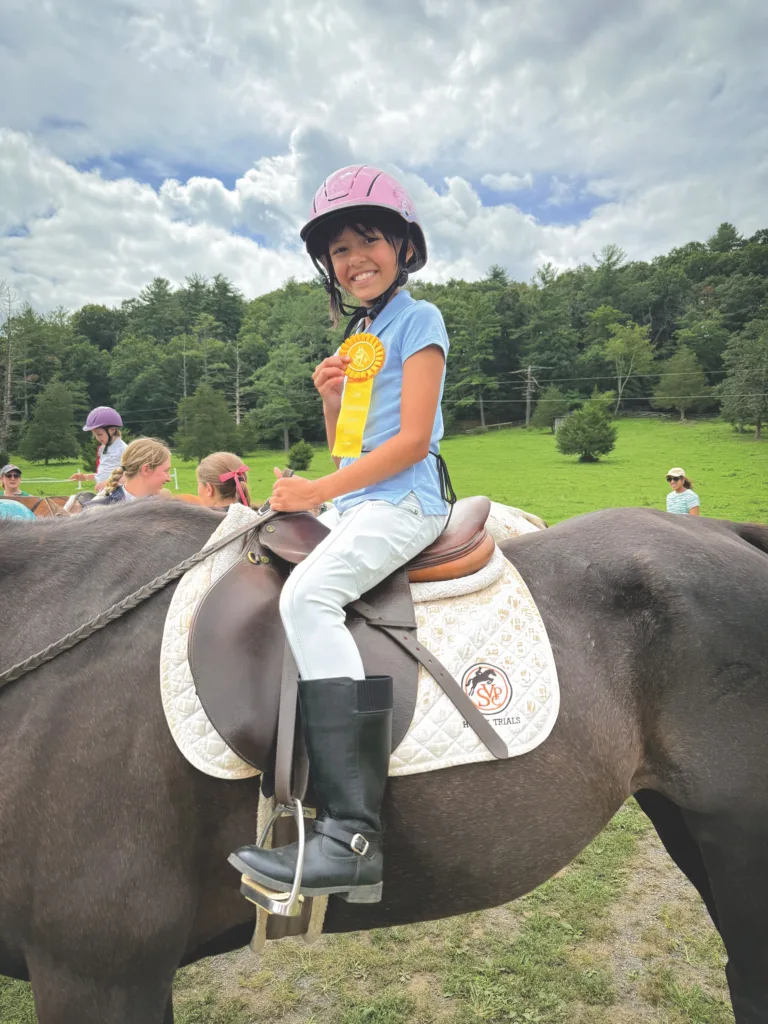
A year later, my daughter went to Camp Mont Shenandoah in Millboro Springs, on the Cowpasture River. While she was there, she stepped up to do things that required more self-assurance, like trying out for the musical. She loved knowing a place—the barn, dining hall, the slam of a screen door, and lit candles on special nights. For her zest, the green team gave her a great honor: custody of a stuffed green snake called Sir Ivy, until the next summer.
From my point of view, working around students every day as I did for many years, I saw how the school year could wear children down, including my own. Camp redeemed their spirits and fortified them for a new year. Time away from home gave them independence that adolescents crave in a safe, supportive environment. Learning how to make a campfire, making lifelong pals, and doing hard things and liking it all gave them what they needed to return home more confident and resilient.
On annual visits to their camps, my mother loved seeing them flourish. In 2001, some Okahahwis alumni set up a scholarship fund to help girls attend summer camp each year. These women, whose summer refuge closed in 1966, were passionate about others having a chance to experience something so dear to them. When our mother died last year, we asked that memorial gifts be sent to the Camp Okahahwis Scholarship Fund in honor of the place that planted the seed for all of us to go to the mountains, play all day, and close our eyes to a bugle playing taps.
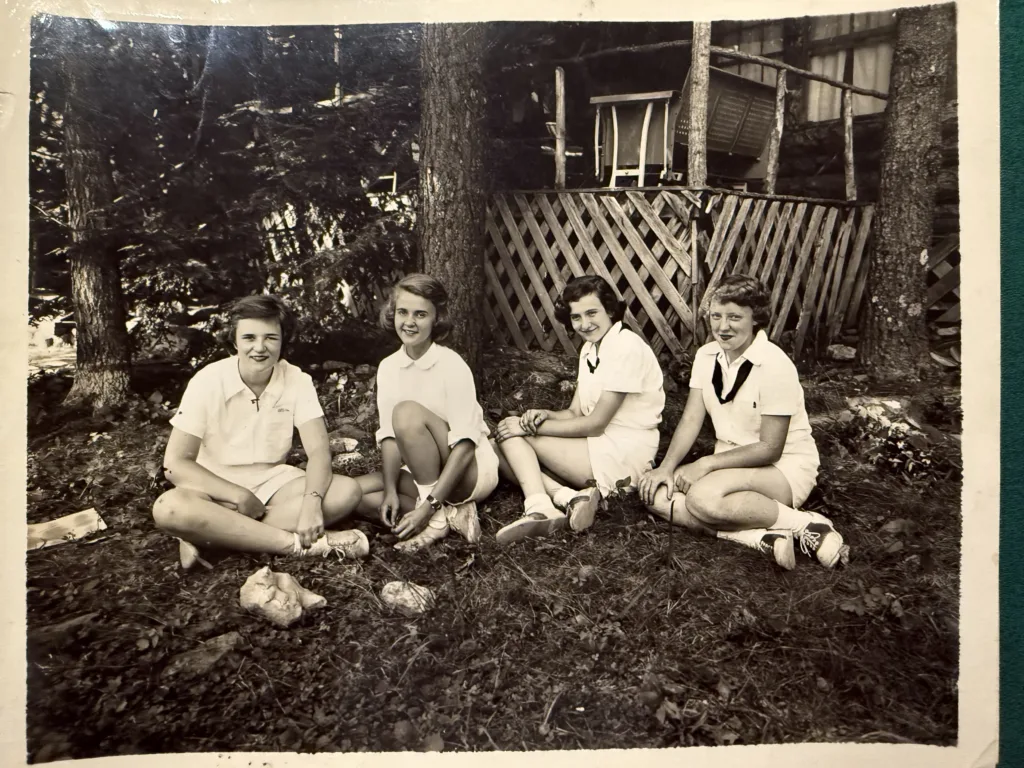
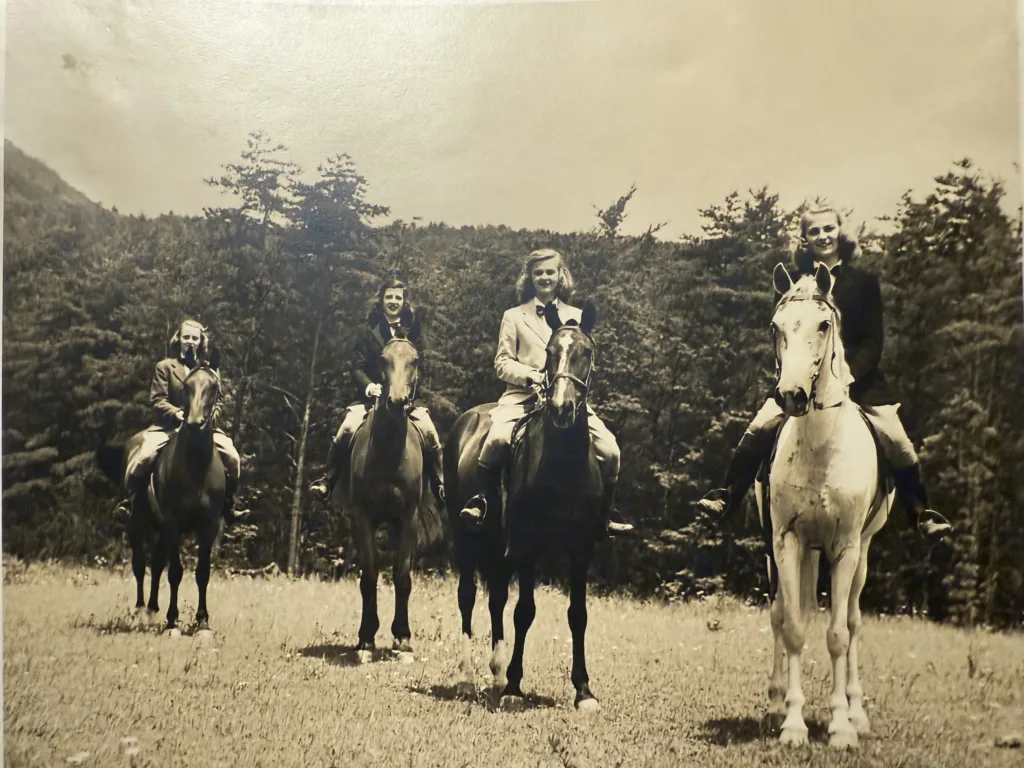
Vintage photos from Camp Okahahwis, c. 1940s
This article originally appeared in the June 2026 issue.