
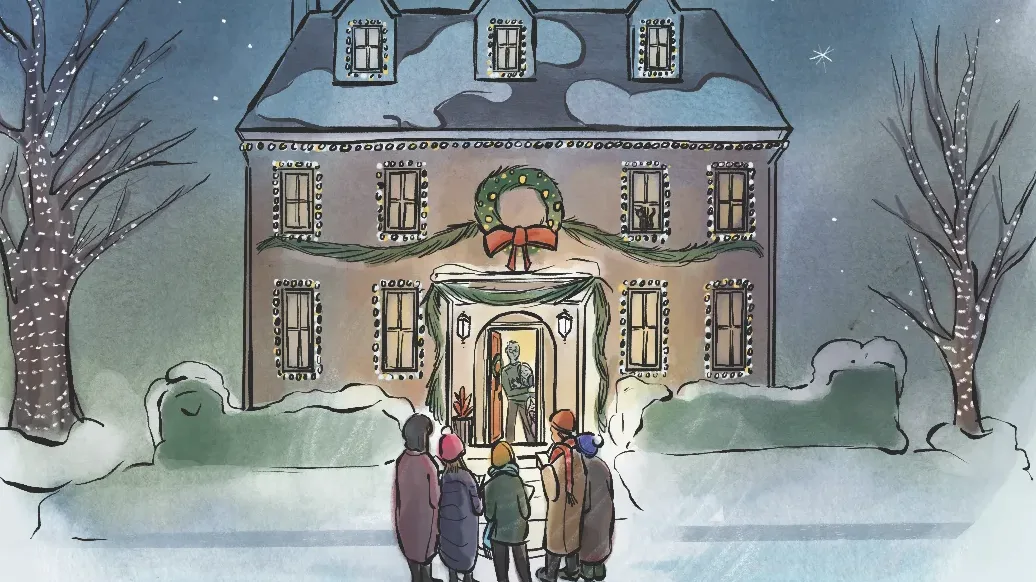
Stories of family, tradition, and the joy—and chaos—of the holiday season from writers across the state.
The Frost & The Furious
By Eric J. Wallace
The snow was falling heavily when we stopped at a middle-of-nowhere gas station for push-button hot chocolates. Floodlights blazed through a silent wash of pebble-sized flakes falling like stones through deep water. The kids burst from my battered Toyota Corolla and dashed around the empty lot like goofy penguins, huffing clouds of laughter, their mittens palming the sky.
“Daddy, it’s bew-tiful,” squealed my 4-year-old daughter. “Be-ewwwww-tiful!”
It was Christmas Eve, and we were probably 10 miles from my parents’ home on the rural outskirts of Appomattox County. The storm had turned angry about an hour back, and the road was carpeted in 2 inches of white. It was our first holiday together since the separation. I was broke, and presents were beyond minimal. My emotions were a blurred pendulum of anxiety, self-loathing, and joy.
But dropping my puff-jacketed forearms around my children’s shoulders? A sumptuous sense of gratitude pulsed through me. And as I hugged them toward the glass doors, I said, “Who’s in the market for a sleigh ride?”
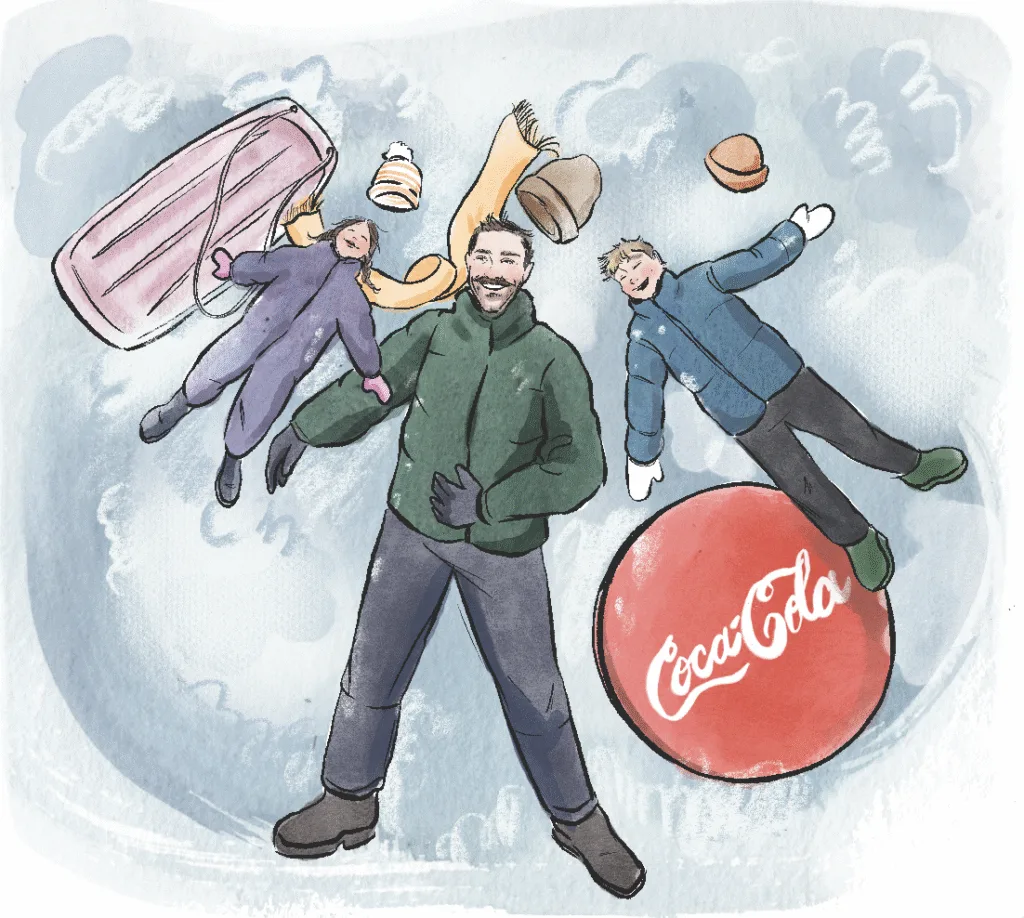
We crunched through a shin-deep layer of powder-dusted snow and fished a dusty old plastic toboggan and disc-shaped, metal Coca-Cola sign from the back of the squat, open-faced barn. I dragged them to the edge of the adjacent hill, and my father pointed across the field to a silhouetted panorama of sycamores trembling above the river. By now, the snow had stopped. A near-full moon burned through thin wisps of clouds, draping the world in an impossible gradation of violet-grey-black-white.
Then my daughter let out a wild yip, dove headfirst into the toboggan, and went careening down the hill in a fit of glee. My father raised his glass of bourbon and shouted, “Nice knowing ya!”
She crashed near the bottom and, after an exaggerated roll, began to snow angel.
My 8-year-old son grabbed my sleeve and yanked me toward the sign. I’d warned him of its crazed speed and the outrageous crashes my brother and I suffered as kids—but he was determined to be a part of what my father called the Legendary Idiots Club.
“Do you think I still poop in my pants?” Kayden demanded in the car. “That I’m some kind of weenie?”
I hollered at Zoe to move aside, told my son to “hold on like your life depends on it,” wrapped my legs around him and pushed off. We rocketed down the hill in a spinning fury of laughter and snow. He shrieked maniacally as we jolted over the dirt farm road and bounced across the field toward the river and came to a stop maybe 20 feet from
the bank.
We rolled out of the sleigh, giggling uncontrollably as Zoe galloped across the snowy field like a dwarfed and drunken gazelle. Moments later, we were all cuddled in a pile, gazing at the moon. “Best Christmas Eve ever,” Kayden murmured. Zoe poked my nose, parroted in agreement, then asked why Daddy was crying.
“Because I love you two so, so much,” I laughed, my heart giddy as a newly crowned champion. “Now come on, or Pawpaw’s going to sop up all the good booze. Who wants to go again?”
Returning to the Table
By Ciara Brennan
Growing up, fondue was a magical meal shared one evening between Christmas and New Year’s. In those days, Christmas meant road trips to Ohio. It meant cousins and chaos and casseroles. But these evenings in our Daleville kitchen, it was just us five, and we felt complete.
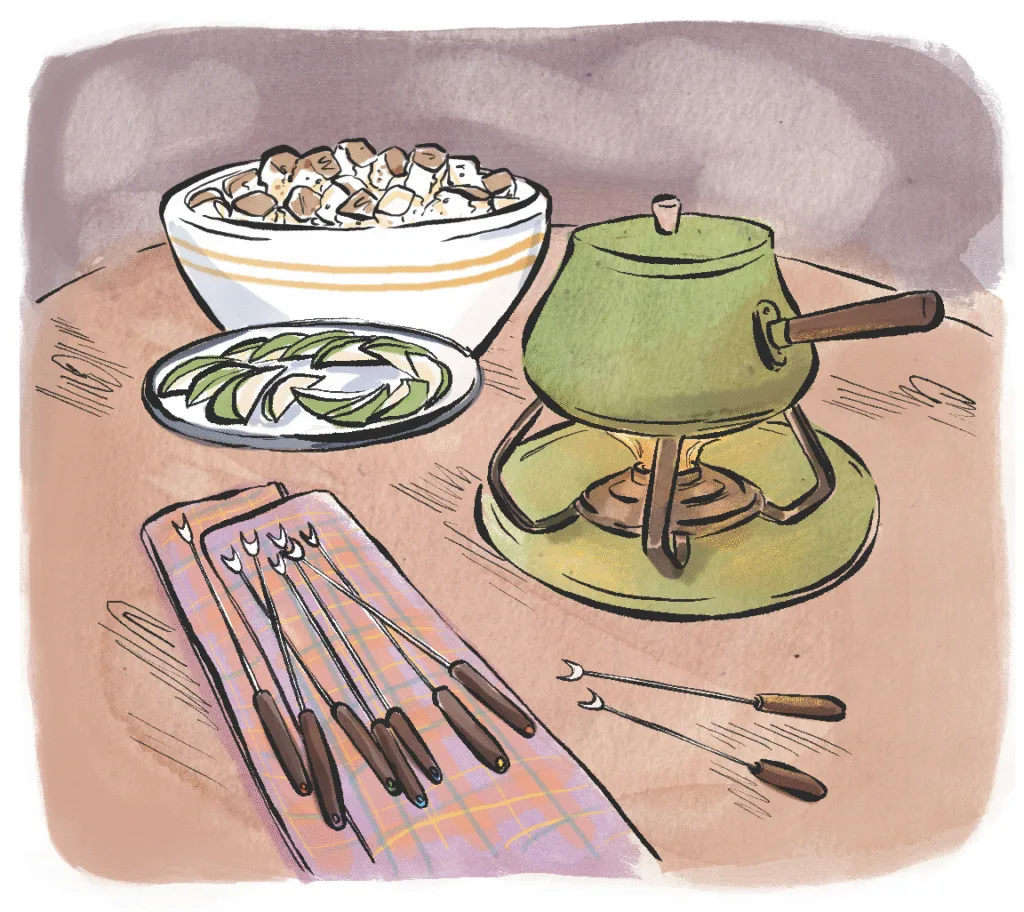
Wearing a puff-painted holiday sweatshirt, Dad would stoop over the stove, an unusual location for him, as he combined sharp-smelling cheeses in precise proportions. At the island, my older brother and I would carefully cut dippers, while the baby transferred fistfuls of bread into bowls. Mom always kept the radio on, Perry Como crooning in the warm light.
At the table, my brothers and I selected our skewers delicately, like game pieces that might give us an edge over one another. I liked to cloak green apples in a thick, glistening layer of cheese. The sour tickled just above my molars, and the fondue—nutty, almost biting—was otherworldly to the slices Mom unwrapped and melted inside our grilled cheese sandwiches. To this day, these flavors belong to no other time of year.
Not long after this, the road trips to Ohio stopped, and I learned that families change, even when we don’t want them to. But this tradition continued, a ritual of consistency in a reality of change. Not every year, but most, we cut and stir and skewer. It is a choice we make to reconcile the way it was then with the way it is now.
When I remember those evenings, I’m enveloped with a childlike assurance that everything is okay and right and complete. I carry that feeling with me now, even when new chairs are empty and the world outside feels uncertain. And I keep coming back to the table.
Two Kinds of Light
By Stephanie Ganz
As a kid, Christmas was good to me, and I savored celebrating two Christmases—one with my Dad and Stepmom at a big party on Christmas Eve, and again with my Mom on Christmas Day. I cherish my memories of lassoing the tree in string lights while listening to Bing Crosby and Nat King Cole croon Christmas carols; of getting dressed up in a velveteen dress to have my picture taken with Santa at Valley View Mall; and of giddily ripping into a pile of presents on Christmas morning.
But as I got older, I grew more interested in my Jewish heritage, which was passed down through my Dad’s side but never really mentioned or observed. I felt Jewish, even though I had never become a Bat Mitzvah or even attended so much as a Jewish wedding. And I knew, if I wanted to trade my Christian traditions for the Jewish life I saw for myself, I was going to have to start learning new customs and making my own traditions. As I began to grow my little family of four, I did just that.
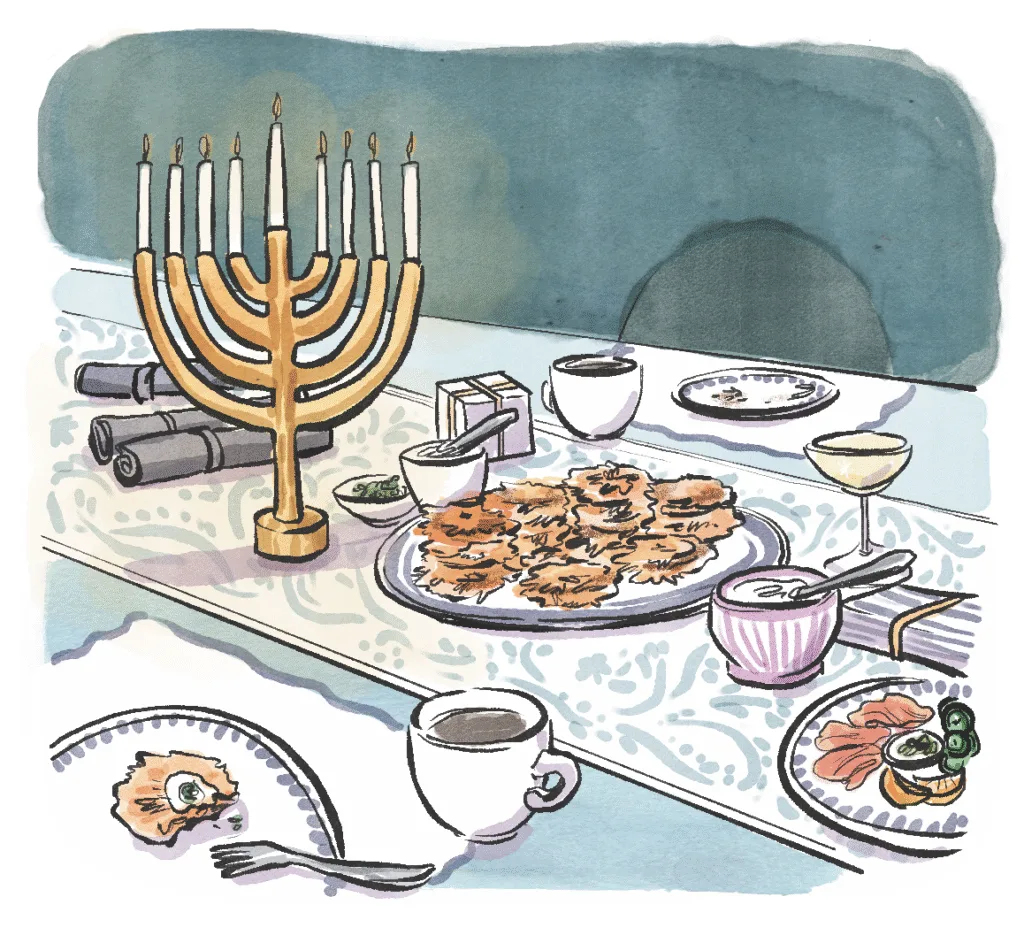
These days, my husband, two kids, and I celebrate Hanukkah with a hodgepodge of these new traditions. On one of the eight nights, we usually host a big latke party, filling the house with friends and the smell of cooking oil. Other nights are more low-key, simply lighting the menorah and opening presents as a family or going out for Hanukkah dosas. Each night we have a different theme—book night and LEGO night are two of my favorites. And there is always a ton of fried food, from falafel to latkes, to celebrate the miracle of the oil.
Christmas and Hanukkah share little overlap in their stories. But in my lifetime, the winter holidays have always been presented as two sides of the same coin. The pomp and the presents, the gathering of family for special meals, the collective voices belting familiar songs. In all the ways that Christmas and Hanukkah have nothing to do with one another, they also share these undeniable similarities. With their glimmering string lights and candle-lit menorahs, both holidays, in the end, are about finding light in the darkness—something all of us need, regardless of background.
Mingled & Merry
By Craig Stoltz
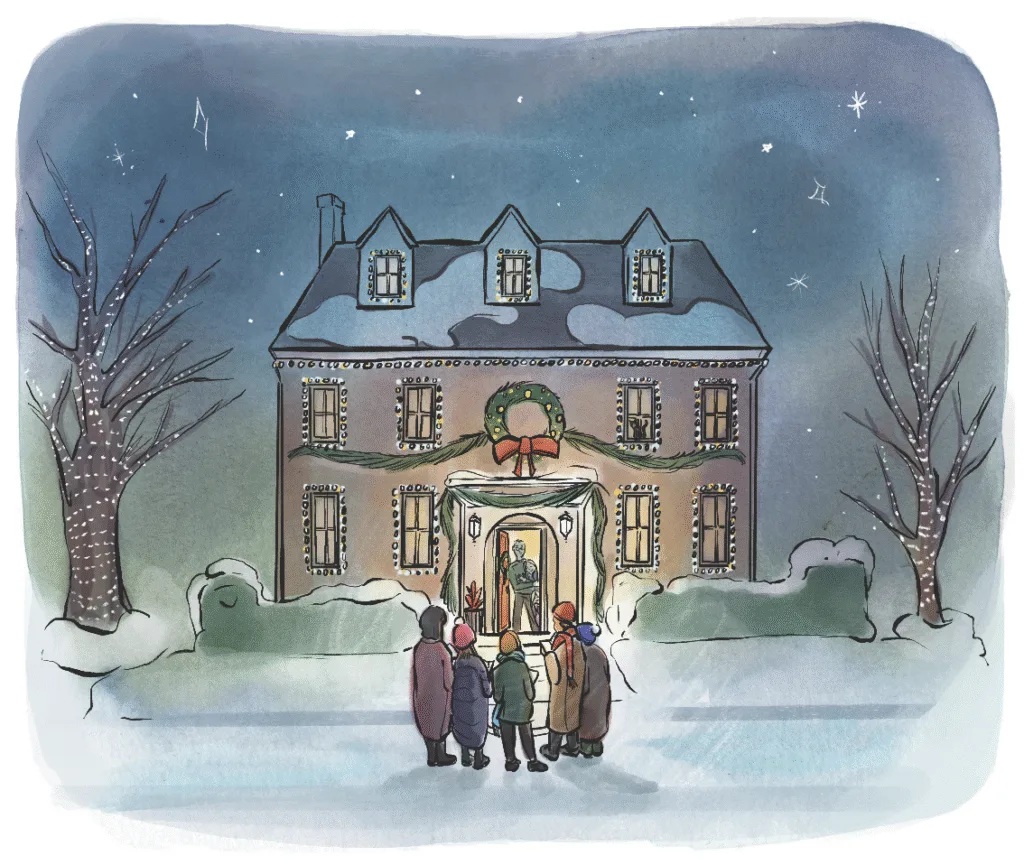
My brother likes to say we were scheduled to be Jewish. But due to a series of baroque family calamities there’s no need to detail here, we didn’t keep to that schedule. And so after having completed one year of Hebrew school—I can still recite the first six letters of the Hebrew alphabet, and remember dressing up as a frog, I think, for a holiday play—we drifted into a sort of multifaith way of life, one that fused vaguely Jewish and gentile ways around a strong belief in family, community, and friends.
And, as Americans above all, we developed a strong enthusiasm for the December holidays, shaped by Christmas. We indulged in all the familiar seasonal gatherings, foods, festivities, entertainments, and, of course, gifts. We had a tree. We sang the popular songs. We watched Jimmy Stewart and Charlie Brown navigate the season. This lite version of the holiday suited the young me well.
And happily, it prepared me well for holidays with what became a blended family. I married a lapsed Catholic; we took our young kids to a Unitarian Universalist Church; we sent them to an Episcopalian elementary school. Our younger son married a lovely Catholic woman from El Salvador, who brings a Latin American flavor to the family celebrations. Our older son married a lovely woman from Bolivia; she adds some indigenous practices and beliefs to our holidays. We are a family mingled in faiths and united in each other, delighted to spend as much time together around Christmas as our scattered lives allow.
My own joys are less religious than seasonal. I relish pulling out the little plastic wreath ornaments with the pictures of the kids when they were around 7 and 8, and hanging them from the tree. I love greeting carolers at the door. I get a bang out of those neighborhoods full of spectacularly overdecorated houses that strobe like Frosty’s flash mob. I cherish spatchcocking a turkey and gathering our sons, daughters-in-law, and grandkids around the table, my eyes moist with paterfamilial joy.
My religion may not have been delivered as scheduled, but my holiday gifts continue to arrive.
Cushion & Captain
by Madeline Mayhood
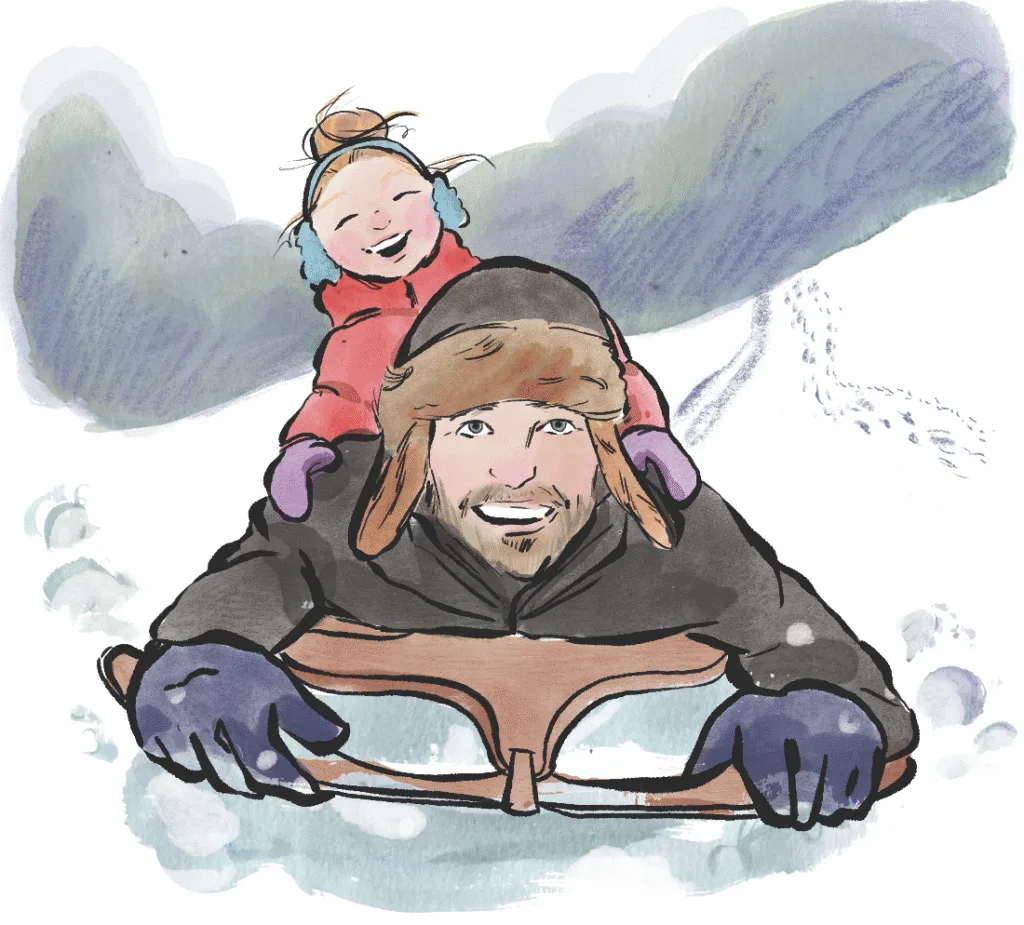
The memory crystallizes like frost on a window—sharp, pure, impossibly clear for something that happened when I was barely 3. Pinetree Road stretched before us—to me, we might as well have been on top of the Matterhorn—a white ribbon unfurling down the hill, unmarked except for the occasional neighborhood dogs whose paw prints crossed our path. This was back when winter in Richmond meant business, when storms dumped a full foot of snow at a time and the world transformed overnight into something magical.
My father positioned my brand-new-from-Santa Flexible Flyer at the top of the hill, its red runners gleaming against the pristine white. Without hesitation, he threw himself onto the sled face-first, his long frame stretched out like an arrow ready for flight. I can still see him there—this grown man suddenly turned boy again, grinning over his shoulder at me with snow already dusting his coat and hat.
“Hop on!” he shouted, and I didn’t think twice. I scrambled onto his back in my red snowsuit, my small mittened hands gripping his jacket, my legs straddling his waist. We were ridiculous—a 3-year-old jockey and her willing steed, about to hurtle down Pinetree Road on a piece of wood and steel.
Then we were flying. The world blurred into streaks of white and gray, wind stinging our faces, laughter trailing behind us like a banner. My father’s body absorbed every bump and jolt, keeping me safe while we surrendered completely to gravity and joy. In that moment, sledding wasn’t just about the ride—it was about trust, about a father willing to be both cushion and captain, about the wild freedom that only comes when snow falls thick enough to remake the world.
The Glow From Grandparents’ House
By Hope Cartwright
Growing up in Northern Michigan with my grandparents, mom, and two sisters under the same roof meant a particular kind of Christmas. Our house stood tall on a tree-covered slope that gave way to the inland Long Lake, a setting plucked from a snow globe when winter arrived—snow piling 3 feet high on the deck and the lake slowly freezing over. Inside, the air was rich with the usual holiday scents of peppermint candies and hot chocolate, but also the ones only a grandmother can create: incomparable Christmas cookies (shortbread, sugar, and pecan-topped chocolate in my house); wax from decades-held seasonal candles, from tree-shaped to candy cane tapers; and that other, indistinguishable scent of warmth and family—the one that simply says a grandma lives here and this is a home.
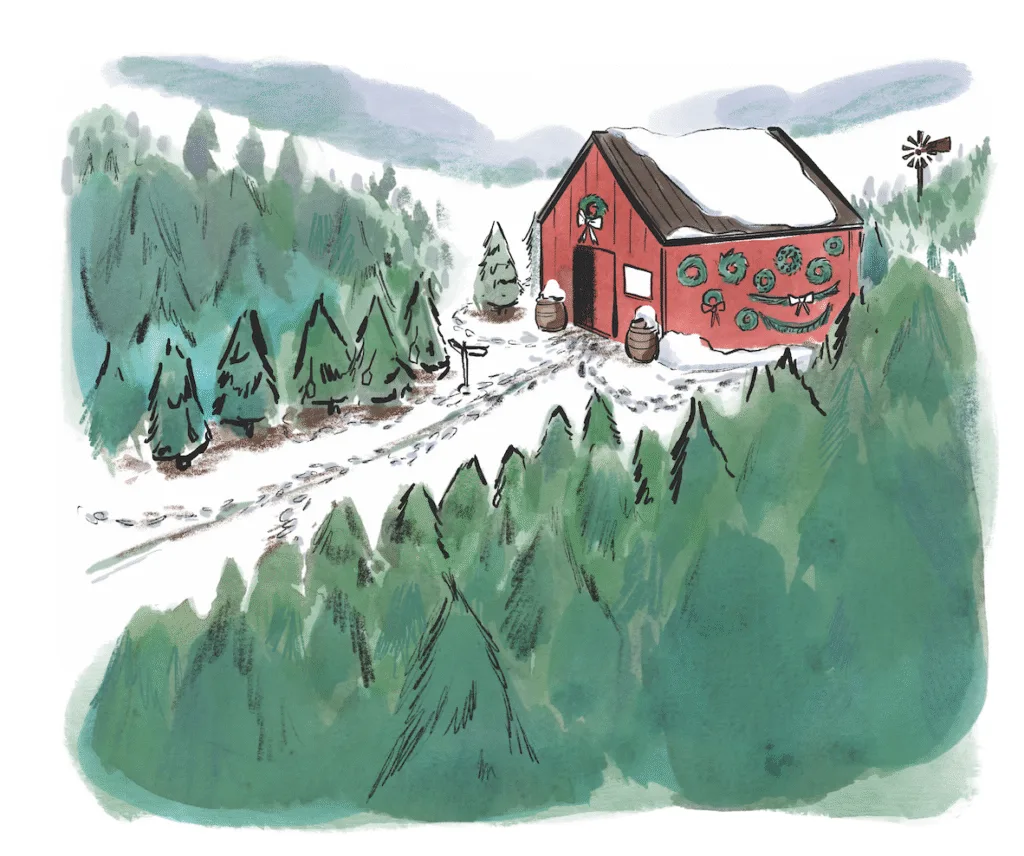
One year, when I was 7 and my sister Abby 12, my grandpa suited us up in full snow gear for a serious duty: our rare chance to pick out a living tree. Other years, a real one was deemed too likely to die while my grandparents snowbirded to Florida. But this time, we drove through snowbound roads until we reached a real-life White Christmas scene: a wooden barn, pre-cut trees, and beyond it, a forest blanketed in white. My eyes swept greedily, sparking Rockefeller-level visions. I begged for towering 12-footers, but reason prevailed—we cut a sensible 7-foot pine. My glee dimmed when I realized we had to lug it back, though I quickly found new amusement in Abby’s scheme to saw leftover branches from stumps for decorative swags.
At the barn, steaming hot cocoa waited, which my grandpa—sweet tooth supreme—downed by the mugful. Back home came the ordeal: how to wedge the tree through the door. “Oh, John,” my grandma sighed, as she often did. At last it stood, dressed in her lifetime collection of ornaments—sparkling bulbs; White House annuals; those honoring Manassas, where my grandpa was longtime city manager; and my favorite, a beeswax cherub. Then came the barrage of tinsel, and a plate of cookies to fortify us, my grandpa sneaking the extras.
Through the huge living-room windows, tree lights and fireplace glow reflected back at us, while beyond the glass stretched the icy blue of Long Lake—warmth within, winter without.
This article originally appeared in the December 2025 issue.