

The first time Suzanne Eblen walked up to the 1799 mansion that would become her French-inspired retreat in the country, it was Mother’s Day.
That morning, a friend showed up at her house, coffee in hand, and directed her to get in the car. There was an old house in Bluemont they needed to see, the friend said, and Eblen, who owns Lucketts Store in Loudoun County, has never been one to turn down the chance to wander an abandoned home.
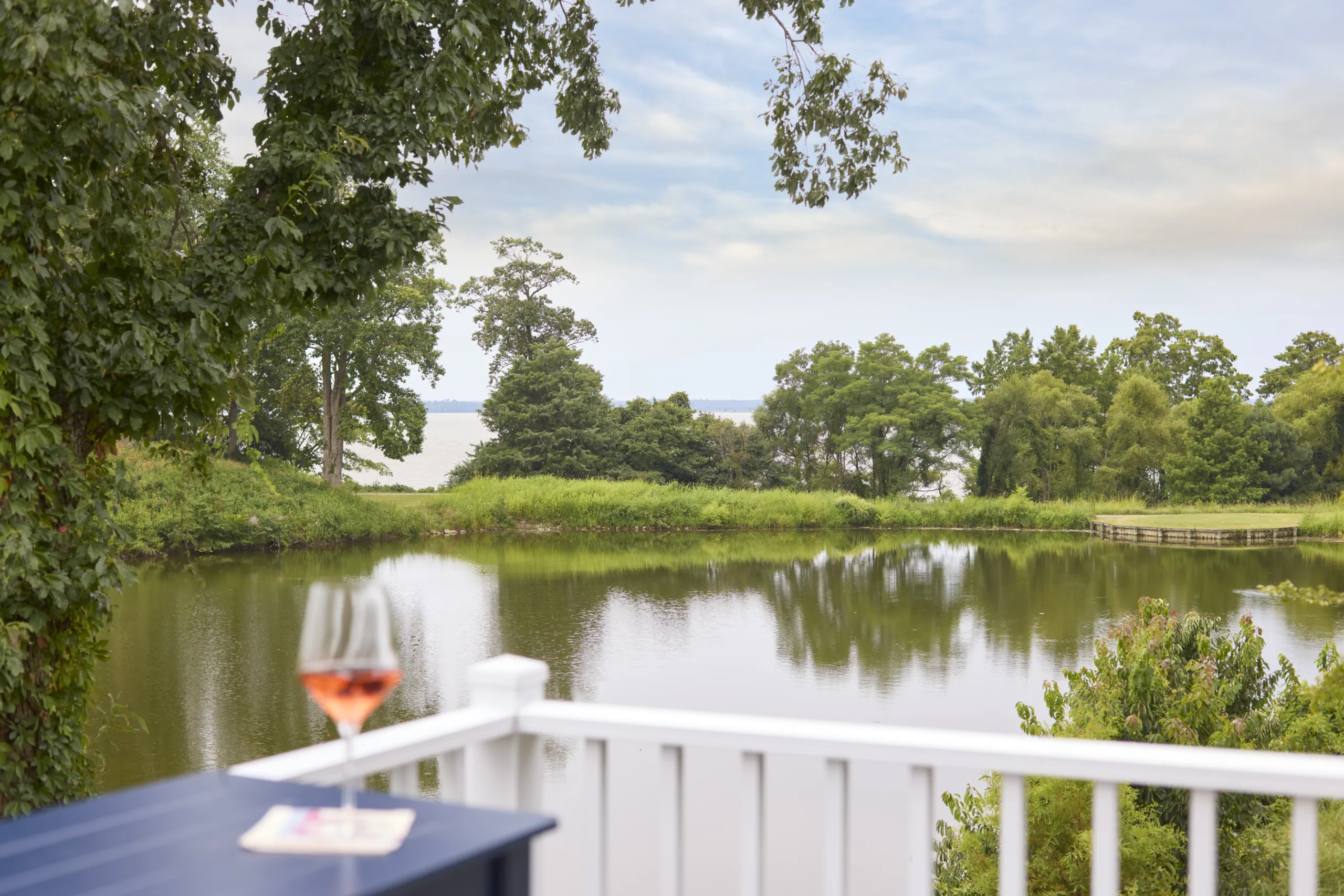
The pair was met with the sight of crumbling walls and graffiti. But Eblen looked past the relics of decades of neglect and the evidence of local teenagers using the old grand dame as a place to hide out on Friday nights. What drew her in were the views of the river beyond the house. “I was gobsmacked,” she recalls, “… and it was overpriced for what it was.”
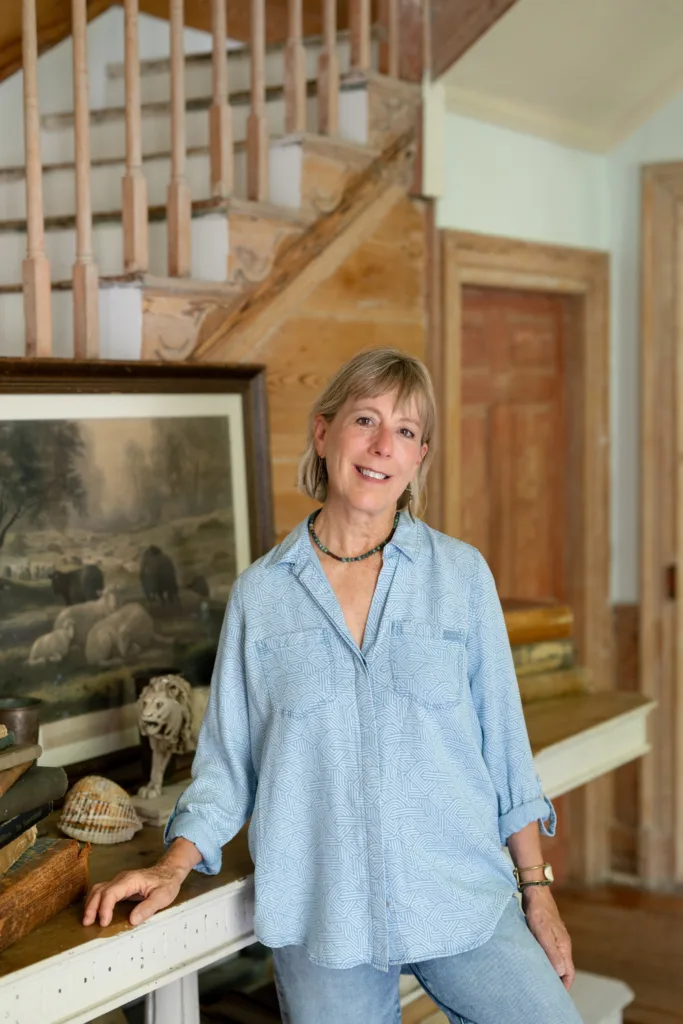
Eblen sat on the idea of the house for a moment—more than three years, in fact. She researched and obsessed. She continued to stand her ground that the house was not justifiable at the price. But the week before Christmas 2013, the house came up for a short sale.
“I grabbed a bunch of the girls from the shop, called a realtor, and we ran out to see it,” says Eblen. “I was in love.”
This time, the price was right. By early 2014, the house—and its massive restoration potential—was hers.
A Get-It-Done Attitude
Eblen was no stranger to old-house living in the country. She’d lived on a farm between Waterford and Lovettsville for nearly three decades. A house nearly as old as our nation, however, presents different perplexities and contains hidden stories waiting to be uncovered.
The main part of the mansion was built in 1799, and among its occupants were the judge that tried John Brown, as well as a juror in the Aaron Burr trial. For its first two and a half centuries of existence, the property it was on spanned the entire mountain surrounding it.
Almost immediately after its construction, the occupants began to add on to it—it turns out frenetic home renovations aren’t solely a result of the social media era. Eblen has evidence that the first addition dates to the early 1800s. Some updates added needed space to its footprint, while others fell short of what we might call charming and historic. “We found crazy Kelly green with orange floors in one room. Something tells me the 1970s were involved,” laughs Eblen.
They had the good fortune of acquiring the house from a skilled restorationist who put on a roof, shored up the stone walls, and tackled the necessary structural updates that would have rendered the project impossible for anyone without bottomless pockets.
When Eblen took ownership, the needs were extensive, but she focused on updating the electrical, plumbing, and cosmetic restoration. Speaking with Eblen, it’s apparent she has the type of get-it-done attitude that lends itself to taking on a project that might seem insurmountable to most. As she says, “It was just me and a couple of guys doing everything.”
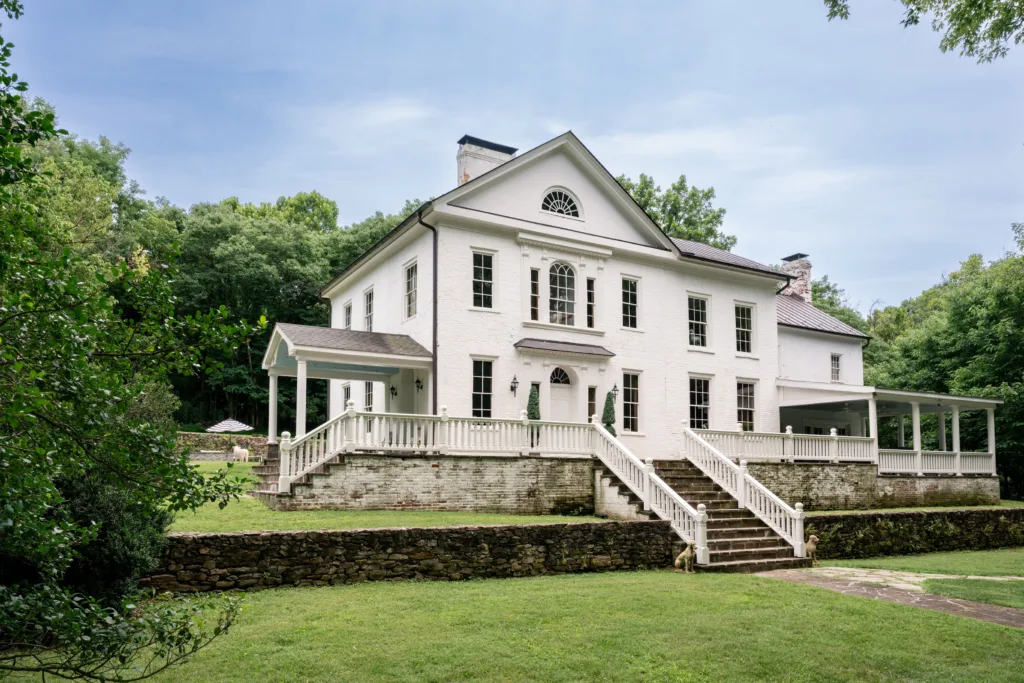
Letting the Home Be a Comfortable Relic
Before the 2000s structural renovations, Eblen explains that the house had been inhabited by a family who fully immersed themselves in the historic lifestyle. She has been told they lived a Dickensian life, getting their water from the creek nearby and heating the house with fire stoves.
Despite her respect for the house and the original structure, that’s not how Eblen intended to live.
“People tend to either take old houses and make them into a new house, or they turn them into a museum. I prefer to let it be a relic, but a relic that is comfortable and welcoming,” says Eblen. “An old house tells you what it wants.”
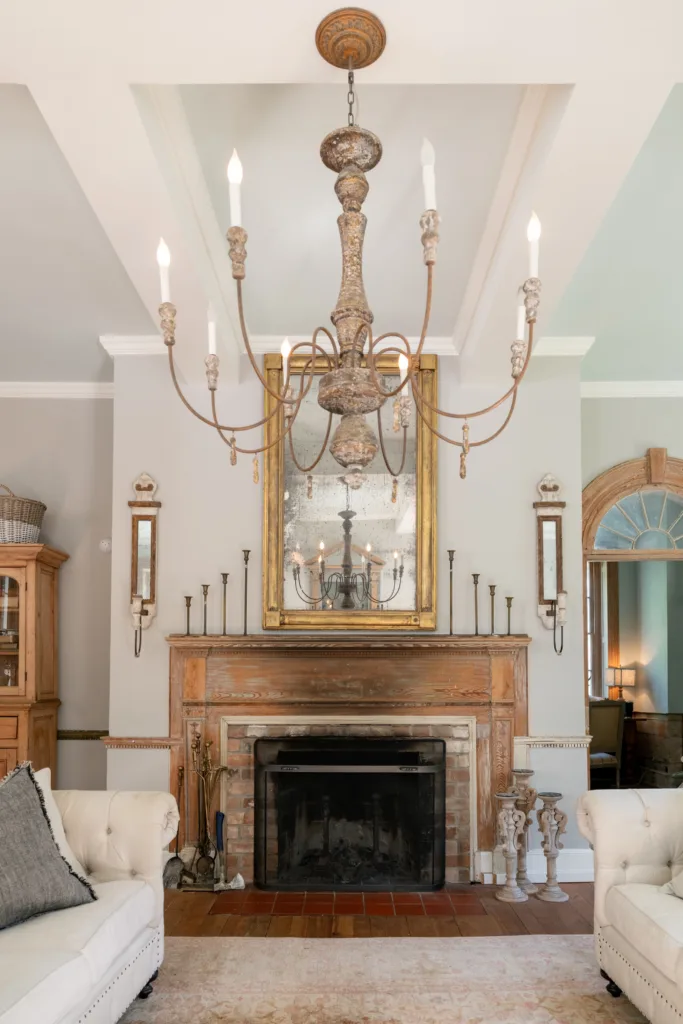
She let the feeling of the house guide her. It gave her a vision of walking down a lane in France and stumbling upon a beautiful old home. The visual of what she’d want to see when she opens the door is how she has renovated and decorated the space.
While her focus is on restoration, she also doesn’t subscribe to a purist approach. The trim didn’t need to be painted Wedgewood blue. Instead, she embraced the stripped trim that had been done a few years earlier. This pared-down aesthetic matched her philosophy when it came to both the finishing and the décor. She never wanted the house to feel busy or cluttered. Rather than turning it into a period recreation, she wanted the bones of the home to speak for themselves.
That led to an evolution over the course of a year. As the owner of a home shop, Eblen had a front-row seat to beautiful pieces to fill the space, and she used that fortunate position to source striking antiques for the mansion without worrying about whether a room was done. “I started building and putting in the pieces. I didn’t care what phase the house was in, I just got it,” recalls Eblen.
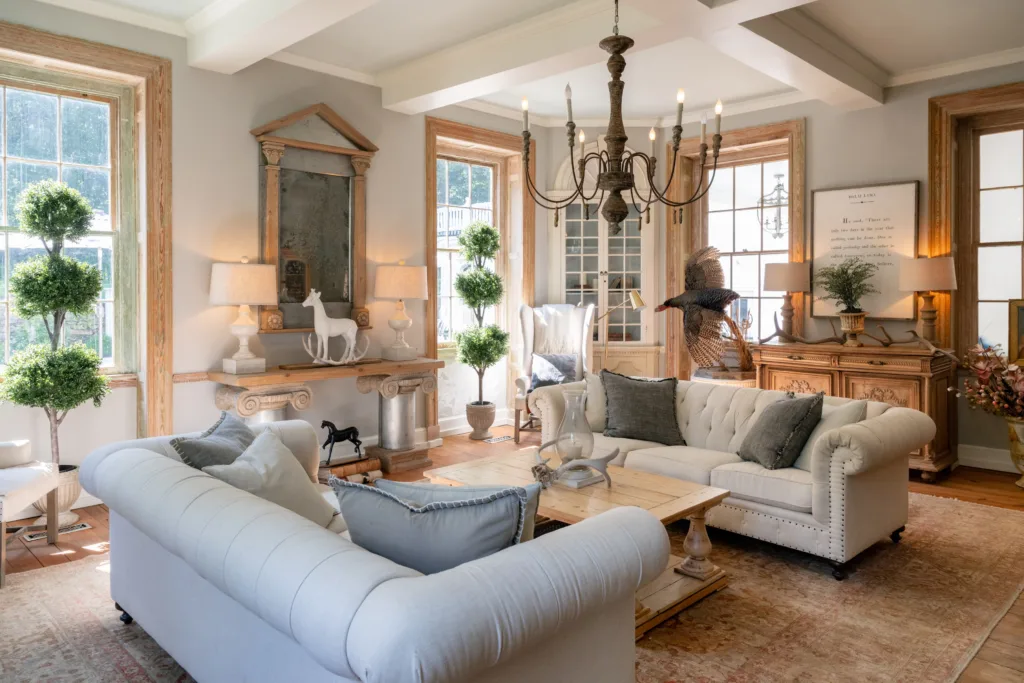
The result is a décor style that feels collected yet light and airy. It doesn’t feel old or oppressive. Instead, it looks as if a stunning country mansion was filled with elegant pieces, then left to age in place. Weathered wood and distressed finishes show off the beauty of the timeworn floors and original details.
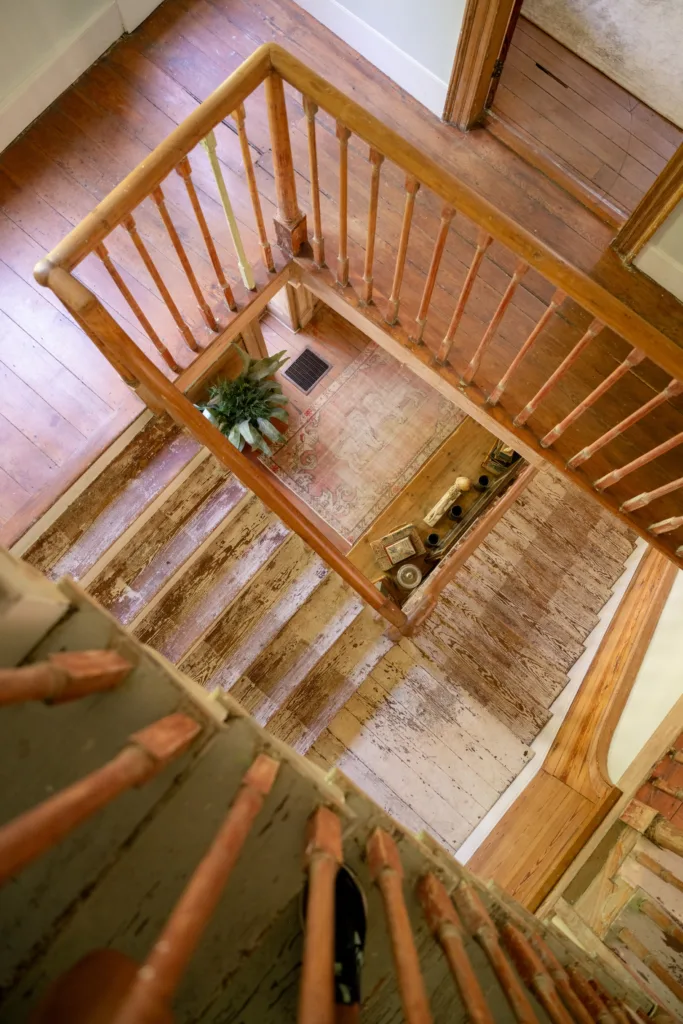
Three flights from above that feature two-quarter landings
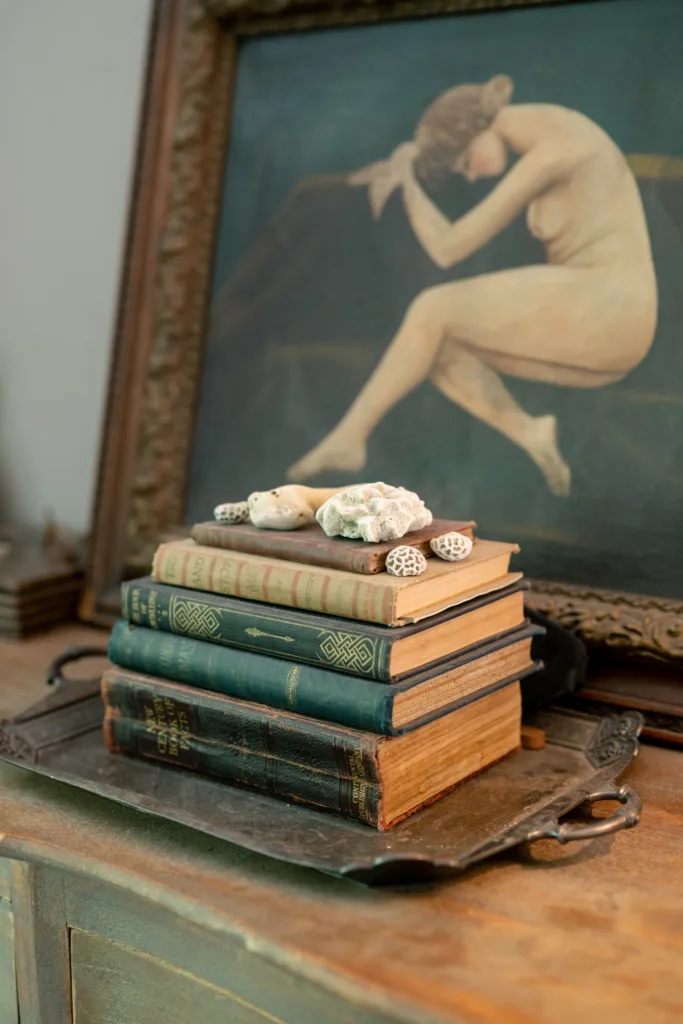
Eblen’s collections include art, books, silver, china, shells, and more.
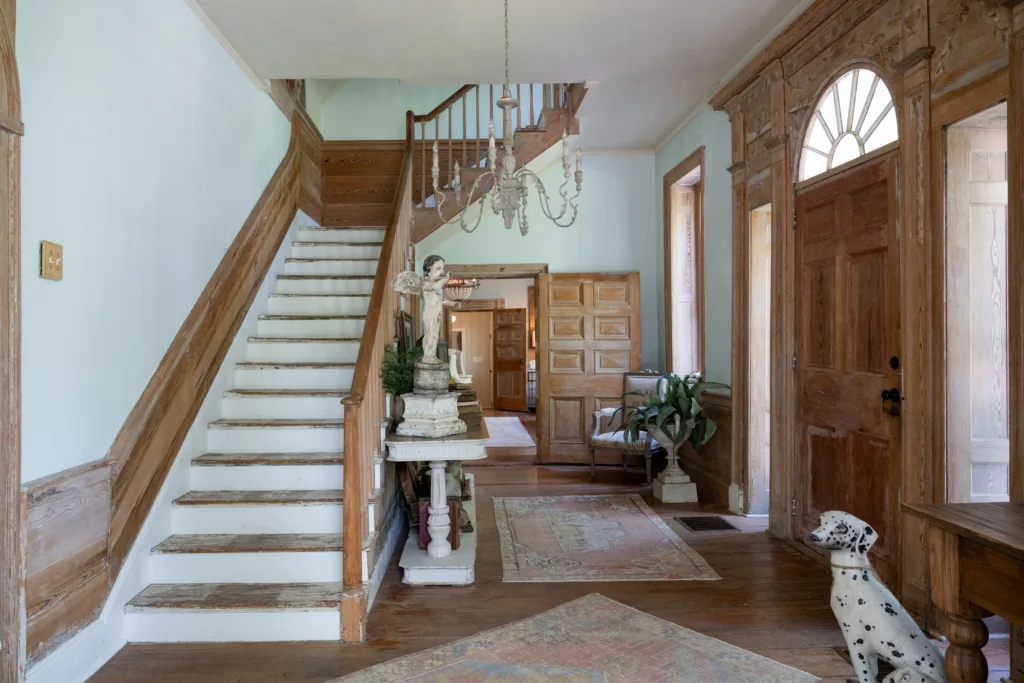
The foyer showcases the home’s exquisite woodwork and staircase.
Living Within History’s Walls
Eblen left the living spaces to their existing state, avoiding renovation in any rooms that had the handsome mark of time. But, to her point of creating a home that’s a comfortable relic, there were updates needed within the kitchens and bathrooms. What she didn’t do, however, was abandon the history of the home. A welcome side effect of that approach was significant cost savings.
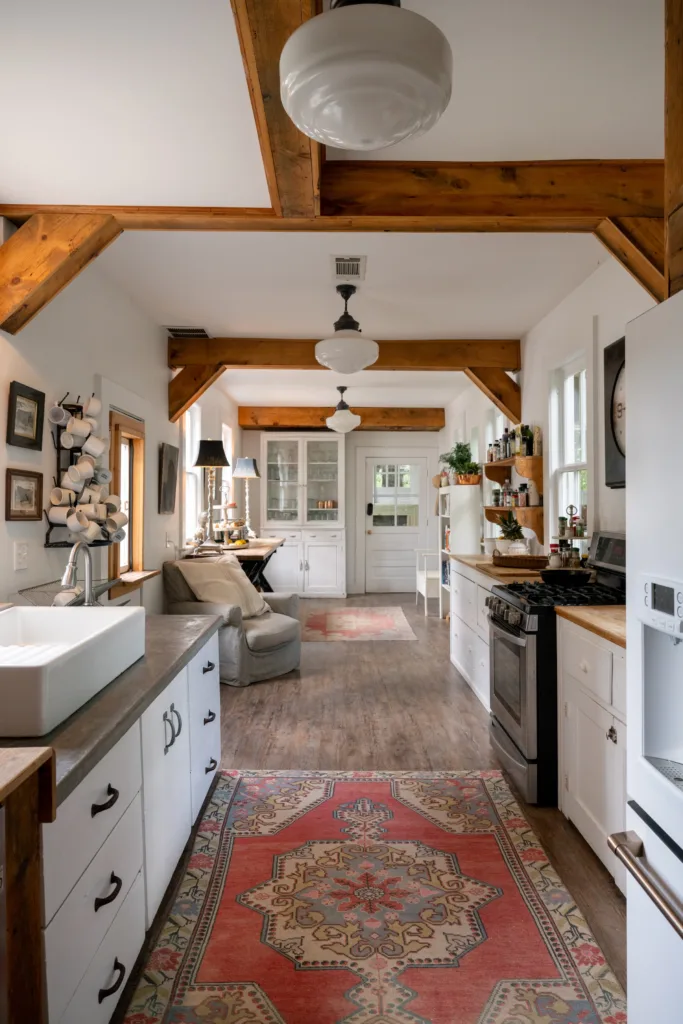
“I’m pretty MacGyver-y, but I had $5,000 left by the time we got to the kitchen. I sourced an old European farmhouse sink and built the cabinets from actual old cabinet tops and bottoms,” says Eblen. She points out that, while the antique cabinets happened to fit her budget, the reality is that new cabinets would have been wrong in the space.
Her goal was to create a kitchen that felt spare rather than filled floor to ceiling with cabinetry. The kitchen counter is an old store counter, and the storage is minimal. The home’s original owners would have lived, as everyone did back then, with less stuff. A purposeful lack of storage is a nod to that lifestyle. “Everything you have, you can see. This house forces you to have fewer things, but the right things, whether that’s the right towel or the right can opener. In a way, being in an old house is like being on a boat,” Eblen says.
For someone surrounded by stuff—albeit beautiful stuff—every day at her shop, this intentional minimalism in her grand old home is a refreshing sanctuary. Yet, if there’s one key to living comfortably within a centuries-old home, it’s summed up simply. Eblen says, “I don’t need anything to be perfect in my life.”
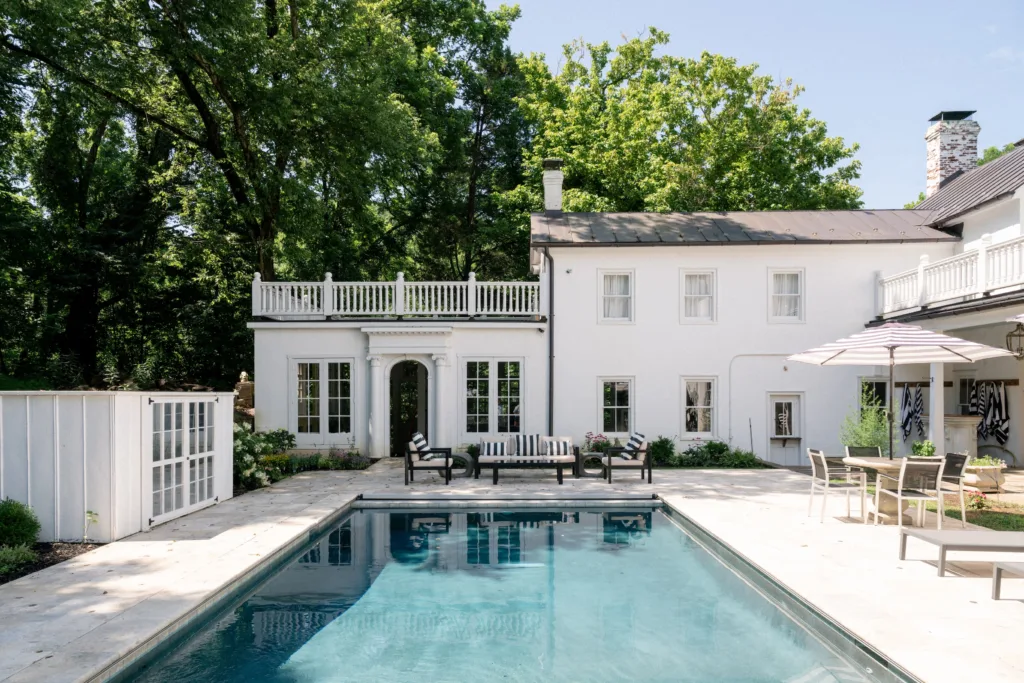
Eblen added a salt water pool with easy access from the house and plenty of outdoor space to entertain and relax.
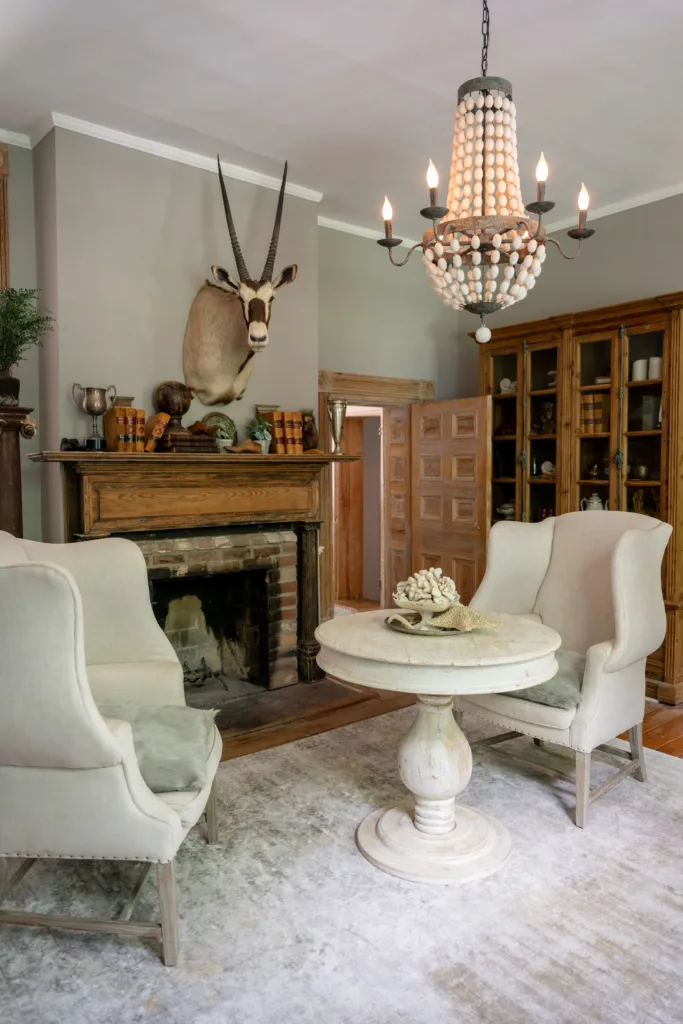
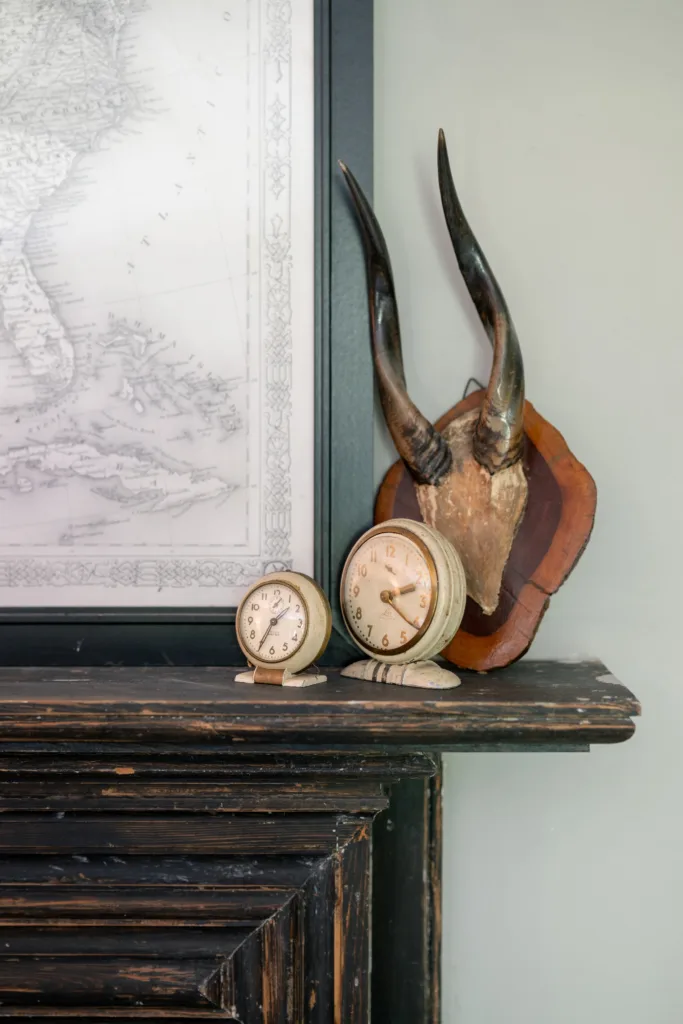
A mounted African Gemsbok Oyrx oversees this cozy space, where a collection of Eblen’s treasures fills the mantel shelf and an antique barrister bookcase is on display.
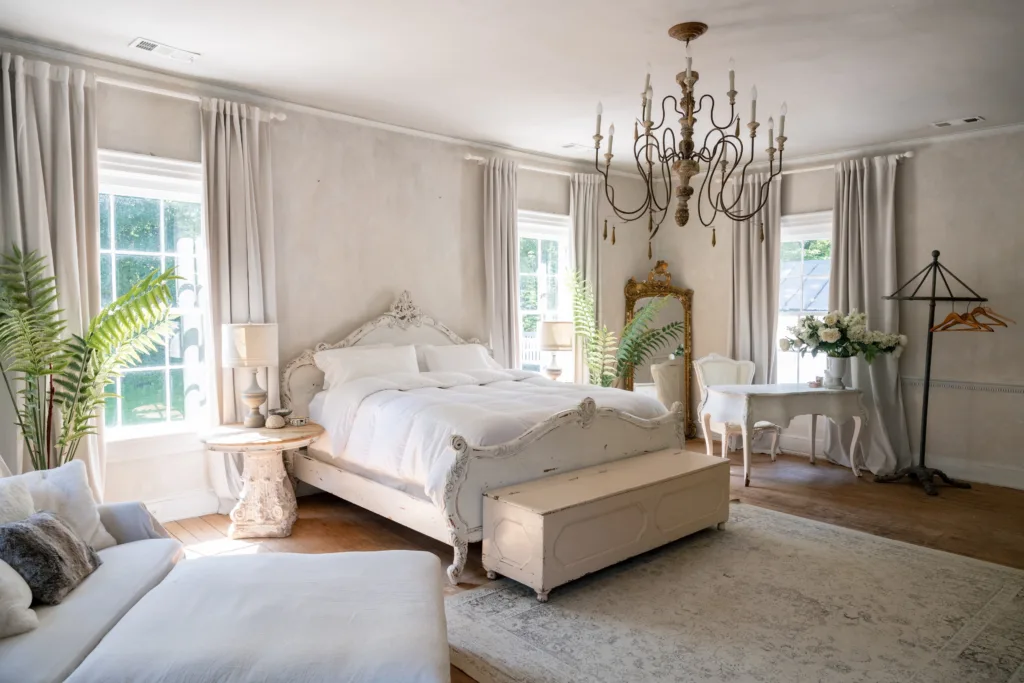
The primary bedroom, in muted neutrals, is anchored by the whitewashed bed and massive chandelier. The spacious space also accommodates a lounge chair and ottoman and an antique desk.
This article originally appeared in the October 2025 issue.